
One of the first decisions any new EV owner faces isn’t which car to buy — it’s which charger to buy. Walk into the charging aisle (or scroll through it online) and you’ll find two fundamentally different product categories wearing similar marketing language: permanently installed wall-mounted chargers, and portable EV chargers you plug into an outlet and pack away. Both can deliver genuine Level 2 charging speeds. The right choice depends less on brand and more on how, and where, you actually charge.
The Core Difference
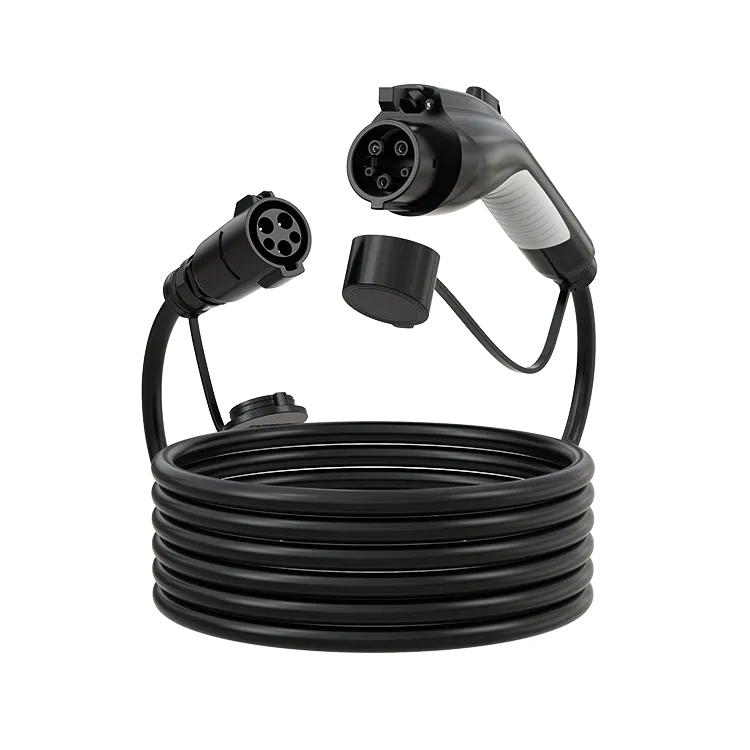
A wall-mounted charger — a wallbox — is fixed permanently to a wall, typically hard-wired to a dedicated circuit, with the cable and connector integrated into the unit. A portable EV charger is a self-contained brick with a plug on one end and a charging connector on the other, designed to be carried, stored in a trunk, and moved between a home outlet, a relative’s garage, or a job site. Everything else — power output, IP rating, smart features — can be nearly identical between the two categories. The form factor is the real dividing line.
When a Portable Charger Makes More Sense
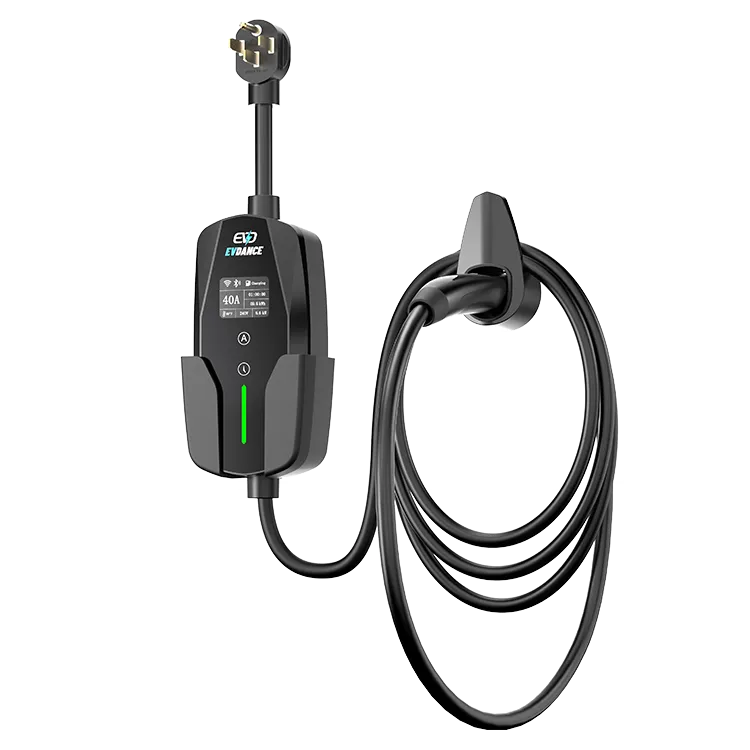
Portable Level 2 chargers, like EVDANCE’s EV-AC04001U series, exist because not everyone has the same charging needs every day. A portable unit is the better fit if you rent your home or apartment and can’t install fixed hardware; regularly travel to a second home, a family member’s house, or a job site and need charging capability wherever you park; want a backup charger to keep in the trunk for unexpected situations; or are testing EV ownership before committing to a permanent electrical installation.
Good portable units still deliver real power — EVDANCE’s portable line ranges from 16A up to 40A (roughly 3.8kW to 9.6kW), built with the same TPU+copper cabling, IP66 waterproofing, and adjustable current settings found on wall-mounted models, and many ship with a NEMA 6-20P or 14-50P plug plus a wall-mount bracket, so you can even semi-permanently hang one if your needs change later.
When a Wall-Mounted Charger Is the Better Investment
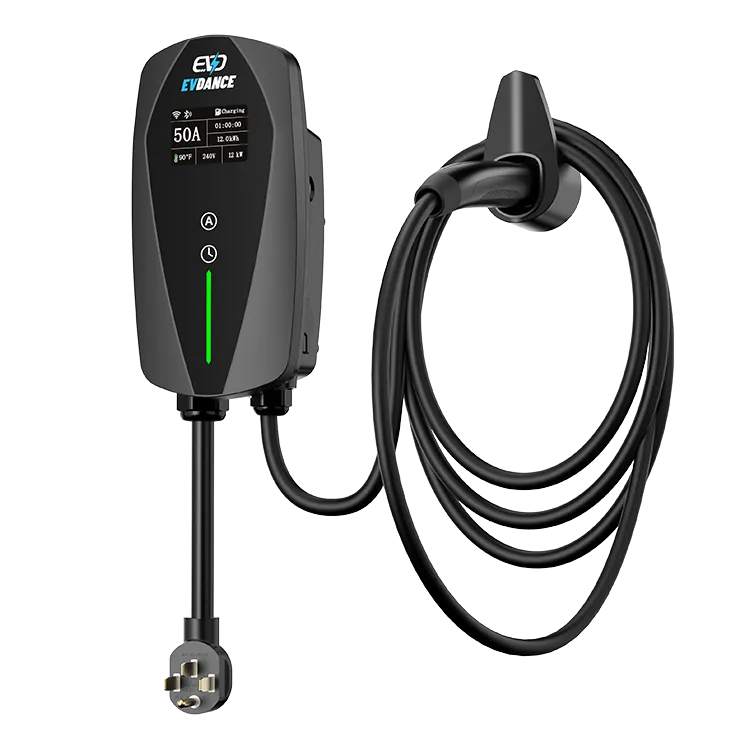
If you own your home, park in the same spot every night, and are charging one or more EVs as a daily routine, a dedicated wall-mounted charger — such as the EV-ACS4005T/B or the commercial-grade EV-ACT5006U/B — is almost always the better long-term choice. A fixed unit isn’t repeatedly coiled, uncoiled, and tossed in a trunk, which is where cable and connector wear tends to originate. Integrated cable wraps and holsters keep a thick charging cable off the garage floor — a real tripping and durability hazard over time with a loose portable unit. Hard-wired installations can also safely support higher continuous amperage (up to 48-50A on EVDANCE’s commercial wallbox line) than most portable units are rated for on a standard household plug.
Connector Compatibility Applies to Both
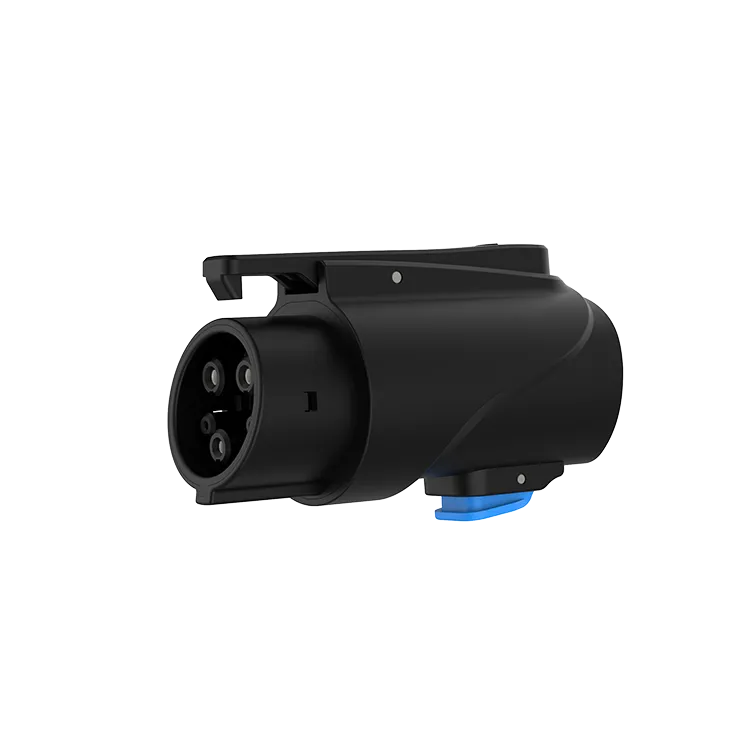
Whichever form factor you choose, connector compatibility works the same way. Most non-Tesla EVs in North America use SAE J1772 (Type 1); Tesla vehicles use the NACS connector natively but can charge from a J1772 charger using an inexpensive J1772-to-Tesla adapter. If your household includes both a Tesla and a non-Tesla EV, a J1772 charger — portable or wall-mounted — paired with an adapter is usually more flexible and future-proof than committing to a NACS-only unit. European and other IEC 62196 markets use Type 2 (Mennekes) connectors on both portable and wall-mounted equipment.
EVDANCE’s own adapter lineup covers this exact gap:
Side-by-Side Comparison
| Factor | Portable Charger | Wall-Mounted Charger |
|---|---|---|
| Installation | Plug-in, no electrician required for most models | Typically hard-wired by a licensed electrician |
| Portability | Fully portable, travels with you | Fixed in one location |
| Typical max output | Up to 40A / 9.6kW | Up to 48-50A / 12kW |
| Best for | Renters, multi-location charging, backup use | Homeowners, daily single-location charging |
| Long-term durability | Good, but subject to handling wear | Excellent — built for permanent outdoor duty |
Why Not Both?
Many EV households eventually land on a hybrid approach: a wall-mounted charger installed at the primary residence for daily convenience, plus a compact portable charger kept in the vehicle for travel, emergencies, or visiting family. Because EVDANCE builds both categories to the same IP66, TPU+copper, and adjustable-current standard, pairing a wallbox with a portable unit from the same lineup means consistent performance and a shared parts/accessory ecosystem — including the same J1772-to-NACS and CCS1-to-NACS adapters — rather than juggling two incompatible charging systems.
Making the Decision
- Ask yourself: do you charge in the same spot, every day, for years? If yes, a wall-mounted charger will pay for itself in convenience and durability.
- If your charging needs are variable — different locations, renting, or still deciding on a long-term setup — a quality portable charger delivers the same charging speed without the fixed installation.
- Either way, don’t compromise on the fundamentals: IP66 weatherproofing, adjustable current, a connector that matches your vehicle, and independent safety certification (CE, UL, RoHS) should be non-negotiable regardless of which form factor you choose.