
No. A granny charger only works where both of its ends match: the wall plug must fit the local socket standard, and the vehicle connector must fit your car’s inlet. A UK charger with a 3-pin plug and a Type 2 connector will not plug into a US garage or a Japanese car. Buy the version made for your region and your car, not a cheap import plus an adapter.
Key Takeaways
- Granny chargers are regional, not universal: wall plug and vehicle connector both vary.
- Type 2 covers the UK and Europe at the car end; North America uses J1772 and NACS.
- Rated adapters exist for the car end; travel adapters at the wall end are unsafe for charging.
- Moving country means replacing the charger, not adapting it.
Two Ends, Two Different Standards
Drivers often talk about “the plug” as if there were one. A granny charger has two. The wall end follows your country’s household socket standard, which is fixed by local wiring rules. The car end follows the vehicle connector standard for your market, Type 2 across the UK and Europe, J1772 (Type 1) and increasingly NACS in North America. Both ends have to match before any electricity flows.
| Region | Wall plug | Vehicle connector |
|---|---|---|
| United Kingdom | Type G (3-pin) | Type 2 |
| Most of Europe | Schuko (Type F) | Type 2 |
| United States and Canada | NEMA 5-15 | J1772 (Type 1) or NACS |
| Japan | Type A | Type 1 (J1772) |
Voltage and frequency differ too, not just shapes. A charger built for one market is not certified for another, even if a plug physically fits. Our wider explainer, are EV chargers universal, covers public and home charging beyond portable units.
The Car End: Where Adapters Belong
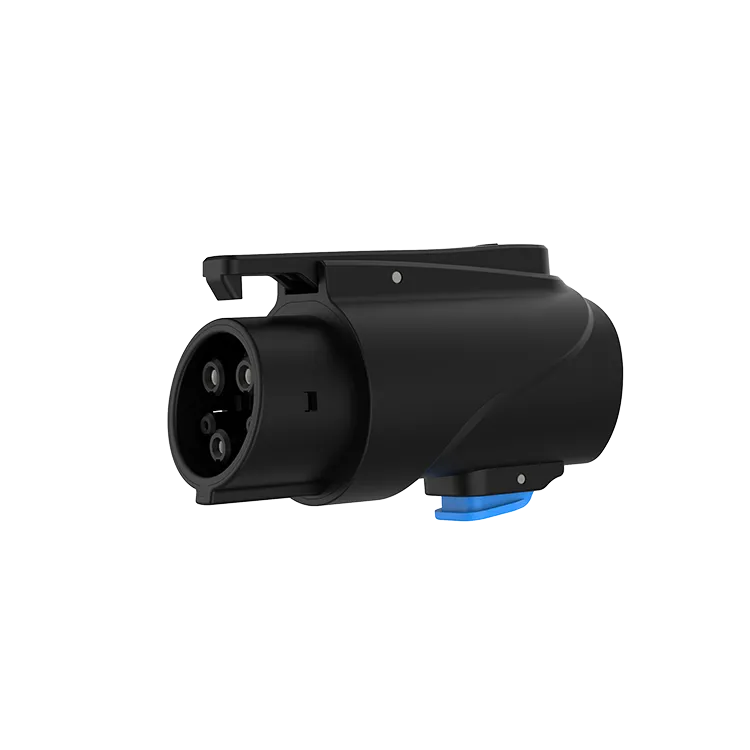
Some mismatches at the car end have a legitimate fix. A rated AC adapter can bridge two vehicle connector standards, for example the JT02 NACS-to-J1772 adapter, which handles AC charging up to 80 A with an IP65 rating. Adapters like this are built for the load and lock onto the connector. Even so, check the rating and the fit before relying on one, as our guide to whether EV charging adapters are safe explains. Regional models avoid the question entirely: the EV-ACS3210E is a Type 2 portable charger built for European-style supplies.
The Wall End: Where Adapters Do Not Belong
Travel adapters are made for phone chargers and hair dryers on holiday, not for a car drawing power continuously for ten hours. Stacking one between a foreign granny charger and your wall socket adds a weak, uncooled connection to the highest-load job in the house. The honest answer is plain: do not do it. If you move country or import a car, replace the charger with the local version. It costs less than repairing a melted socket, and an electrician will tell you the same.
What To Check Before You Travel or Buy
- The wall plug type at your destination, and whether the voltage matches your charger’s rating plate.
- Your car’s inlet type, from the manual or the connector shape, before ordering anything.
- Whether a rated car-end adapter exists for your exact pairing, if you truly need one.
- Local rules: some regions restrict charging from household sockets in certain buildings, whatever the plug.
The U.S. DOT’s charging speeds overview lists the connector standards used across North America, which is a useful reference when comparing regions.
Frequently Asked Questions
Can I use a European granny charger in the UK?
The car end matches, because both use Type 2. The wall end does not: a Schuko plug is not a UK 3-pin plug, and a travel adapter is not a safe bridge for continuous charging. Buy the UK version.
Will a US granny charger work in Europe?
No. The wall plug, the voltage and usually the vehicle connector are all different. It is the wrong tool on every count.
My car has a different inlet from local chargers. What can I do?
Look for a properly rated adapter for the car end only, matched to your two connector types, and keep the wall end native. Our guide to which charging cable you need helps identify what your car takes.
Related Reading
- Are EV Chargers Universal?
- Are EV Charging Adapters Safe?
- Which EV Charging Cable Do I Need?
- What Is J1772? The North American EV Plug Explained

