
Yes, you can take an EV charger with you when you move. A plug-in charger is easy: unplug it, coil the cable and reinstall the holster at the new house. A hardwired charger can move too, but it needs an electrician at both ends, some wall repair where it comes off, and a fresh circuit at the new home. Whether it is worth moving depends on the unit’s age and condition.
Key Takeaways
- Plug-in chargers move easily; hardwired chargers move with an electrician’s help at both houses.
- The old circuit stays behind. The new home needs a new circuit sized to the charger.
- Labour, not the unit, drives the cost of moving, so price both ends before deciding.
- Move a young, healthy unit; replace an old one and keep the flexibility of a plug-in option.
Plug-In Chargers: The Easy Move
A plug-in wall charger connects through a 240-volt outlet such as a NEMA 14-50, so removing it is mostly a careful unplug. Take the unit and its mounting bracket, keep the screws and holster, and photograph the outlet and breaker labels before you leave. At the new house you still need a suitable outlet in the right place; if there is none, an electrician fits one, and our guide to a standard EV charger installation shows what that involves. Portable chargers are simpler still: they were built to travel.

Hardwired Chargers: Possible, With Help at Both Ends
A hardwired unit is part of the home’s electrical system, so treat removal as electrical work, not furniture moving:
- Have an electrician isolate the circuit, disconnect the unit and make the wiring safe. The breaker and cable usually stay with the old house.
- Expect holes and marks where the unit and cable clips were fixed; budget a little wall repair.
- Check what your sale contract says. Fixtures are often included in a sale, so agree in writing that the charger goes with you.
- At the new home, the charger needs its own new circuit sized to its rating, installed and checked like any new installation.
Our comparison of hardwired vs plug-in chargers explains why the two types differ so much when moving day comes, and our guide on where to install a home charger helps you pick the spot at the new address.
What the Reinstallation Costs
The expensive part of moving a hardwired charger is rarely the box; it is the labour at two addresses plus a new circuit. For scale, DOE-cited figures for public Level 2 charging put equipment at about $3,500 and installation at about $2,500 per connector. A home reinstall is a smaller job than a public installation, but the same lesson applies: wiring and labour drive the bill, so get the new circuit quoted before you decide. Our breakdown of what affects installation cost lists the factors an electrician will price.
Move It or Buy New? A Checklist
| Question | Moving makes sense | Buying new makes sense |
|---|---|---|
| How old is the unit? | Under about 3 years, working well | Old, out of warranty, or unreliable |
| How is it connected? | Plug-in, or hardwired with cheap removal | Hardwired, with removal and repair quoted high |
| Does it fit the new home? | Right power and connector for your car | You want more power, smart features, or a longer cable |
| What does the new circuit cost? | Similar either way, so the unit is the saving | A bundle deal on unit plus installation beats it |
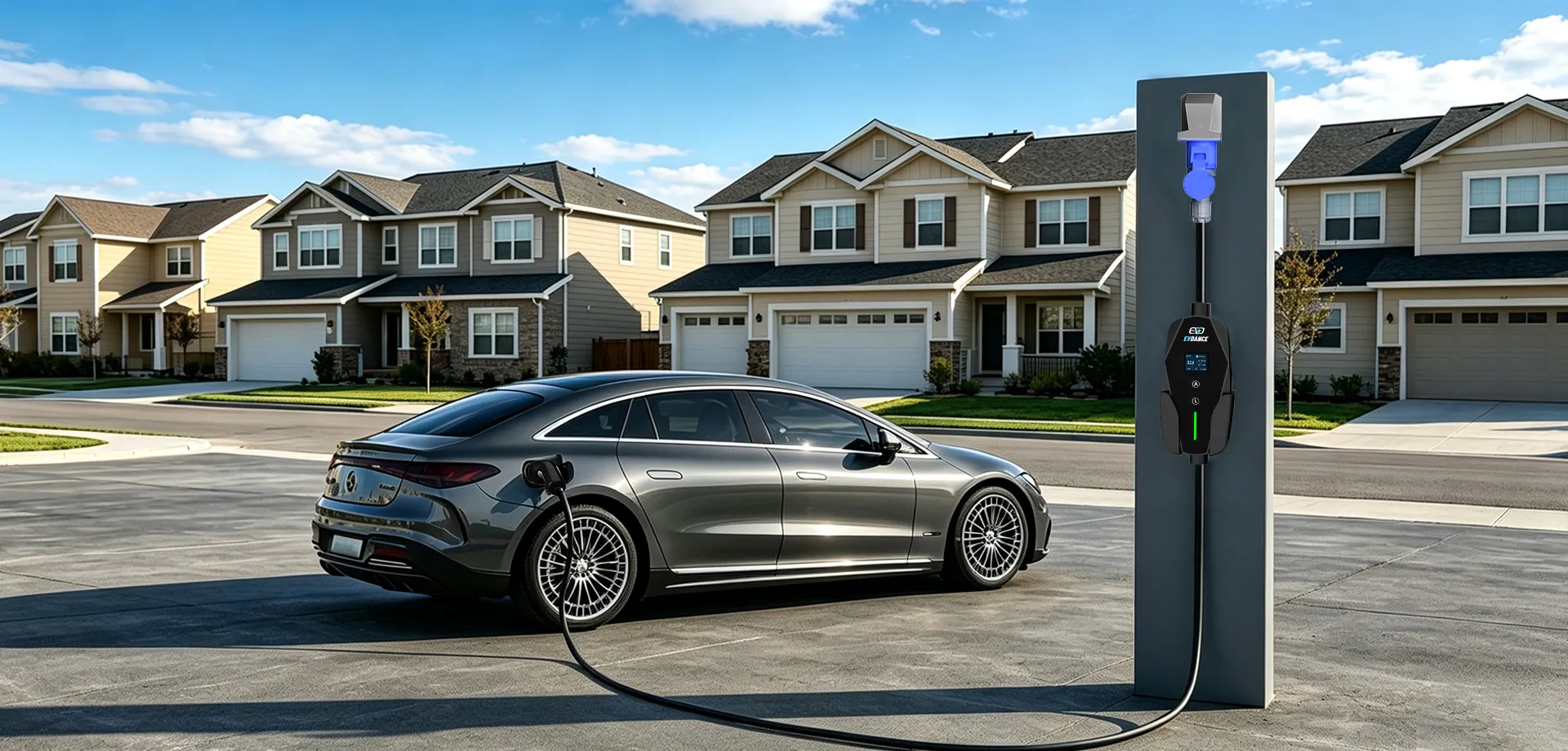
If you do replace the unit at the new house, a model that can be hard-wired or plugged in keeps your options open next time. The EV-ACT5006T 48A Level 2 wall charger works hard-wired or on a NEMA 14-50 plug, with a 25 ft cable and IP65/IP66 rating. Have its circuit sized by an electrician, as with any 48 A installation.
Frequently Asked Questions
Can I remove a hardwired charger myself?
Disconnecting a hardwired unit is electrical work on a dedicated circuit. Use a licensed electrician; our article on installing a Level 2 charger yourself explains where the DIY line sits.
Does the charger stay with the house when I sell?
Often it is treated as a fixture, especially if hardwired. Agree it explicitly in the sale paperwork if you plan to take it.
Will my charger work at the new house?
The car side will. The supply side is the question: the new home needs a circuit of the right rating in the right place, which the electrician confirms.
Related Reading
- What Is the Cheapest Way to Install an EV Charger?
- How Much Does a Home EV Charger Cost?
- How Long Does EV Charger Installation Take?
- EV Charger Hardwired vs Plug-In: Which Should You Choose?

