
The fastest way to find a J1772 charger is the U.S. Department of Energy’s Station Locator. Enter your location, then filter the connector type to J1772. Most public Level 2 charging posts in the United States use J1772, so a filtered search usually shows several options nearby.
Key Takeaways
- Filter the DOE Station Locator by J1772 to find compatible public chargers fast.
- Most public Level 2 posts in the U.S. use J1772; DC fast sites use CCS1 or NACS.
- Check access hours and pricing in the listing before you travel.
- A J1772 home charger removes the search for daily charging.
Start With the DOE Station Locator
The Alternative Fuels Data Center keeps a national map of public charging stations. It is free, needs no account, and lets you narrow results before you drive anywhere. A typical search takes under a minute:
- Open the Station Locator and enter a city, ZIP code, or address.
- Open the filters and select J1772 under connector type.
- Check the station details for access hours, pricing, and whether the site is public or restricted.
- Zoom the map along your route if you are planning a longer trip, not just a single stop.

The Plugs You Will See at Public Sites
J1772 is the standard AC plug for North America, but public sites often have more than one connector type. The U.S. Department of Transportation puts Level 2 charging at 7 to 19 kW, or about 10 to 20 miles of range per hour.
| Connector | Used for | Typical power | What to know |
|---|---|---|---|
| J1772 | AC charging, Level 1 and Level 2 | Up to the Level 2 range | Fits almost every non-Tesla EV and plug-in hybrid sold in North America |
| CCS1 | DC fast charging | 50 to 350 kW | Uses the J1772 shape with two extra DC pins below it |
| NACS | AC and DC charging | Varies by site | Found on a growing number of sites; many cars need an adapter |
Federally funded NEVI corridor stations follow set rules: Level 2 ports carry J1772 connectors, and DC fast ports carry CCS1. So along highway corridors, a J1772 Level 2 port is a standard part of the offer.
Other Ways to Find a Charger
The locator is the best starting point, but it is not the only tool. Use these as a cross-check, especially for pricing and live availability:
- Your car’s navigation: most EVs list nearby chargers and can filter by connector.
- Charging network apps: each network shows its own stations, plus live status and prices.
- Destination listings: hotels, workplaces, and parking garages often list charging on their own pages.
Before your first visit, it helps to read how to use a public EV charger and our wider guide on where to find EV charging stations.
If You Would Rather Charge at Home
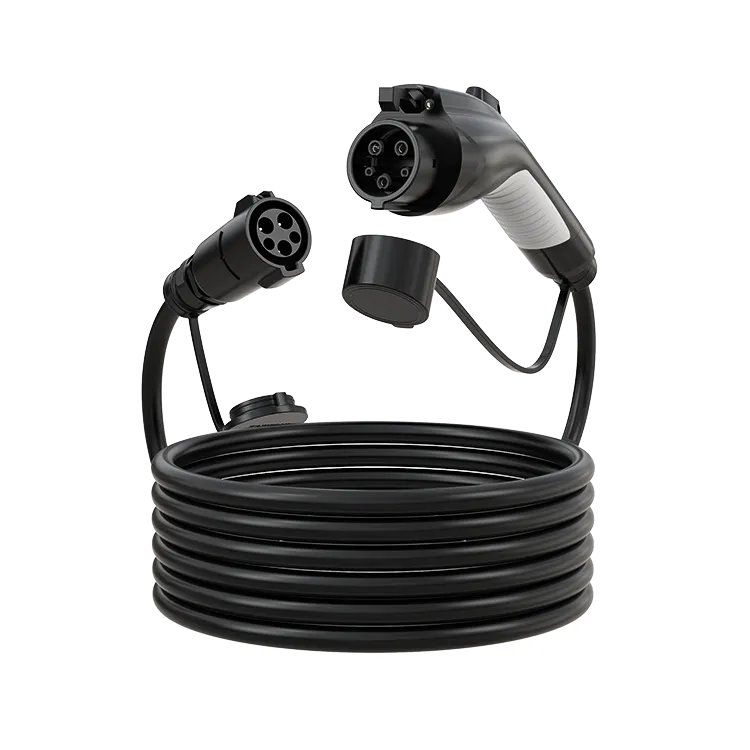
Public J1772 posts are shared and priced by the hour or by the kWh. If your car sits at home overnight, a home unit is usually simpler. The EV-AC04001U is a 40A J1772 portable charger with 9.6 kW output, a NEMA 14-50P plug, IP66 rating, and a 25 ft cable, so it works in a garage or on a driveway. Tesla drivers who want to use J1772 equipment can look at the JT02 NACS-to-J1772 adapter, rated for AC charging up to 80 A.
Frequently Asked Questions
Do all public chargers have J1772?
No. Most public Level 2 posts do, but some sites are NACS-only, and DC fast chargers use CCS1 or NACS. Always check the connector in the listing before you go.
Can a Tesla charge on a J1772 charger?
Yes, with the adapter that uses the J1772 plug on AC charging. Our guide on whether a Tesla can use J1772 explains how it works.
Is J1772 fast charging?
No. J1772 is an AC connector, so it covers Level 1 and Level 2 speeds. Fast charging uses DC connectors such as CCS1 or NACS.
Related Reading
- What Is J1772?
- Does J1772 Work With CCS?
- How to Use a Public EV Charger
- Where to Find EV Charging Stations

