
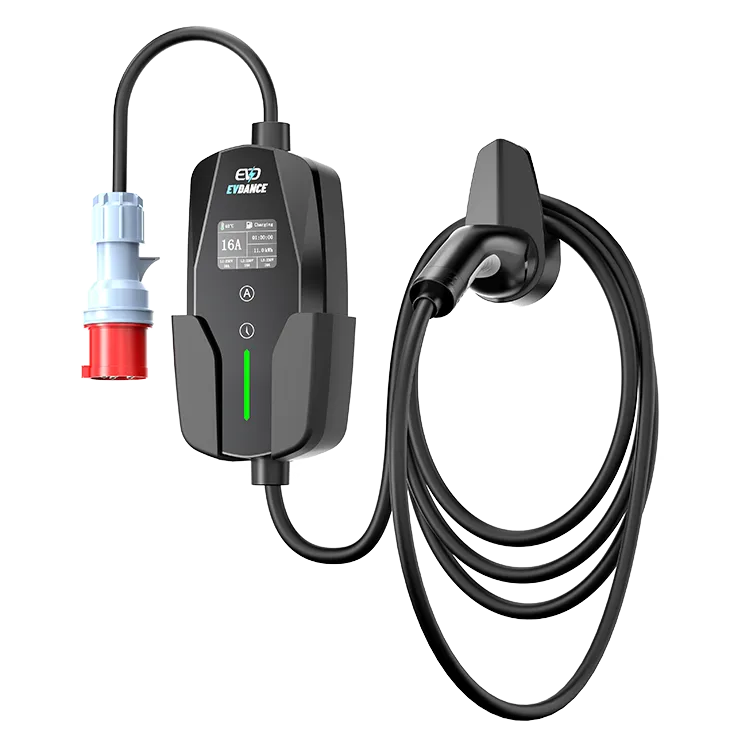
Store a portable EV charger the way you would store any electrical tool: clean, dry, loosely coiled, and indoors. Put the protective cap back on the connector, coil the cable in wide loops rather than tight wraps, and keep the unit in a case or on a shelf off the floor. No winterizing or special preparation is needed — the damage to avoid is kinks in the cable, moisture in the connector, and heat.
Key Takeaways
- Clean, dry and inspect the charger before storing it; cap the connector.
- Coil the cable in wide, loose loops — never tightly around the control box.
- Store indoors, off the floor, in a case or on a shelf; the trunk is fine for trips, not for months of extreme temperatures.
Before You Put It Away: Clean, Dry, Check
Storage starts before the charger goes into its case. Unplug the unit from the wall first, then work through three quick steps:
- Wipe it down. A dry or slightly damp cloth removes dust and road grit from the housing and cable. Follow the method in our guide to cleaning an EV charger connector: dry methods only, and never spray liquid into the pins.
- Dry the connector. If the charger was used in rain, let the connector air-dry before capping it. Trapped moisture is what corrodes contacts over weeks of storage.
- Inspect as you go. Look for cuts in the cable jacket, a cracked connector shell, or bent or discoloured pins. Storing a damaged charger does not fix it — set it aside for repair or replacement instead.
Coil the Cable in Wide, Loose Loops
The cable suffers most in storage. Conductors and the jacket both dislike sharp bends, and months in a tight coil can leave a permanent set or cracks at the bend points.
| Do | Do not |
|---|---|
| Coil in wide loops, roughly the size of a dinner plate or wider | Wrap the cable tightly around the control box or your elbow |
| Let the cable follow its natural curve as you coil | Force a twist out by bending it back the other way |
| Rest the connector on top, capped, where it cannot be crushed | Hang the whole unit from the connector or the plug |
| Use the case or a hook that supports the coil | Leave the coil on a damp floor or under heavy tools |
How you treat the cable also matters in daily use — see how long EV charging cables last and why you should avoid driving over a charging cable, in storage or out of it.
Where to Store It — and Where Not To
A dry shelf, cupboard or hard case suits almost every portable charger. Most portable units, including EVDANCE models, carry an IP66 rating, but that rating covers rain and water jets in use — see what portable charger IP ratings mean. It is not a licence to store the unit somewhere permanently damp.
- Good: a case or shelf indoors, off the floor, at ordinary room or garage temperatures.
- Acceptable for trips: the trunk, in its case — but bring it in during heatwaves or hard freezes if it will sit for weeks. Extreme cold makes cable jackets stiff and harder to coil without forcing them, as our cold-weather charging guide explains.
- Avoid: floors that flood or stay damp, spots under leaking pipes, and anywhere the connector can sit in standing water.
Portable Chargers That Travel Well
EVDANCE portable chargers are built to be stored and carried this way: the EV-ACS3210T (32 A, about 7.7 kW, IP66) and the three-phase ACS1605PE (11 kW, IP66) both ship with connector protection suited to case storage. A fitted case keeps the coiled cable, the control box and the connector together, so nothing is left dangling or crushed in the trunk.
Frequently Asked Questions
Can I leave my portable charger in the car all the time?
For regular use, yes, if it sits in a case and the trunk stays dry. For weeks of parking in extreme heat or cold, bring it indoors — temperature extremes age the cable jacket and electronics faster than normal use does.
Should I leave the charger plugged into the wall between uses?
A portable charger that lives on one outlet is usually left plugged in or holstered beside it. If you are storing it for a month or more, unplug it, coil it and store it as above; that also frees the outlet and removes a trip hazard.
How should I store a wallbox I am not using?
Leave the connector in its holster with the cable looped on its hook. If it will sit idle for a season, your manual may suggest switching it off at the breaker; never open the enclosure — that is an electrician’s job.
Related Reading
- How Long Do EV Charging Cables Last, and Can They Be Repaired?
- How to Clean an EV Charger Connector
- Are Portable EV Chargers Waterproof? IP Ratings Explained
- Cold-Weather EV Charging: Chargers and Cables Below Freezing

