
A three-phase charging cable is an AC cable, in Europe a Type 2 cable, wired to carry all three phases of a three-phase supply. Paired with a three-phase charger and a car that accepts it, it delivers 11 kW at 16 A or 22 kW at 32 A. A single-phase cable on the same setup would limit the session to about 7 kW, because only one phase would reach the car.
Key Takeaways
- A three-phase cable wires all three live pins of a Type 2 connector; a single-phase cable wires one.
- Ratings are 16 A for 11 kW and 32 A for 22 kW three-phase charging.
- Supply, charger, cable and car must all be three-phase, or the session falls back to one phase.
- The rating is printed on the cable and connector label; check before you buy.
Same connector, more wires inside
The Type 2 connector has the same shape either way. The difference is which pins are wired: a single-phase cable connects only the first live pin, while a three-phase cable connects all three live pins plus neutral and earth. That is also why a three-phase cable is thicker, heavier and less flexible. The background is set out in our guide to single-phase vs three-phase EV charging.
| Single-phase cable | Three-phase cable | |
|---|---|---|
| Phases connected | L1 only | L1, L2 and L3 |
| Typical rating | 32 A, about 7 kW | 16 A for 11 kW, 32 A for 22 kW |
| Cable feel | Thinner and lighter | Thicker and heavier |
| Best for | Single-phase homes and cars | Three-phase supplies and 11 or 22 kW charging |
The slowest part sets the speed
Three parts must all support three-phase charging: the supply and charger, the cable, and the car’s onboard charger. If any one of them is single-phase, the session runs single-phase. A three-phase cable cannot make a single-phase car charge faster, and a single-phase cable quietly caps an 11 or 22 kW wallbox at one phase. With a tethered charger the cable is built in, so there is nothing to choose; with a socketed charger, the cable is the part buyers most often get wrong. Portable three-phase models are covered in our overview of portable EV charger types.
How to tell which cable you have
- Read the print on the cable jacket or the connector label: look for 400 V and a three-phase marking, rather than 230 V single-phase.
- Check the rated current next to it: 16 A points to 11 kW three-phase, 32 A to 22 kW.
- Compare the weight and thickness with a known single-phase cable; the three-phase version is visibly heavier.
- When buying, match the cable to the fastest part of your chain, not the slowest, so it never becomes the bottleneck.
Three-phase portable chargers from EVDANCE
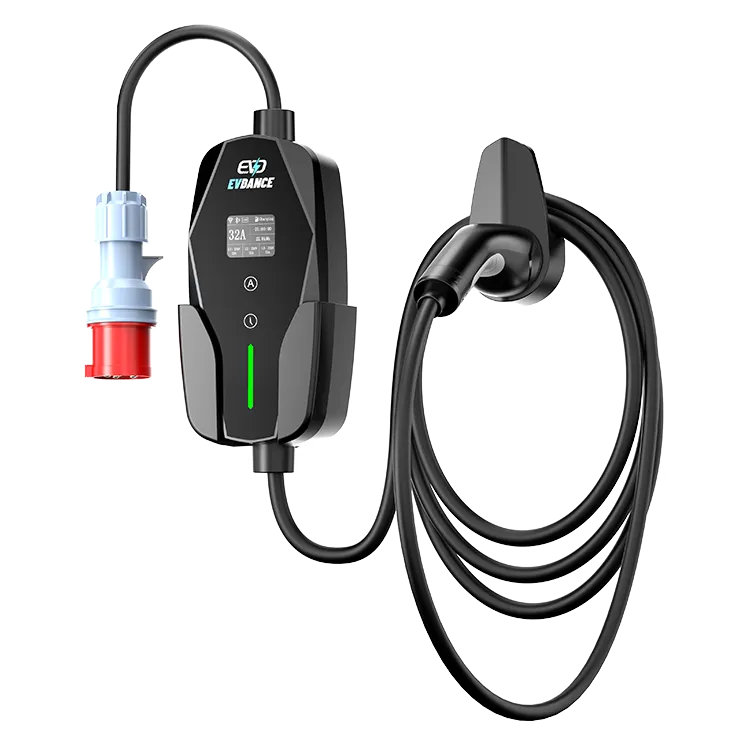
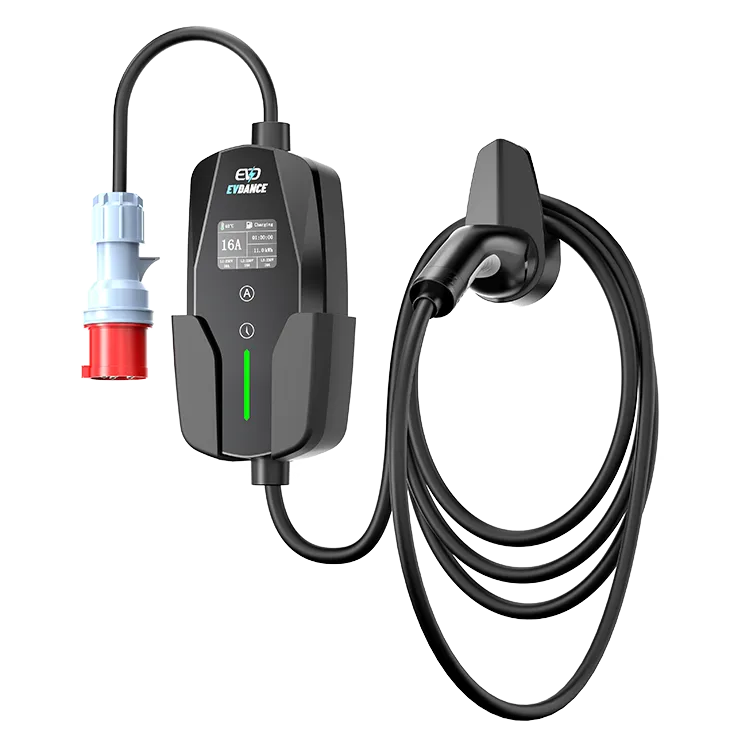
For portable three-phase charging, EVDANCE offers the ACS1605PE, an 11 kW charger with a CEE 5-pin plug, a 7.6 m Type 2 cable and an IP66 rating, and the EV-ACS3205PE, a 22 kW three-phase portable charger with a CEE 32 A plug. Both carry the three-phase wiring in the cable itself, so there is no separate cable to match.
Frequently Asked Questions
Can I use a three-phase cable on a single-phase wallbox?
Yes. The session charges on one phase and the extra conductors are simply unused. There is no harm, just no speed gain.
My car charges at 11 kW. Which cable do I need for a socketed charger?
A three-phase cable rated at least 16 A. A single-phase cable would cut the car back to single-phase power even on a three-phase wallbox.
Are three-phase cables only a European thing?
Three-phase AC charging with a Type 2 cable is the European pattern. North American AC charging is single-phase, so J1772 and NACS cables have no three-phase version.
Related Reading
- Single-Phase vs Three-Phase EV Charging: 7kW, 11kW and 22kW Explained
- CEE Plugs Explained: Choosing 16A or 32A for a Three-Phase Portable EV Charger
- Portable EV Charger Types Explained: 10A, 16A, 32A and Three-Phase Models

