
A used CHAdeMO car is neither a trap nor automatically a bargain. CHAdeMO is a DC-only inlet: it limits public fast charging, and it touches nothing else about the car. Whether it matters is decided by how you actually charge — so the checks are about your home charging, your real routes, and the maker’s support for the exact model, not the connector’s future in the abstract. Run those three checks and the right price usually becomes obvious.
Key Takeaways
- CHAdeMO limits only DC fast charging; the car’s home AC charging is unaffected for its whole life.
- Check your real routes in the station locator, and the maker’s support for the exact model, before you buy.
- No adapter will carry a CHAdeMO car onto CCS — price the car as if the inlet never changes, because it will not.
- The right price depends on your charging pattern: heavy DC users should pay less; home chargers may be buying a bargain.

Check One: Home Charging Carries the Car
Every CHAdeMO car also has a separate AC inlet — J1772 on North American cars, the subject of our J1772 explainer — and that inlet is completely unaffected by anything that happens to public CHAdeMO networks. If your pattern is home charging overnight with occasional destination charging, the DC inlet may be used a handful of times a year, and its shrinking network costs you little. Be honest about the pattern before buying: a car that fits it is easy to live with for years.
Check Two: Map Your Real Routes, Not National Counts
National connector counts will not tell you what you need. What matters is whether the specific stations on the trips you actually drive still list a working CHAdeMO connector. Use the DOE Station Locator with its connector filter, and check:
- Your regular long trips — the two or three routes you drive most, stop by stop.
- Redundancy — a route with one CHAdeMO site is a different risk from a route with three.
- Recent renewals — when a network replaces an ageing unit, the connector mix is decided again; a familiar stop is unconfirmed until checked.
Check Three: Ask the Maker About the Exact Model
| Question for the maker | Why it decides the purchase |
|---|---|
| Parts and software support for this model — how is it being maintained? | Support tails end before connectors do; a car its maker still supports ages better than the network question suggests |
| Is there any approved adapter path to other DC networks? | There is not — CHAdeMO and CCS negotiate in different protocols, so no adapter crosses between them; a seller promising one is telling you something false |
| New cars with this inlet — is the maker still fitting it, and where? | Each maker’s published decision for its current range tells you which way its own support will lean |
The Price Should Carry the Limitation
The same car is worth different amounts to different buyers, and the CHAdeMO inlet is exactly why. If you fast-charge on public DC every week, a thinning network is a real, growing cost — the price should reflect it. If you charge at home and rarely travel, you are buying a limitation you will barely use, and a lower price for it is a genuine bargain. What neither buyer should pay for is the idea that the problem can be adapted away later: as our adapter safety guide sets out, adapters work inside a communication family, and CHAdeMO has no DC partner family.
Equipping the Car at Home
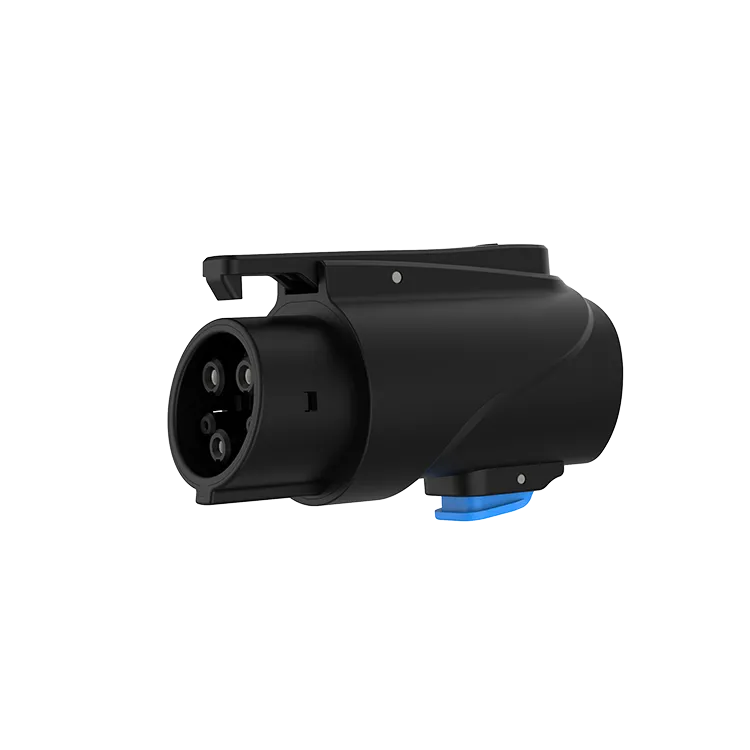
Home equipment follows the car’s AC inlet, not its DC one. A J1772 portable such as the EV-AC04001U 40A J1772 portable charger (9.6 kW, NEMA 14-50P, IP66) covers home and travel charging, and at NACS AC destination chargers the JT02 NACS-to-J1772 adapter (AC, up to 80 A, IP65) works on the AC side, where signalling is common and simple. EVDANCE makes no CHAdeMO product — the DC inlet is served by the public network you checked in step two, which is why that check comes before the purchase.
Frequently Asked Questions
Will CHAdeMO disappear before a used car wears out?
No switch-off date has been announced by anyone. Availability thins gradually as chargers reach replacement age — so the check is your routes today, not a forecast.
Can I adapt a CHAdeMO car to CCS later?
No. The two systems run their sessions in different communication protocols, and no maker sells or approves an adapter between them. Plan on the car keeping the inlet it was built with.
Is a CHAdeMO car worse to charge at home?
No. Home charging uses the separate AC inlet and works exactly as it does on any other EV — overnight, on your own supply, for the life of the car.
Related Reading
- What Is J1772? The North American EV Plug Explained
- Are EV Charging Adapters Safe?
- Does J1772 Work With CCS? CCS Connectors Explained
- Are EV Chargers Universal?

