
Yes. A charging cable is a sealed system built to work outdoors, and rain falling on the cable itself — before, during or after a session — is normal use for equipment with a stated outdoor rating. What changes the answer is not the wet cable run but two other things: a connector left in standing water, and damage to the sheath.
Key Takeaways
- Rain on the cable run is normal use; the cable is a sealed tube along its length.
- The connector ends are the openings — keep them docked, capped and out of standing water.
- A cut or cracked sheath ends the cable’s wet-weather story: stop and route it to the maker.
- The equipment’s stated IP rating and its manual govern outdoor use.
The Cable Run Itself
Along its length, a charging cable has no openings. The conductors sit inside insulation inside a continuous outer sheath, and that sheath is what the weather meets. Rain running down it, spray from the road and a wet driveway underneath it are all on the outside of a sealed tube.
The formal version of that statement is the IP rating on the equipment the cable belongs to. The rating is the maker’s published figure for the whole unit, and it — not a general rule — is what governs how a given charger and cable may be used outdoors. Our explainer on whether portable EV chargers are waterproof sets out what the ratings do and do not promise. Note what no rating promises: that the equipment works under water. Rain is one thing; immersion is another, and no home charging cable is rated for it.

Three Wet Situations, Three Answers
| Situation | Verdict | Why |
|---|---|---|
| Rain on the cable during a session | Normal use | The sheath is sealed along its length, and rated outdoor equipment is built for exactly this |
| Connector lying in standing water between sessions | Avoid it — dock or move the connector | The connector is an opening, not a sealed tube; hours in a puddle is not the exposure the rating describes |
| Sheath cut, cracked or crushed | Stop using the cable | Damage gives water a path past the sealing; the maker, or a licensed electrician for fixed wiring, decides what happens next |
The middle row surprises people. A mated connector during a session and a connector capped in its holster are both closed states. A connector dropped where driveway water pools is neither — and it can sit there all night. Park the cable so its ends stay out of the low spots.
Habits That Keep Wet Weather Boring
- Route around the puddle, not through it. Where the driveway dips, carry the cable across the higher ground; the run does not care, but its ends should not rest in the water.
- Dock or cap the connector between sessions. A holster or the maker’s cap keeps the opening closed and off wet ground — the routine covered in our guide to leaving a charging cable outside.
- Dry the connector before storage. A wipe and a few minutes of air before the cable is coiled away keeps moisture out of the contacts.
- Inspect the sheath as you coil. Cuts and cracks are easy to spot while the cable is in your hands, and they are the one finding that turns wet weather into a stop sign.
Rated Cables From EVDANCE
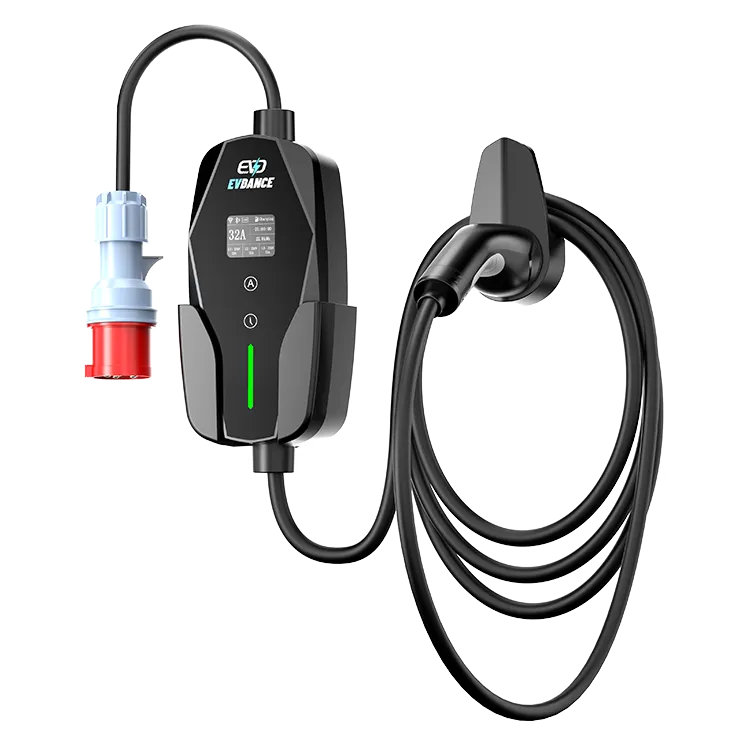
EVDANCE states the rating for each unit on its product page: the EV-ACS3205PE 22 kW three-phase portable charger is rated IP66, as is the EV-ACS3210E 32 A Type 2 portable charger with its 7.5 m cable. Treat that figure as the maker’s statement about the complete unit in normal outdoor use, and follow the manual that comes with it — if a cable’s sheath is damaged, the rating no longer describes it.
Frequently Asked Questions
Can I charge while rain is running down the cable?
Yes. That is ordinary outdoor use for rated equipment, and the session itself is covered in our guide to charging an electric car in the rain. The cable being wet does not reduce charging power or change the session.
My connector was dropped in a puddle. What now?
If a session is running, end it. Let the connector dry fully, inspect it for grit or damage, and only reuse it once it is dry and clean. If water has got inside the connector housing, or the sheath is damaged, contact the manufacturer before using it again.
Does a wet cable charge more slowly or lose power?
No. Wetness on the outside of the sheath has no effect on the session; power is set by the charger, the car and the cable’s rating class. The wet-weather risks are about water reaching places it should not — connector openings and damaged sheaths — not about efficiency.
Related Reading
- Can You Charge an Electric Car in the Rain?
- Are Portable EV Chargers Waterproof? IP Ratings Explained for Drivers
- Can You Leave an EV Charging Cable Outside?
- IP Ratings for EV Chargers: IP54, IP65 and IP66 Compared

