
Often, yes — many universities have chargers in their car parks, but who may use them is set by the university, not by the charging network. A campus charger might be limited to permit holders, need a staff or student account, or sit in a car park your parking permit does not cover. Check the rules before you count on one for a daily commute.
Key Takeaways
- Campus chargers exist for defined groups — the university’s permit rules decide whether you are in one.
- Check permit coverage, how a session starts, and time limits before relying on a campus charger.
- Long campus days suit Level 2 charging, which adds roughly 10–20 miles of range per hour.
- Keep a public charging fallback near campus for full or faulty days.
Who Campus Chargers Are Usually For
Campuses are workplaces, homes and public venues at once, and the chargers are usually arranged for one group at a time.
| User | Typical arrangement |
|---|---|
| Students living in halls | Chargers, where they exist, are in residential car parks and tied to a parking permit |
| Commuting students | Day car parks; may need the same account or app as staff, plus a valid parking permit |
| Staff | Often the primary audience, in staff car parks or shared ones |
| Visitors | Visitor car parks sometimes have a unit; many campuses offer visitors none |

Checks to Make Before You Rely on One
- Find the chargers on the university’s parking pages first; our guide to where to find EV charging stations covers the map and app side of the search.
- Confirm your parking permit covers the car park the charger sits in — the right charger in the wrong car park is a parking fine, not a charge.
- Check how a session starts: a public network app, a campus card, or an RFID fob issued by the university.
- Check time limits and whether the bay must be vacated when charging ends.
- Line up a public fallback near campus for the days the campus units are full or out of service — most public units are open to any driver, as our guide to using any charging station explains.
Dwell Time Is on Your Side
Campus days are long, which suits Level 2 charging: it adds roughly 10–20 miles of range per hour, so a car parked through a day of lectures, labs or office hours takes a useful charge without anyone waiting on it. That is the same pattern that makes workplace charging work, and the reason campuses tend to install Level 2 units in car parks rather than rapid chargers. If you live in halls, treat campus charging the way flat-dwellers treat any shared charger: plan around it, and never trail a cable across a path from a window.
For Universities Adding Charging
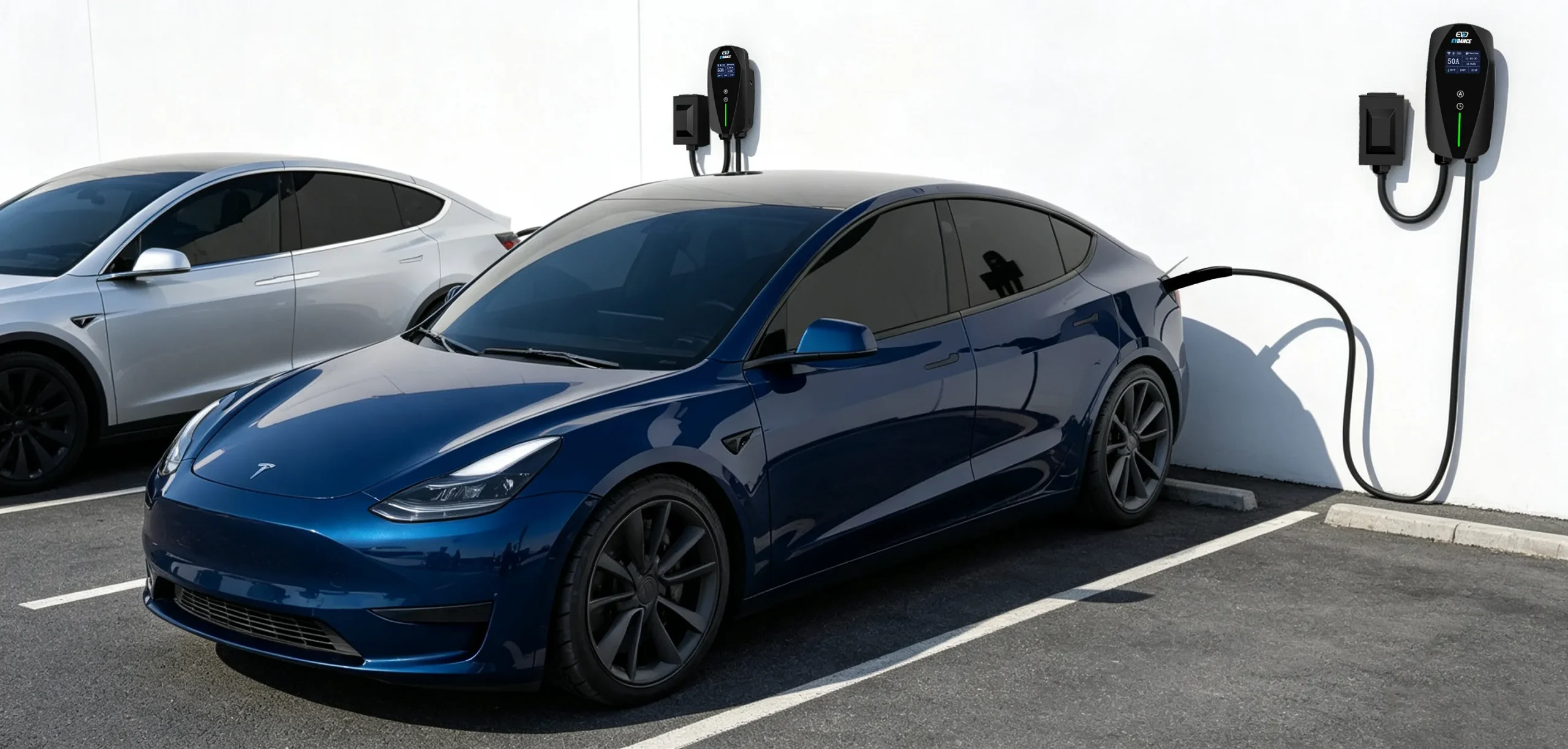
Campuses need access control more than raw speed: the chargers have to serve permit holders and keep everyone else out. The EVDANCE EV-AC03201T charging station supports OCPP 1.6J and RFID/app access, which is how a site limits charging to its own community while keeping records per user. EVDANCE’s commercial charging range covers the wider car-park picture for estates teams planning a rollout.
Frequently Asked Questions
Can visitors charge on a university campus?
Sometimes. Visitor car parks occasionally have a charger, but many campuses restrict theirs to staff, students and permit holders. The university’s visitor parking page is the place that decides it.
Do I need the charging network’s app, or a campus card?
Either is possible. Some campus chargers run on public networks and start from the usual app; others are restricted and start with a campus-issued card or fob. Check before the first day you depend on it.
Can I leave my car plugged in all day?
Only if the car park’s rules allow it. Many campuses set session or stay limits so the chargers turn over; the bay’s signage and the parking terms are what count.
Related Reading
- Where to Find EV Charging Stations: Maps, Apps and Tips
- Can You Use Any EV Charging Station?
- Are EV Charging Stations Open 24/7?
- Do Hotels Have Charging Stations for Electric Cars?

