
Most early EV mistakes are petrol habits that no longer fit: waiting until the gauge is low before “filling up”, treating every charge as a full tank, and braking the way a petrol car taught you. None of them will break the car. Each quietly costs range, time or money until the new habits take over — usually within the first month.
Key Takeaways
- Charge little and often where you park, instead of running low and filling up.
- Use the maker’s daily charge limit; save full charges for trips.
- Let regenerative braking do the slowing by lifting off earlier.
- Read the range display as a forecast, not a fuel gauge.
The Five Habits That Don’t Transfer
| Petrol habit | Why it costs you in an EV | The EV habit instead |
|---|---|---|
| Running low, then filling up | Your routine becomes long stops at public chargers | Charge where you park, little and often |
| Filling to full every time | Ignores the lower daily charge limit most makers recommend | Set the daily limit; charge fully for trips |
| Treating fast chargers as the default | DC stops eat the time home charging would have saved you | Home Level 2 overnight as the routine, DC for journeys |
| Braking late and firmly | Friction brakes throw away energy regeneration could have recovered | Lift off earlier and let regeneration do the slowing |
| Reading the range display like a fuel gauge | The estimate recalculates from recent driving, so it swings and worries you | Watch the percentage, and judge trips by your own history |
Charging Like It’s Petrol
A petrol car is refuelled in occasional big events, so new EV drivers often do the same: run the battery down, then look for a charger. An EV is cheapest and easiest to live with on the opposite rhythm — plugged in where it parks, topped up as a background habit. The second petrol reflex is filling to the brim. Most makers recommend a daily charge limit below full, reserving complete charges for long trips; the reasoning sits in our explainer on whether Level 2 charging shortens battery life. Third is leaning on DC fast charging as a weekly routine. It has a real role — journeys — but as a habit it costs time and money that overnight charging does not, a balance examined in does DC fast charging degrade the battery?
Driving Like It’s Petrol
Petrol driving teaches late, firm braking because braking is free of consequence. In an EV, lifting off early lets regenerative braking recover energy instead of heating the brake discs. The related display trap is the range estimate: unlike a fuel gauge it is a forecast recalculated from your recent driving, weather and speed, so it falls quickly after a motorway run and recovers in town. New drivers who treat it as a tank gauge feel cheated by numbers that were never a promise. The comparison of the charging levels helps calibrate the other early surprise — how different the three charging speeds feel from a five-minute petrol stop.
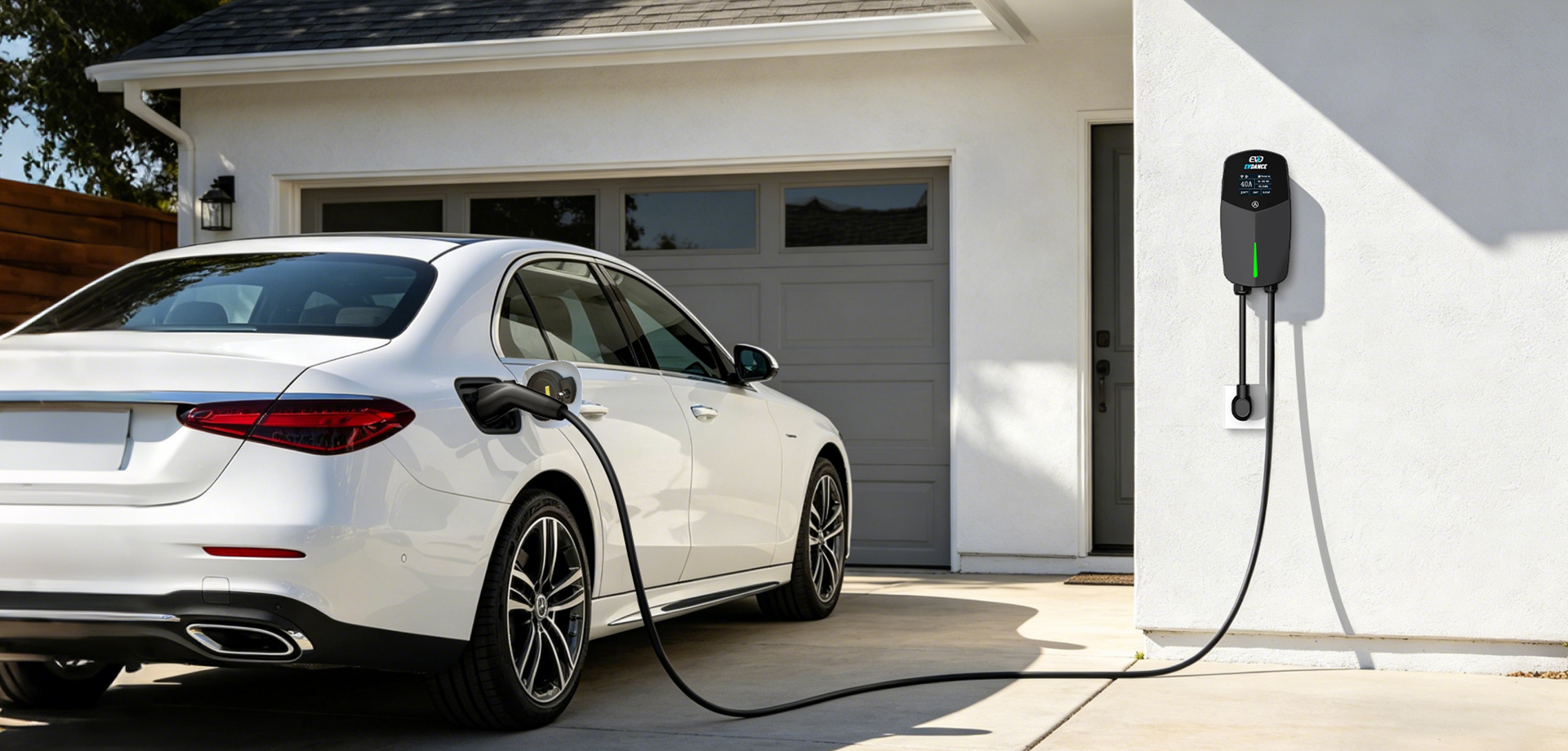
The home setup that makes the new habits effortless is a proper wallbox or portable charger: the EVDANCE EV-ACT5006T 48A Level 2 wall charger (hard-wired or NEMA 14-50P, NACS, IP65/IP66) for a fixed install, or the EV-AC04001U 40A J1772 portable charger (9.6 kW, IP66, 25 ft cable) if you want the unit to move with you.

Frequently Asked Questions
Is it bad to charge an EV to 100% every night?
For daily driving, most makers recommend a charge limit below full, with complete charges reserved for trips. Set the limit your manual suggests rather than defaulting to full.
Should new EV drivers avoid DC fast charging?
No — it is the right tool for long journeys. The mistake is using it as the weekly routine when slower home charging would have covered the same miles overnight.
What is the first habit to change?
Plug in where you park. Once charging happens at home as a background habit, the low-battery errands, the public-charging detours and most range anxiety disappear together.
Related Reading
- Does DC Fast Charging Degrade the Battery?
- Does Level 2 Charging Shorten Battery Life?
- Level 1 vs Level 2 vs DC Fast Charging: A Practical Comparison
- Are Home EV Chargers Safe?

