
A 60 kWh battery takes about 7 to 7.5 hours to charge from empty to full on the EV-AC04001U. The unit delivers up to 9.6 kW at 40 A, so the plain division gives about 6.25 hours; losses of roughly a tenth and the slower top end stretch the real session. The 10–80% top-up most drivers actually run takes about 5 hours.
Key Takeaways
- A 60 kWh battery charges empty to full in about 7 to 7.5 hours at 9.6 kW, losses and taper included.
- The everyday 10–80% session takes about 5 hours; 20–80% takes about 4 to 4.5.
- “Full” is the slow case: the top of the battery tapers, so the last fifth costs disproportionate time.
- If your car accepts less than 9.6 kW of AC power, the car sets the time — check its specification first.
One Battery, One Charger: The Times by Start and Finish
Most charging-time tables vary the battery size. This one fixes the battery at 60 kWh and the charger at 9.6 kW, and varies the session instead. Figures are worked examples: energy added divided by 9.6 kW, with about 10% allowed for conversion losses.
| Session | Energy added | Time on the EV-AC04001U |
|---|---|---|
| Empty to 100% | 60 kWh | About 7–7.5 hours |
| 10% to 100% | 54 kWh | About 6–6.5 hours |
| 10% to 80% | 42 kWh | About 5 hours |
| 20% to 80% | 36 kWh | About 4–4.5 hours |
| Any single hour plugged in | — | About 8.5 kWh stored |
For other battery sizes and power levels, our general guide to charging time at 7, 11 and 22 kW works the same arithmetic.
Why “Full” Runs Longer Than the Division Suggests
Dividing 60 by 9.6 assumes full power from the first minute to the last. Two things break that assumption on a charge to 100%:
- The top end tapers. Every EV slows its charging rate as the battery nears full, which is why charging slows down after 80%. The last fifth of a 60 kWh pack takes far longer than the same energy added in the middle of the pack.
- Not all of the nameplate is usable. Work from the usable capacity in your car’s specification when you plan a full charge; the energy your car reports adding is the honest input to the sum.
This is also why the empty-to-full row is the only one that can challenge an overnight window. Every partial session in the table finishes with hours to spare, which is the pattern behind leaving an EV charging overnight.
When the Car, Not the Charger, Sets the Time
With AC charging, the car’s onboard charger does the conversion and sets the ceiling. If your car accepts less than 9.6 kW of AC power, it — not the portable unit — decides the clock. As a labelled example, a car limited to 7.4 kW would need about 9 hours for the same empty-to-full charge, whatever the charger offers. A cold battery also starts more slowly until it warms. Check your car’s AC charging specification next to its battery size; our explainer on how many kWh it takes to charge an EV covers the energy side of the same calculation.

The EV-AC04001U in This Sum
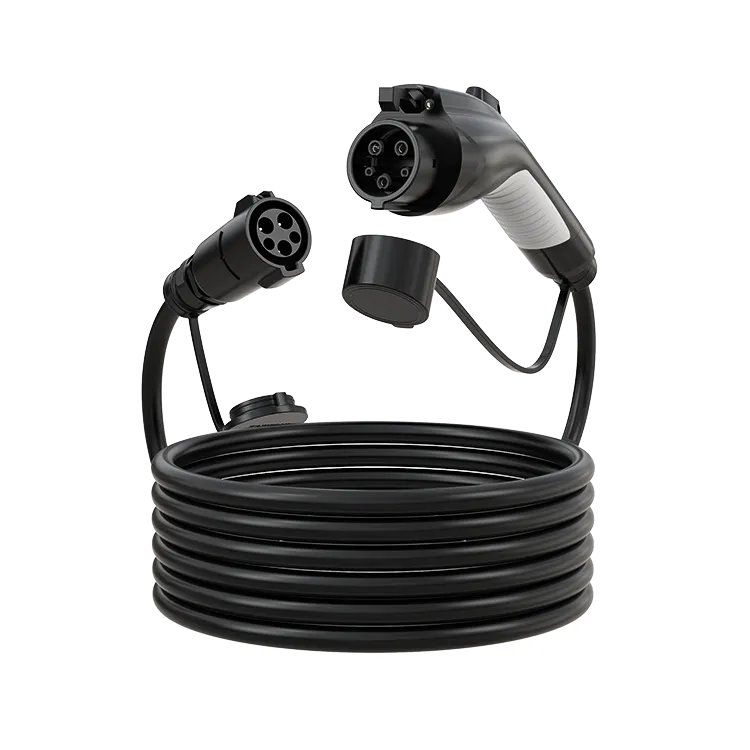
The EV-AC04001U is a 40 A J1772 portable charger: 9.6 kW at 240 V, a NEMA 14-50P plug for a 50 A circuit (the NEC continuous-load rule pairs a 40 A charger with a 50 A breaker), a 25 ft cable, and an IP66 housing for outdoor use. It sits in the U.S. DOT’s Level 2 band of 7–19 kW. The times above assume a sound outlet and a car that accepts the full rate.
Frequently Asked Questions
Why does my car estimate 8 hours or more when I plug in?
The car’s estimate builds in the taper and its own acceptance limit, and it is usually cautious at the start of a session. If your car accepts the full 9.6 kW, expect the session to land near the table; if it accepts less, the car’s figure is the honest one.
Is 9.6 kW fast enough for a 60 kWh car?
For overnight charging, yes. A full charge fits a long night, and the partial top-ups that make up daily use finish in 4 to 5 hours. It becomes a constraint only if you regularly arrive near empty and need a full battery again within a few hours.
Would a 48 A wall charger cut the time much?
Somewhat, and only if your car accepts 11.5 kW. By the same arithmetic, a full 60 kWh charge falls to about 6 to 6.5 hours — roughly an hour saved on a full charge, and proportionally less on a top-up.
Related Reading
- How Long Does It Take to Charge an EV at 7 kW, 11 kW and 22 kW?
- Why Does EV Charging Slow Down After 80%?
- How Many kWh Does It Take to Charge an EV?
- Can You Leave an EV Charging Overnight?

