
For the plug-in hybrid itself, mostly yes — and it does no harm at all. A plug-in hybrid charges at the rate its own onboard charger accepts — a limit set by the car, not the charger. Plug a PHEV into the 40 A EV-AC04001U and it draws up to its own cap, no more. So whether 40 A is wasted depends less on today’s hybrid than on what else your household will plug into the same unit in the next few years.
Key Takeaways
- A plug-in hybrid charges at its onboard charger’s rate — the car caps the session, whatever the charger offers.
- Oversizing does no harm: no forced current, no battery strain, no higher cost per charge.
- 40 A earns its place when a BEV is coming, a second car shares the unit, or between-trip top-ups matter.
- For a long-term hybrid-only household on a small circuit, buy to the car and the circuit you have.
The Car Sets the Speed, Not the Charger
Every AC charging session runs at the lowest of two numbers: what the charger can supply and what the car’s onboard charger can accept. Plug-in hybrids carry small onboard chargers because their batteries are small, so on any generously sized charger the car is the bottleneck by design. Read your car’s acceptance figure from its spec sheet or manual — it is the only number that predicts your session speed. The examples below are illustrations, not figures for any particular model:
| If the car’s onboard charger accepts (example) | This 40 A unit delivers | What that means |
|---|---|---|
| About 3.6 kW | About 3.6 kW | The session runs at the car’s cap. A 14 kWh example pack fills in roughly four hours at that rate, before losses — far quicker than a wall outlet; a bigger charger adds nothing |
| About 7.4 kW | About 7.4 kW | Still car-limited; the same pack fills in roughly half the time |
| 9.6 kW or more (a battery-electric car) | The full 40 A / 9.6 kW | Only a car that accepts it ever uses what this charger offers |
Note what the table does not show: a downside. An oversized charger does not push current into a car that cannot take it, strain the battery, or cost more per charge.
When 40 A Is Not Overkill
- A battery-electric car is plausibly next. Charger and 50 A circuit are bought once — sized for the hybrid alone, both would be bought again when the BEV arrives.
- The household runs two plug-ins. The hybrid charges at its cap on some nights; a second car with a bigger onboard charger uses the full 40 A on others. One unit serves both.
- You recharge between trips. Even capped by the car, Level 2 at the car’s limit refills a small pack in a few hours instead of most of a day on a wall outlet — the U.S. DOT puts Level 2 at roughly 10–20 miles of range per hour against Level 1’s 2–5. That is the difference the hybrid actually feels.
When a Smaller Setup Honestly Fits
- Hybrid-only, overnight-only, for the long term. If this car is the plan for years and it charges while you sleep, even its capped rate finishes long before morning. Our guide to whether a plug-in hybrid needs an EV charger covers when the supplied cord is enough.
- The existing circuit is small and staying that way. This is a fixed-output unit for a 50 A circuit. If yours is smaller and an upgrade makes no sense for this car, a charger with adjustable current can be set down to it instead — our explainer on how many amps an EV charger needs covers the matching.
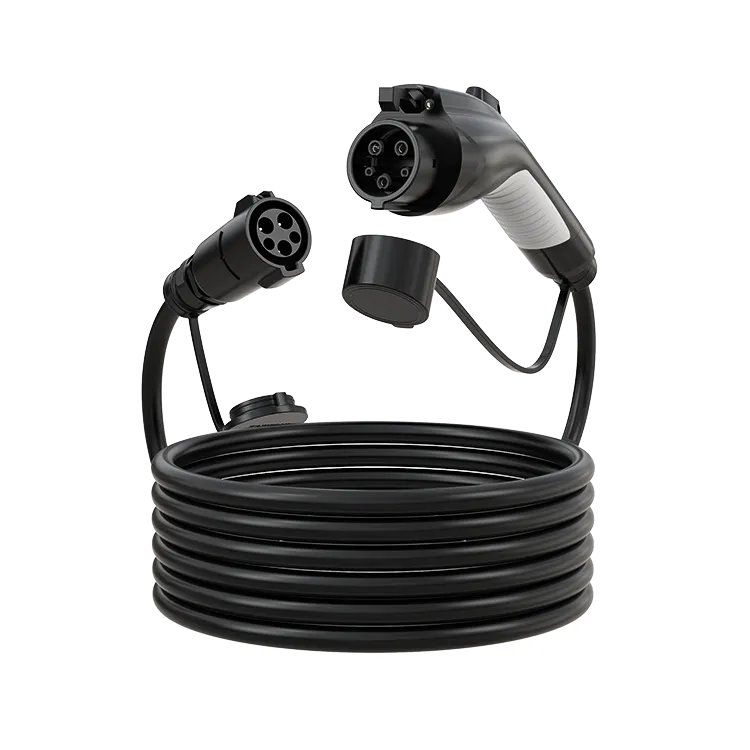
The EVDANCE EV-AC04001U is a 40 A J1772 portable charger: 9.6 kW, NEMA 14-50P, IP66, a 25 ft cable, EVDANCE 3-year standard warranty. Bought for a plug-in hybrid, it is best understood as a household charger the hybrid borrows at the hybrid’s own pace — sized for the cars around it.

Frequently Asked Questions
Will a 40 A charger damage a plug-in hybrid’s battery?
No. The car draws only what its onboard charger is built to accept; the charger cannot push more into it. Oversizing is a value-for-money question, never a battery-safety one.
Will this charge my plug-in hybrid faster than a small charger?
Only up to your car’s cap. If your hybrid accepts more than a small charger offers, the session shortens to the car’s limit and stops there. If the cap is below the small charger’s output too, both charge at exactly the same speed.
Should I buy for the next car instead of this one?
If a battery-electric car is realistic within the charger’s life, yes — the 50 A circuit is the part that is expensive to redo. If it is not, buy for the car and circuit you have.
Related Reading
- Do I Need an EV Charger for a Plug-In Hybrid?
- How Many Amps Does an EV Charger Need?
- Do Portable EV Chargers Work? How Speed Depends on the Outlet

