
Yes — the EV-ACS3210T’s IP66 rating travels with it. The housing is dust-tight and sealed against powerful water jets, so rain at a campsite or on a relative’s driveway is inside the promise. What does not travel is your home setup: an outlet you do not own, ground you did not choose, and no holster waiting for the connector. In real weather the rating covers the box; the stop decides the rest.
Key Takeaways
- IP66 travels with the unit: dust-tight, sealed against powerful water jets, at every stop.
- The rating covers the closed housing — not the borrowed outlet’s joint, immersion in a puddle, or an uncapped connector.
- On the road, weather care is three checks: the outlet’s condition, a raised resting place, a parking spot for the connector.
- Dry the connector before capping it for the drive; do not seal a wet connector in a closed bag.

The Rating Travels; the Setup Does Not
An IP code tests two things — solids and water, one digit each — and on this unit both digits are 6: no dust ingress that could affect operation, and powerful water jets from any direction kept out. That statement is about the sealed housing, and it holds at a lakeside pitch as in your own garage. What changes away from home is everything the test never included: the outlet, the surface under the unit, and where the connector spends the night.
Our comparison of IP ratings for EV chargers sets the digits against the whole scale, and our explainer on whether portable EV chargers are waterproof covers the same boundaries for portables generally.
Real Weather at Someone Else’s Outlet
| Situation at the stop | What IP66 does | Your move |
|---|---|---|
| Rain starts mid-session | The housing and the seated connector are sealed for it | Nothing — leave the session running; charging in the rain is normal use |
| An outdoor outlet with no weather cover | The rating covers the charger, not the wall joint behind it | Keep the joint off the ground and out of standing water; a cracked or scorched outlet means skip the stop |
| The only resting place is gravel or wet grass | Jets are covered; sitting in water is immersion, which is not | Rest the box on its coiled cable or any raised dry spot, never in a puddle |
| A dry, dusty site | The first 6 means dust-tight | Shake or wipe the connector before seating it, so grit stays off the contacts |
| Packing up while everything is still wet | The rating says nothing about storage | Wipe the connector and let it air briefly before capping; do not seal a wet connector in a closed bag |
Three Checks Before You Plug In Somewhere New
- Read the outlet with your eyes only. Cracks, scorch marks, a loose fit or heat damage are stop signs, not invitations to test. If it looks wrong, charge somewhere else.
- Pick the unit’s resting place before you start. Off the ground, out of the puddle line and the tyre track — decided while you can still move the car.
- Decide where the connector parks. It will be unplugged at least once per stop; capped or docked against the car beats lying open on wet ground, collecting the site.
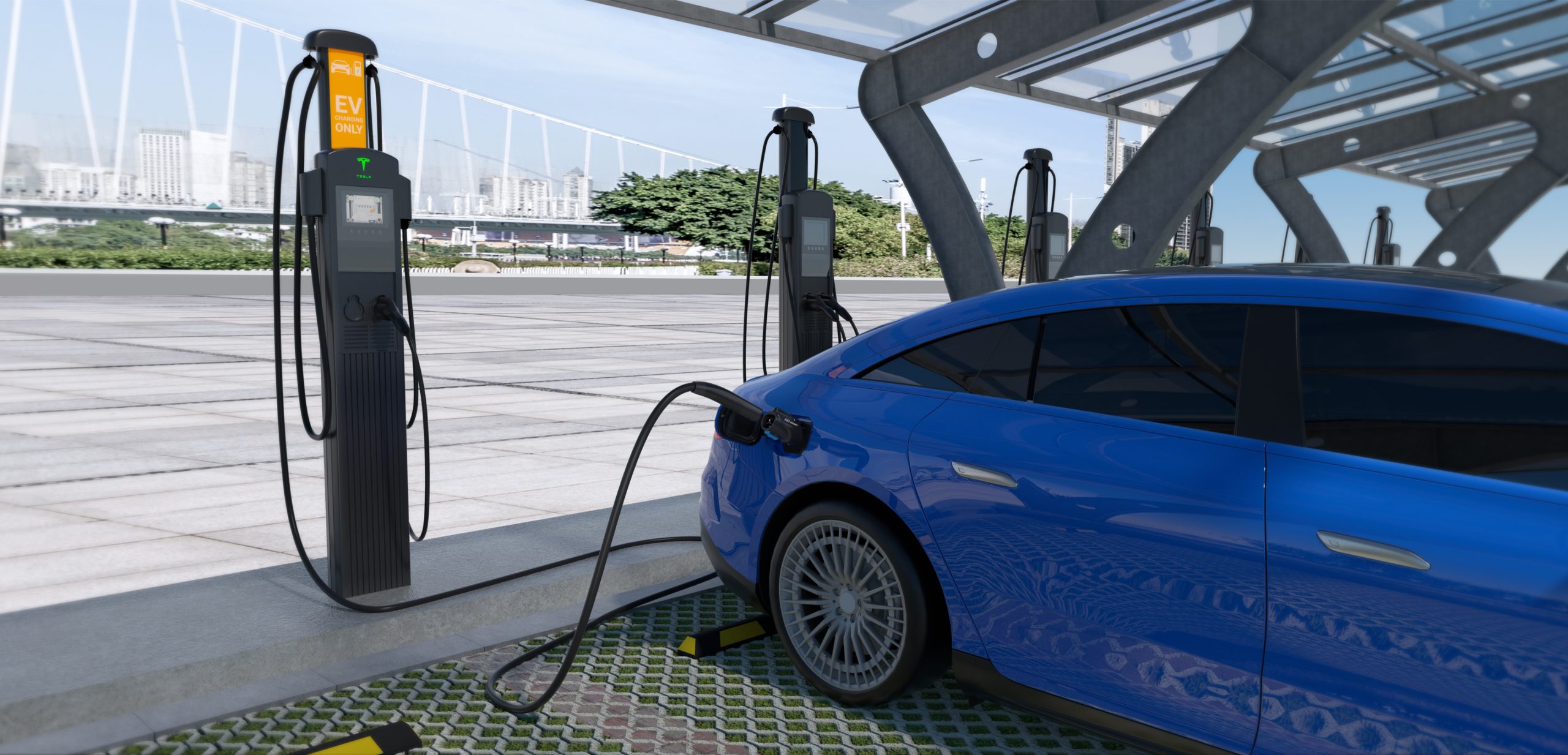
The EV-ACS3210T on the Road
The EVDANCE EV-ACS3210T is a 32 A NACS portable charger: about 7.7 kW on a NEMA 14-50P plug, current adjustable in six steps (10, 12, 16, 20, 24 and 32 A), a 1.77-inch screen, an IP66 housing and a 3-year standard warranty. On the road the steps matter as much as the seal: the step you choose has to fit the circuit behind an unfamiliar outlet, so starting low at a stop you do not know is the conservative habit, and the screen confirms the step before the session starts.
Frequently Asked Questions
Can I charge with the EV-ACS3210T in the rain at a campsite?
Yes. The housing is rated for rain and water jets, and the seated connection is made for wet use. Mind the two things the rating does not reach: the plug joint, and where the box rests — off the ground, out of standing water.
The outlet at my stop has no weather cover and looks weather-beaten. Should I still charge?
A missing cover is a joint-care problem you can manage for one session by keeping the joint dry and raised. Damage is different: cracking, scorch marks or a loose fit are reasons to skip that outlet entirely.
Can I put the charger back in the car while it is still wet?
The housing itself travels wet without harm. The connector deserves a minute first: shake off the water, wipe it, let it air briefly, then cap it. Sealing a wet connector in a closed bag keeps moisture against the contacts for the whole drive.
Related Reading
- Can You Charge an Electric Car in the Rain?
- Are Portable EV Chargers Waterproof? IP Ratings Explained for Drivers
- IP Ratings for EV Chargers: IP54, IP65 and IP66 Compared
- Can a Home EV Charger Be Installed Outside?

