
On the clock, gasoline wins: a fill-up takes a few minutes, and no EV charges that fast. In your own time, charging usually wins, because almost all of it happens while the car is parked anyway — overnight at home, or during the working day. The only charging that asks you to wait is DC fast charging on a trip, and the U.S. Department of Transportation puts that at 180 to 240 miles of range added per hour.
Key Takeaways
- Gas fills faster on the clock; charging usually costs less of your own time.
- Home Level 2 adds 10 to 20 miles of range per hour while you sleep — attended time is seconds.
- DC fast charging is the one real wait: 180 to 240 miles per hour, in stops of roughly 20 to 45 minutes.
- Without home charging, the comparison tightens — count your likely routine, not the brochure numbers.

Two Different Kinds of Time
A gas stop is all attended time: you drive to the station, wait for a pump, stand with the car while it fills, and pay. Charging splits the two clocks apart. The plugged-in clock can run for hours, but the attended clock is the few seconds it takes to plug in when you park and unplug when you leave. Once the car charges where it would be parked anyway, the long clock stops costing you anything. So compare attended minutes against attended minutes, not pump minutes against cable hours.
| Way of adding range | Clock time | Time it asks of you |
|---|---|---|
| Filling up with gasoline | A few minutes at the pump, plus the trip to the station | All of it — you go there and stay there |
| Level 1 at home | About 1 kW — 2 to 5 miles of range per hour | Seconds to plug in and unplug |
| Level 2 at home | 7–19 kW — 10 to 20 miles of range per hour | Seconds — the car fills while you sleep |
| Public Level 2 while parked | Same 7–19 kW band | None extra, if the car was parking there anyway |
| DC fast charging | 50–350 kW — 180 to 240 miles of range per hour | A real stop: roughly 20 to 45 minutes for 10% to 80% on many modern cars |
The ranges in the middle rows are the U.S. DOT’s typical figures for each charger type; how fast a DC fast charger is in practice also depends on your car’s limit, battery temperature and charge level.
A Week of Driving, Counted Honestly
Take a labelled example: a driver covering about 250 miles in a week. In a gasoline car, that is roughly one attended stop — drive, fill, pay — repeated every week of the year. In an EV charged at home, those 250 miles need about 12 to 25 plugged-in hours at Level 2’s 10 to 20 miles per hour, but they are spread across five or six nights when the car was parked regardless. The attended total is a handful of plug-ins and unplugs. The week where charging genuinely takes your time is the road-trip week, when DC stops replace fuel stops — and even there, the comparison of Level 1, Level 2 and DC fast charging shows the stop buys range at 180 to 240 miles per hour, so most drivers pair it with a meal or a break they were taking anyway.
Chargers That Give the Time Back
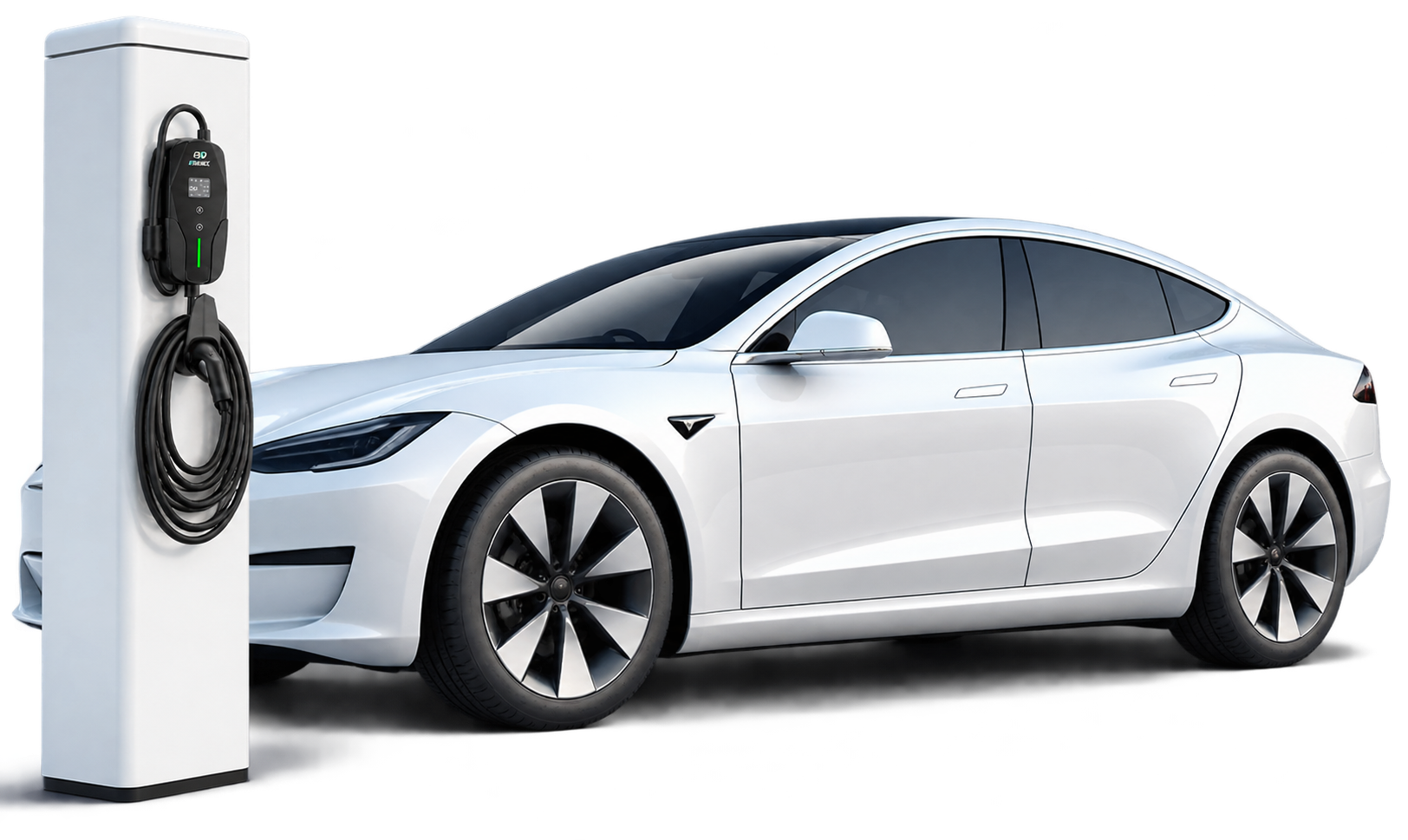
The attended-minutes advantage only exists if the car is reliably full each morning, which is a home-equipment question. A wall charger such as the EVDANCE EV-ACT5006T 48A Level 2 wall charger refills a typical day’s driving in the first part of the night. Where no fixed install is possible, the EV-ACS4005T 40A NACS portable charger delivers 9.6 kW from a NEMA 14-50 outlet and travels with the car. Both are in our residential EV charging range.
Frequently Asked Questions
So is EV charging slower than filling up with gas?
On the clock, yes — nothing plugs in for five minutes and leaves full. In time you personally spend, home charging is usually faster, because it asks for seconds of plugging instead of a weekly attended stop.
How long will I actually wait on a road trip?
Plan around the DC fast-charging row: many modern cars take roughly 20 to 45 minutes to go from about 10% to 80%. Charging beyond 80% slows sharply, so shorter, earlier stops usually beat one long one.
What if I cannot charge at home?
Then the maths changes: public Level 2 while the car is parked at work or shopping still asks almost nothing of you, but DC fast charging becomes your weekly attended stop instead of an occasional trip stop. Weigh that honestly before you buy.
Related Reading
- How Fast Is a DC Fast Charger?
- Level 1 vs Level 2 vs DC Fast Charging: A Practical Comparison
- How Long Does It Take to Charge an EV at 7 kW, 11 kW and 22 kW?
- How Much Does It Cost to Charge an Electric Car at Home?

