
Matching a charger to a plug-in hybrid is a two-number job: the car’s acceptance sets the speed, and the battery’s small size sets the session length. EVDANCE’s stepped portables can be set at or just above the car’s acceptance, while a fixed 40 A unit runs at the car’s lower rate.
Key Takeaways
- The car sets the speed and the small battery sets the session length — match the charger to the car’s acceptance figure.
- Stepped portables set at or just above the acceptance; a fixed 40 A unit runs at the car’s rate and buys household headroom instead.
- Connector first, current second: NACS, J1772 and Type 2 hybrids each have their own EVDANCE portable.
- Even Level 1-class power refills a small pack overnight — Level 2 for a hybrid is a convenience decision.
And the honest baseline: even Level 1-class power refills a small hybrid pack overnight, so this choice is about convenience and fit, not necessity.
The Two Numbers That Decide the Match
Plug-in hybrids carry small batteries, and their onboard chargers are sized to match — as a class, their AC acceptance is modest next to a battery-electric car’s. The session always runs at the lower of what the charger offers and what the car accepts, so the charger’s job is to offer the car’s figure without waste. Find your car’s acceptance in its specification; our guide to how many amps an EV charger needs covers the general logic, and whether a hybrid needs a dedicated charger at all is answered in our EV charger for plug-in hybrids guide.

| If your hybrid accepts (example class) | EV-ACS3210T — NACS, six steps | EV-ACS4005T — NACS, four steps | EV-ACS3210E — Type 2, six steps | What the session does |
|---|---|---|---|---|
| About 3.7 kW class | 16 A step | 16 A step | 16 A step | Runs at the car’s cap |
| About 5.5 kW class | 24 A step | 24 A step | 24 A step | Runs at the car’s cap |
| About 7.4 kW class | 32 A step | 32 A step | 32 A step | The top step matches the car |
| Above that class | Top step | 40 A step | Top step | Uncommon among hybrids — headroom for a future car |
Read the table as offers, not forces: a step above the car’s acceptance changes nothing, because the car draws only its cap. Setting near the cap fits the circuit and household — it is not about protecting the battery.
The Fixed-Unit Case, and the Time Arithmetic
The EV-AC04001U makes the opposite trade: a fixed 40 A, 9.6 kW output with no steps. On a hybrid it runs at the car’s rate and does no harm — what it buys is not speed for this car, but a unit already sized for a bigger car later. The time side is labelled arithmetic: an example 10 kWh usable pack — chosen for the arithmetic, not a figure for any model — at a 3.7 kW acceptance refills from empty in about 3 hours, allowing roughly 10% for losses. At Level 1’s roughly 1 kW (U.S. DOT), the same pack is an overnight charge. That gap is what Level 2 buys a hybrid: between-trip turnarounds, not survival.
The Connector Decides Before the Current Does
Matching order matters: connector first, current second. A NACS-port hybrid takes the NACS portables; a J1772-port hybrid takes the J1772 portable; a Type 2-market hybrid takes the Type 2 portable. No current setting fixes a connector mismatch. How the families divide is set out in our comparison of Type 2, J1772 and NACS connectors.
The EVDANCE Matches, by Hybrid
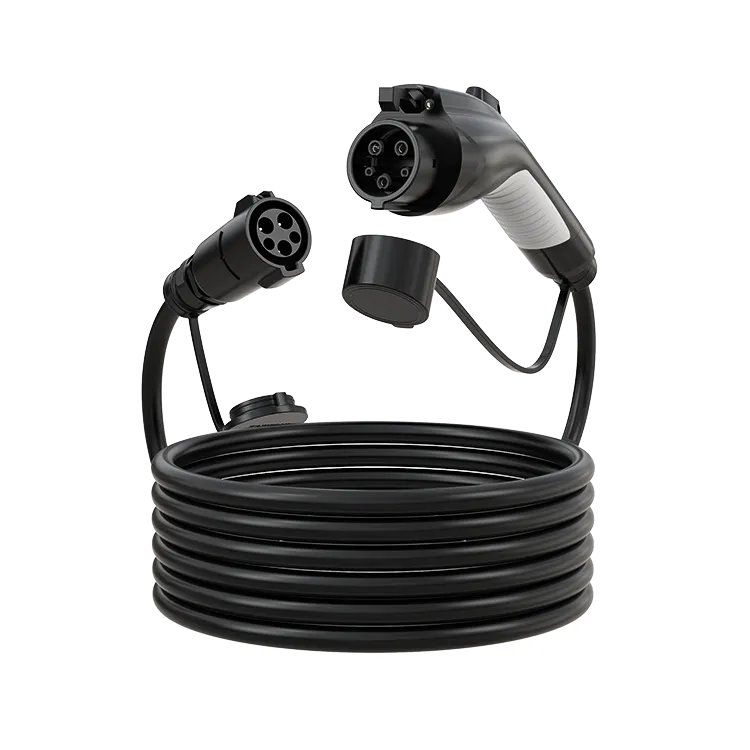
For a NACS hybrid, the EV-ACS3210T (32 A, about 7.7 kW, six steps) and the EV-ACS4005T (40 A, 9.6 kW, four steps) are the stepped matches. For a J1772 hybrid, the EV-AC04001U above is the fixed-output option. For a Type 2 hybrid, the EV-ACS3210E (32 A, about 7 kW, six steps, app monitoring) does the same job in the other connector world. All four are on the products page.
Frequently Asked Questions
Why doesn’t a bigger charger speed up my hybrid?
Because AC charging runs through the car’s onboard charger, and its acceptance rating is the ceiling. A charger can offer more than the ceiling; it cannot raise it. The session speed is the car’s number.
Which setting should I use on a stepped charger?
The step at or just above your car’s stated acceptance — and never above what the circuit supports. Charging is a continuous load, so the breaker is sized at 125% of the charging current; a licensed electrician confirms the circuit side.
Do I need Level 2 at all for a plug-in hybrid?
Not for survival: the example above shows even a 1 kW-class supply refilling a small pack overnight. Level 2 earns its place when the car leaves and returns within the day, or one unit serves several cars in turn.
Related Reading
- Do I Need an EV Charger for a Plug-In Hybrid?
- How Many Amps Does an EV Charger Need?
- Type 2 vs J1772 vs NACS: Which EV Charger Connector Does Your Market Need?

