
Rural properties bring three charging questions: how far the parking spot is from the supply, whether the charger will live in an outbuilding, and whether three-phase power is available. In North America, a hard-wired 48 A wallbox or a 40 A portable charger on a 14-50 outlet suits most farmhouses and barns. In Europe, three-phase farms can use 11 kW or 22 kW portable units on CEE outlets, or a 22 kW wallbox. Long cable runs and outbuilding conditions shape the choice more than the charger itself.
Key Takeaways
- Distance and outbuilding conditions shape rural charging.
- Size long runs for voltage drop or mount near the supply.
- Use high-IP chargers and holsters in barns.
- Three-phase farms can use 11 kW or 22 kW portable units.

Matching the Charger to the Property
| Rural situation | Practical approach | EVDANCE options |
|---|---|---|
| Farmhouse with attached garage, North America | Hard-wired Level 2 or 14-50 outlet | EV-ACT5006T, EV-ACS4005T |
| Barn or workshop, North America | Dedicated 50 A circuit with heavy-duty 14-50 | EV-AC04001U (J1772) or EV-ACS4005T (NACS) |
| Farm with three-phase 16 A CEE outlets, Europe | Portable 11 kW | ACS1605PE |
| Farm with three-phase 32 A CEE outlets, Europe | Portable 22 kW | EV-ACS3205PE |
| Fixed yard charging, Europe | Wall-mounted 22 kW | EV-ACT3204PE |
Distance and Voltage Drop
Long runs from the house panel to a barn or the end of a driveway need conductors sized for voltage drop as well as current, plus trenching and approved conduit. Often it is cheaper to mount the charger near the supply and use the charger’s long cable, or to park closer, than to run heavy cable a long way. Read detached garage costs and wire sizing.
Outbuilding Conditions
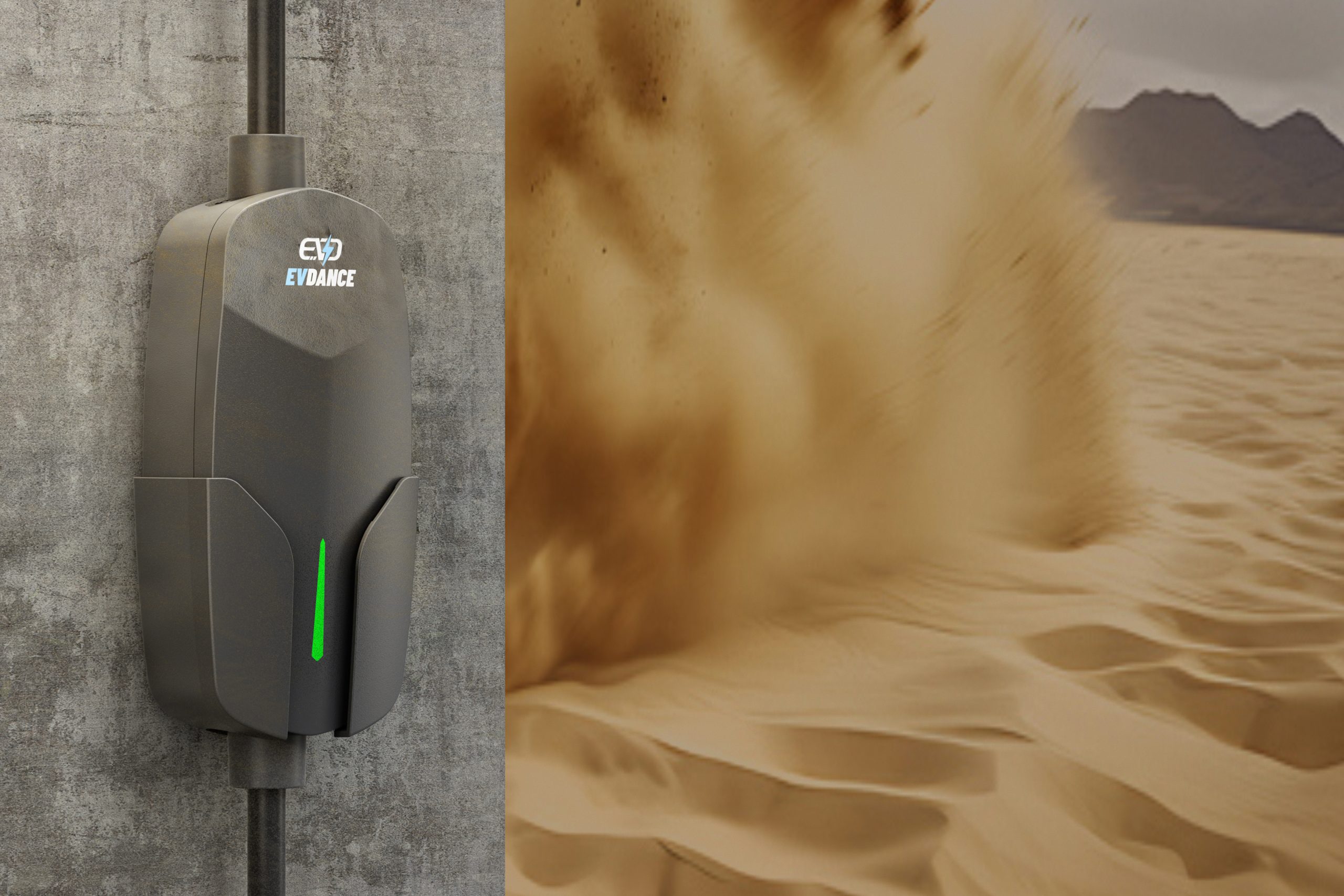
Barns and sheds bring dust, damp, animals and machinery. Choose chargers with high ingress protection, such as IP66 portable units, mount control boxes off the floor, use holsters, and protect conduit from rodents and impact. Keep hay, sawdust and fuel away from the charging spot. An electrician should confirm the outbuilding’s feeder and earthing arrangement.
Three-Phase on European Farms
Three-phase supply makes 11 kW or 22 kW AC charging practical without large current per phase. Portable CEE units can move between yard, workshop and machinery shed. Read what three-phase charging is.
Power Cuts and Backup
Rural supplies may have more outages. Keep the car topped up before storms, and do not connect a charger to generator backup without an electrician’s design. A car with a good state of charge is itself a useful buffer during a short outage, letting you keep driving while the power is restored.
EVDANCE chargers carry a 3-year standard warranty. See EVDANCE residential charging for more.
Frequently Asked Questions
What charger suits a farmhouse with a long driveway?
Mount the charger near the supply and use its long cable, or have an electrician size a longer run for voltage drop.
Can I charge an EV in a barn?
Yes, with a dedicated, protected circuit and a charger suited to dusty, damp conditions.
Which charger suits a European farm with three-phase power?
A portable 11 kW or 22 kW unit on CEE outlets, or a 22 kW wallbox for fixed yard charging.
Related Reading
- How Much Does It Cost to Install an EV Charger in a Detached Garage?
- What Size Wire Do You Need for an EV Charger?
- What Is Three-Phase EV Charging and Does Your Home Have It?
- Do You Need an EV Charger Enclosure? How to Choose an Outdoor Enclosure

