
A charging network is usually financed in one of three shapes: a loan that makes the chargers yours, a lease that trades ownership for periodic payments, or a partner who part-funds the project for a share of its future. The real difference is two answers: who owns the asset, and who loses money when the chargers sit idle. Every deciding figure sits in your own term sheets.
Key Takeaways
- Loans, leases and partner funding differ chiefly in who owns the asset and who carries the utilisation risk.
- Every deciding figure lives in your own term sheets — no published rate or term exists to plan around.
- Lenders price evidence: site rights, session records, real quotes, the operating layer in writing.
- Grants are verified incentives, not finance — and the 30C credit has closed.

Three Ways to Pay for the Same Stations
| Shape | Who owns the chargers | Who carries the utilisation risk | The lines that decide it |
|---|---|---|---|
| Loan (bank or equipment finance) | You, from purchase; the chargers are your asset and your collateral | You — payments are fixed whether sessions come or not | Term and interest basis; the security the lender takes; early-repayment terms |
| Lease or service-style arrangement | The provider’s; you hold a right to use — return, extension or buy-out at term end | Mostly you — payments are due regardless of use, unless the contract ties them to uptime or sessions | Whether installation is inside the scope; maintenance in or out; term-end and early-exit prices |
| Partner-funded (host or network partner) | The partner’s, or shared, exactly as the agreement draws it | Shared as the revenue and cost lines set — silence means the risk sits wherever it falls | Who sets tariffs; how revenue and electricity costs divide; who funds replacements; the term and its end |
Buying outright is the loan without the lender — same ownership and idle risk, no interest line. Real projects often blend shapes: loan for hardware, host-funded site works, a service contract over the top.
What a Lender or Partner Asks to See
Assemble the evidence pack before the meeting, not during it:
- Site rights for at least the finance term — the site agreement or lease clauses covering the chargers, access and removal.
- Utilisation evidence. Existing session records, or for a new site the host’s driver base and dwell pattern — projections are read as claims, records as evidence.
- Real installation quotes. For scale, U.S. DOE-cited figures put public Level 2 at about $3,500 equipment plus $2,500 installation per connector, and DC fast at about $38,000–$90,000 plus $20,000–$60,000 — U.S. context, in our guide to commercial installation costs. Your quotes replace them.
- The operating layer in writing — platform arrangement, maintenance cover, and the hardware’s warranty position (EVDANCE: 3-year standard).
- Insurance and permits as named for that site and market — per-site confirmations.
Grants Are Not the Fourth Loan
Incentives reduce a project’s cost; they are not a finance shape, and belong in a plan only after verification. In the U.S., the checking route is DSIRE, read against each programme’s own current text. The federal 30C credit is the cautionary example: it covered property placed in service from January 1, 2023 to June 30, 2026 — businesses 6%, or 30% with wage and apprenticeship requirements, up to $100,000 per item — and has closed for anything placed in service after that date — no plan written today can include it. How a confirmed incentive is treated in your accounts is for your tax adviser.
The Hardware the Money Buys
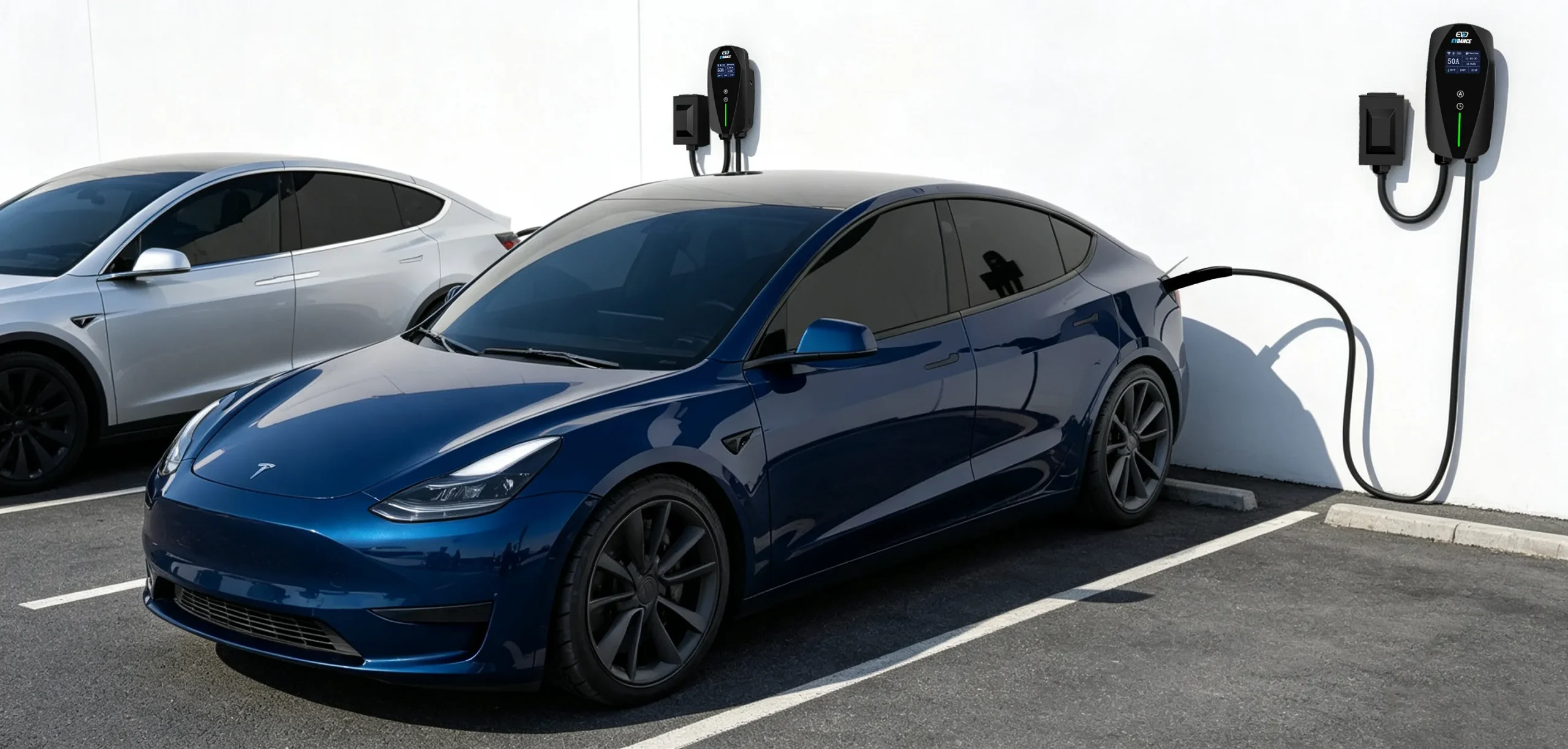
EVDANCE sells hardware; it publishes no financing programme, and any loan or lease is a separate agreement. What a funder prices is the asset itself. A networked AC station such as the EV-AC03201T — two Type 2 connectors sharing up to 43 kW, OCPP 1.6J, RFID, IP54, floor-standing — produces the session records a lender reads as evidence. The EV-RHDC30K-L is compact DC at 22 kW — below the U.S. DOT’s 50–350 kW fast band, not corridor hardware — and should be financed as such. Project discussions run through our commercial charging page or contact us.
Frequently Asked Questions
Can financing cover installation, or only the chargers?
Some loans cover hardware only; others wrap site works in. The term sheet’s scope line decides — check groundworks and supply upgrades, the lines most often left outside.
Is a lease better than a loan for a new network?
Neither by nature. A lease bounds the commitment; a loan builds an asset. Compare totals over the same term and scope, price the exits, and weigh who carries the idle months.
Can grants and loans be combined on one project?
Projects often stack confirmed incentives with finance, but each programme’s conditions govern, and a closed credit cannot be stacked at all. Confirm eligibility before the application relies on it.
Related Reading
- How Much Does It Cost to Install a Commercial EV Charging Station?
- Is an EV Charging Station Business Profitable?
- How to Open an EV Charging Station: Step by Step

