
GFCI and RCD are two regional names for the same protective job: watching for current leaking out of a circuit — through a fault, moisture or a person — and cutting the power before that leakage can hurt anyone. North America says GFCI, Europe and most of the IEC world say RCD. Which one your installation needs follows your wiring system and local code, not the brand of charger you buy.
Key Takeaways
- GFCI (North America) and RCD (Europe and the IEC world) do the same job under different names and rules.
- Both detect leakage current that an ordinary breaker cannot see.
- EV faults can include a DC component, which is why EV-specific RCD types exist.
- The devices are not interchangeable — your wiring system and local code decide which one applies.
The Job Both Devices Do
An ordinary breaker protects wiring: it trips when a circuit draws too much current or short-circuits. A ground-fault device protects people. It compares the current flowing out with the current flowing back, and trips the moment the two stop matching — because the difference is going somewhere it should not, such as through water, damaged insulation or a body. That leakage can be far too small to trip a normal breaker, which is why the two devices sit side by side in a modern installation.
| GFCI | RCD | |
|---|---|---|
| Where the name is used | United States and Canada | United Kingdom, Europe and other IEC-system countries |
| Where it usually lives | A breaker, a receptacle, or built into equipment | A device in the consumer unit, or built into equipment |
| What it watches for | Leakage of AC current to ground | Leakage of AC current — and, on EV types, smooth DC leakage too |
| Who sets the requirement | The National Electrical Code and local amendments | National wiring rules based on IEC standards |
Why EV Charging Adds a DC Wrinkle
A charger is not a simple resistive load. Its electronics can, under fault conditions, leak a smooth DC current as well as AC, and a plain AC-only device may not respond to that DC component. This is why European rules for EV circuits call for RCD types with DC fault detection, a subject our guide to RCD protection for EV chargers covers in depth. On the North American side, chargers carry their own built-in ground-fault protection, and our explainer on whether an EV charger needs GFCI protection sets out when the circuit needs a GFCI as well. Different systems, same instinct: detect the leak the breaker cannot see, in the form it actually takes.

Same Job — Not Interchangeable Parts
The shared job tempts people to treat the names as synonyms for the hardware. They are not. A GFCI breaker is built and listed for a North American panel, voltage and wiring practice; an RCD is built and listed for the consumer units and rules of its own markets. Neither belongs in the other’s panel, and a charger manual written for several markets may name a device your local system does not use. If you are reading foreign forums, importing equipment, or moving between markets, translate the requirement — “ground-fault protection of the type my code specifies” — and let a licensed electrician name the actual device. If protection keeps tripping on an installed charger, our guide to why an EV charger keeps tripping the breaker is the place to start diagnosing, not a reason to remove protection.
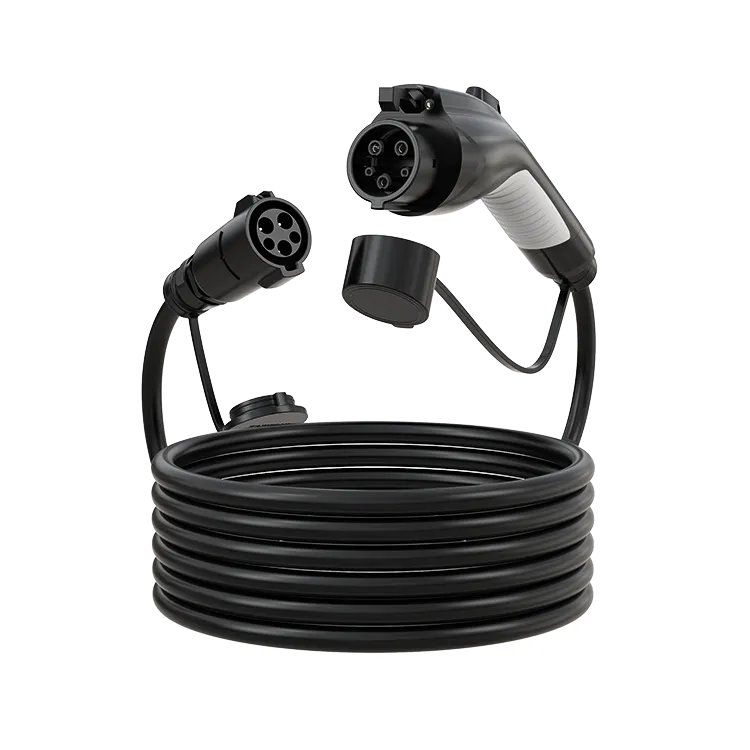
EVDANCE sells into both systems, and the portable range reflects it: the EV-AC04001U 40A J1772 portable charger for North America and the EV-ACS3210E 32A Type 2 portable charger for Europe each carry built-in ground-fault protection suited to their market. What belongs in your panel alongside them is decided by your local code — ask the electrician doing the work, not the product page.
Frequently Asked Questions
Is an RCD just a European GFCI?
In purpose, yes: both detect leakage current and disconnect the circuit. In hardware and rules, no — they are different device families, tested and listed under different standards for different wiring systems, and one is never a drop-in substitute for the other.
My charger manual mentions an RCD, but I am in the US. What do I fit?
Manuals are often written once for many markets. In the US the equivalent requirement is GFCI protection where the National Electrical Code and your local amendments call for it. Your electrician will specify the listed device your panel takes.
If my charger has ground-fault protection built in, is the panel device unnecessary?
Not automatically. For plug-in chargers on receptacles, current US code generally still requires GFCI protection on the circuit; hard-wired installations are treated differently. The built-in protection and the panel device guard different parts of the path, and your electrician and inspector decide what your installation needs.
Related Reading
- Does an EV Charger Need GFCI Protection?
- RCD Protection for EV Chargers: Type A, Type B and 6 mA DC Detection Explained
- Why Does My EV Charger Keep Tripping the Breaker?
- What Size Breaker Do I Need for an EV Charger?

