
Nobody can give you a trustworthy number, because no official statistic separates home EV charger fires from electrical fires in general. Fire reporting groups incidents by broad equipment and cause categories, so “EV charger fires” are never counted on their own — and figures shared online usually mix in vehicle battery fires and public chargers. The absence of a count is not proof the risk is zero; it means risk has to be judged per installation, not from a headline rate.
Key Takeaways
- No official count of home EV charger fires exists; any exact figure is built on mixed categories.
- Vehicle fire comparisons and recall headlines do not measure home charging risk.
- Risk is assessed per installation: certification, a code-sized inspected circuit, and equipment condition.

Why the Statistics Cannot Answer the Question
- The category does not exist. A fire that starts at a charging outlet is recorded as an electrical or equipment fire, the same bucket as a faulty dryer outlet. Nothing in the reporting splits out the charger.
- Vehicle fires are counted separately. A battery fire in a parked, unplugged car is a vehicle fire in the data — yet it is routinely quoted in “EV charging fire” stories.
- Countries record differently. Definitions, reporting thresholds and years covered vary, so international figures cannot simply be added or compared.
- The base is growing fast. A raw incident count means little without a rate per charger or per charging year, and no such rate is published for home chargers.
Our guide to whether home EV chargers are safe covers the protective features that exist precisely because the risk is managed by design and code rather than measured after the fact.
Claims to Read Carefully
| Claim you will see | What is usually wrong with it |
|---|---|
| “There were X EV charger fires last year” | No source category exists for that number; it is often vehicle fires, or all electrical fires, relabelled |
| “EVs catch fire N times less/more than gasoline cars” | That compares vehicles, usually including crash fires — it says nothing about home charging equipment |
| A recalled charger reported as a “fire risk” | Recalls are precautionary actions, not fire counts; a recall can involve zero incidents |
| Photos of melted outlets shared as “charger fires” | Overheating damage is a genuine warning sign, but most such events never become a reported fire — one more reason counts diverge |
The outlet events in the last row are real and worth preventing; our article on whether a NEMA 14-50 outlet is a fire hazard explains how they happen.
How the Risk Is Actually Assessed
Fire services, insurers and inspectors do not work from a global rate. They assess the installation in front of them:
- Is the charger safety-certified by a recognised testing laboratory? OSHA maintains the list of nationally recognised testing laboratories, and ENERGY STAR notes that certified models are safety-tested by one.
- Was the circuit installed to NFPA 70, the National Electrical Code — sized as a continuous load, with the breaker at 125% of charger current — and inspected where a permit is required?
- What condition are the outlet, plug and cable in today?
That checklist, applied to your garage, tells you more about your risk than any national figure could. The certification landscape behind the first question is explained in our guide to EV charger certifications.
Choosing Equipment When There Is No Rate to Quote
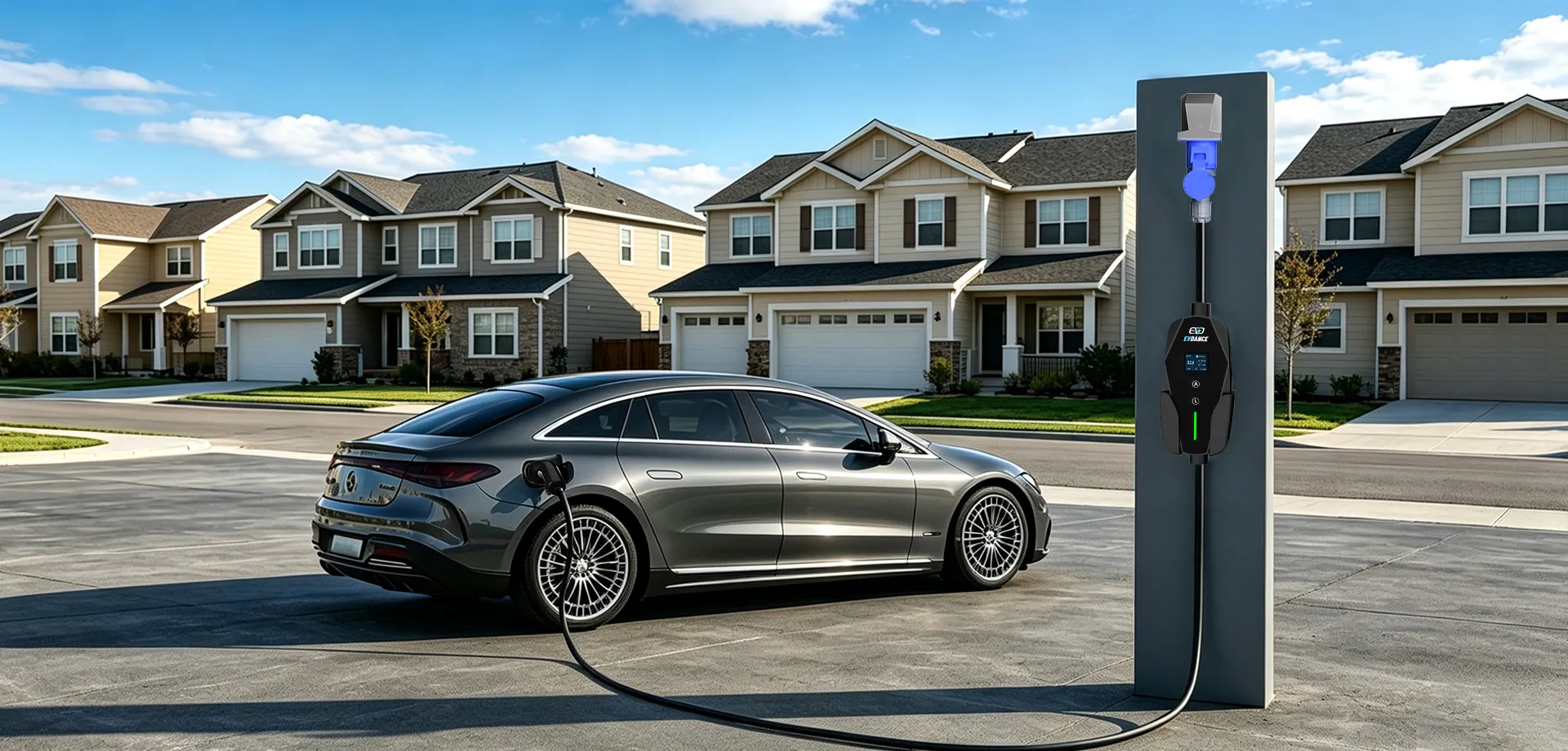
Since no frequency figure can vet a product for you, the listing mark does the work. The EVDANCE EV-ACT5006T 48A wall charger is ETL-listed, and the EVDANCE EV-ACS4005T 40A portable charger adds over-temperature protection at the plug. Certified, correctly installed equipment is the closest thing to a measurable answer this topic offers.
Frequently Asked Questions
Are EV chargers more dangerous than other home appliances?
There is no published like-for-like rate that would prove either direction. Chargers draw more current for longer than most appliances, which is why the code treats them as a continuous load with dedicated rules — the comparison that matters is a compliant installation versus a non-compliant one.
Do melted outlets count in fire statistics?
Usually not as fires. An overheated outlet that is caught and replaced is equipment damage, and reporting systems built on fire incidents never see it — one reason anecdote and data disagree so widely.
Where would a real number come from?
It would need fire-incident reporting with a specific category for EV charging equipment, plus a reliable count of installed chargers to divide by. Until both exist, treat any single figure — reassuring or alarming — as unsupported.
Related Reading
- Are Home EV Chargers Safe?
- Is a NEMA 14-50 Outlet a Fire Hazard for EV Charging?
- EV Charger Certifications Explained: CE, UKCA, UL, ETL, CB
- Portable EV Charger Safety Guide 2026

