
You can check a used EV’s charging port in about ten minutes at a viewing, with no tools. Look at the pins, the seals and the door, then plug the car in and watch a session start and hold. The port is a wear item a dealer normally replaces as one assembly, so a tired port is a real cost to negotiate over — not a detail to discover afterwards.
Key Takeaways
- The port check takes minutes: pins, DC pins, seal, door — then a real plug-in session.
- Heat discoloration is the serious finding; light corrosion is a negotiating point.
- A connector that will not lock or hold a session means a dealer quote before purchase.
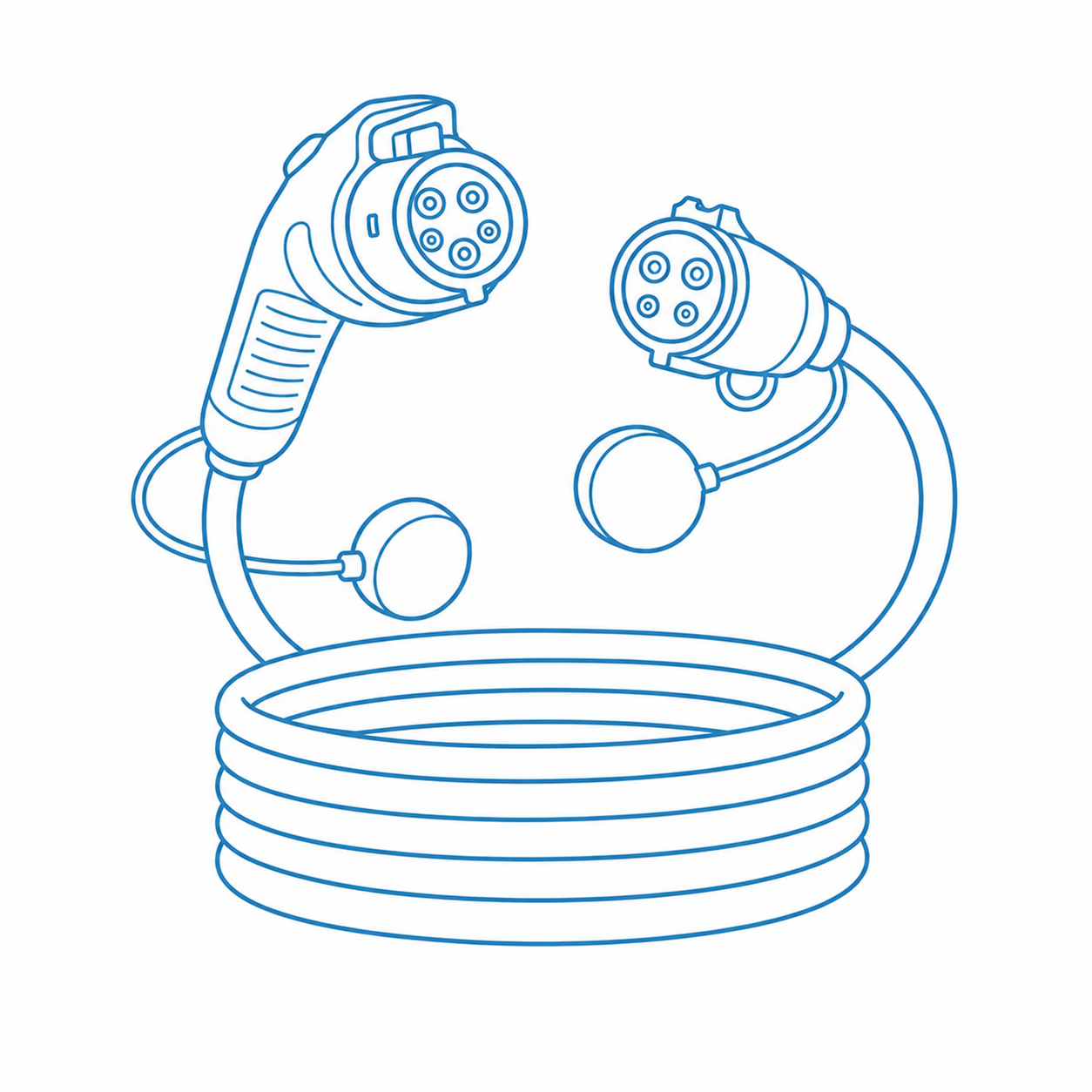
Look First: What Your Eyes Can Judge
Open the charge port door and work through the visible parts. Everything here is a look, not a repair — do not poke into the socket.
- The pins. Contact faces should look clean and even. Dull, green-tinged or pitted pins suggest corrosion, usually from years of outdoor charging.
- The DC pins. On a combined inlet, the two large pins below the AC socket carry fast-charging current. Discoloration around them is the finding that matters most; see the table below.
- The seal. The rubber seal around the inlet should be whole and springy, not cracked or missing — a failed seal lets moisture sit against the contacts.
- The door and catch. The door should open smoothly, close flush and stay shut. A door that will not latch explains a corroded port behind it.
- The port face. Look for cracks, scorch or melt marks, and dirt packed into the socket. Grit can be wiped away; damage marks cannot.
Then Plug In: The Session Test
A visual check cannot prove the port works, so ask to plug the car in during the viewing — a seller who refuses is telling you something. The connector should push home fully without force, the lock should engage with a positive click, and the session should start without errors and keep running at a plausible rate. If the car has DC fast charging, a short fast-charge session afterwards is worth arranging on any car you are serious about: it exercises the DC pins and lock under load.
| What you find | What it suggests | What to do |
|---|---|---|
| Bright pins, door seals well, session starts and holds | A port in normal health | Proceed — this is the good sign |
| Light corrosion or dirt on the contacts | Outdoor charging life, a tired seal or door | Price in a dealer inspection; not a walk-away alone |
| Connector will not lock, or sessions drop out | Wear in the lock or the contacts | Get a dealer diagnosis and quote before agreeing a price |
| Heat discoloration, scorch or melt marks | A poor contact has been overheating | Do not buy until a dealer has inspected it |
Check the Other Half of the Connection
The port is only one side of the joint. Ask to see the charging cord supplied with the car and inspect its connector and cable the same way — a frayed, repaired or missing cord is a cost landing on you, and how long charging cables last explains the wear signs on that side. Run this routine alongside the battery checks in our guide to checking EV battery health: a healthy battery behind a failing port is still a car that cannot charge properly. And as our home charger safety guide sets out, heat damage is always a stop-and-check finding, never a cosmetic one.
If the Car Needs a Cord or a Second Charger
Many used EVs change hands with a worn cord or none at all. A portable charger such as the EVDANCE EV-AC04001U 40A J1772 portable charger (9.6 kW, NEMA 14-50P, SAE J1772, IP66, 25 ft) or the EV-ACS4005T 40A NACS portable charger (9.6 kW, NEMA 14-50P, IP66) replaces it. That solves the charger side; a faulty port itself is carmaker work, which is why the viewing check comes first.

Frequently Asked Questions
Can a worn charging port be repaired?
The inlet is normally replaced as an assembly by the dealer rather than repaired pin by pin. Cost and time depend on the model — which is why a port problem found at a viewing should be diagnosed and priced before you agree to buy.
Does heavy fast-charging use show on the port?
It can. The DC pins carry the highest currents the car ever sees, so a car that has fast-charged often may show heat tinting around them. Treat it as information about the car’s life, and let a dealer judge anything beyond light discoloration.
Is a slightly loose-feeling connector a worn port?
A small amount of play is normal in many designs. What is not normal is a connector that fails to lock, needs force, or drops the session when the cable is touched. Those are faults to price or walk away from.
Related Reading
- How to Check EV Battery Health
- How Long Do EV Charging Cables Last, and Can They Be Repaired?
- Can an EV Battery Be Replaced or Repaired?

