
You pay at a public charging station in one of four ways: tap a contactless bank card on the reader, start and pay inside the operator’s app, tap an RFID card or fob linked to an account, or use Plug and Charge, where the car identifies itself and bills your account automatically. Which methods a station accepts varies by site and network, so check the screen or the site listing before you count on one. On federally funded US corridor stations, contactless payment with no membership is required by rule.
Key Takeaways
- Four ways to pay: contactless bank card, operator app, RFID card, or Plug and Charge.
- Stations authorise first and settle the real total when you stop; the price model on the screen decides how that total is built.
- Memberships trade a monthly fee for lower session prices on one network; pay as you go works anywhere a card is accepted.
- NEVI-funded US corridor stations must take contactless cards with no membership required.

The Four Ways to Pay, Side by Side
| Method | What you need | Account needed? | Watch out for |
|---|---|---|---|
| Contactless bank card | A card or phone wallet with tap-to-pay | No | Not every station has a reader fitted |
| Operator app | The network’s app with a bank card stored in it | Yes | Each network runs its own app and account |
| RFID card or fob | A card linked to your charging account | Yes | Works with poor phone signal, but only on that network |
| Plug and Charge | A car and network that both support it, set up once | Yes, created in advance | Nothing to tap or open — which also means checking the price first |
Our walkthrough on how to use a public EV charger covers the start-and-stop steps these payments sit inside, and whether EV charging stations take credit cards looks at card acceptance on its own.
When the Money Actually Moves
Most stations authorise before they deliver. You tap or start in the app, the station checks the payment method — a temporary hold can appear on a card at this point — and only then does charging begin. The meter runs during the session, and the final amount is settled when you stop. How that amount is built depends on the price model on the screen:
- Per kilowatt-hour: you pay for the energy delivered, the closest model to a fuel receipt.
- Per minute: you pay for time on the charger, so a slow session costs more per unit of energy.
- Session fee or parking fee: a flat amount, sometimes combined with one of the above.
- Idle fees: charged after charging ends if you leave the car plugged in — separate from the energy price.
That mix is part of why public charging costs what it does. Some stations are simply free, as free vs paid charging explained sets out — no payment step at all.
Membership, or Pay as You Go?
A network membership or subscription can cut the per-kilowatt-hour price or waive session fees, in exchange for a monthly charge and an account tied to that one network. Pay as you go costs more per session but works anywhere your card is accepted. The US federal rule for NEVI-funded corridor stations sets the floor: contactless card payment with no membership required, stations open 24/7, and average annual uptime above 97% — so on a highway trip, a plain bank card is always meant to be enough.
If You Run a Charger Other People Pay For
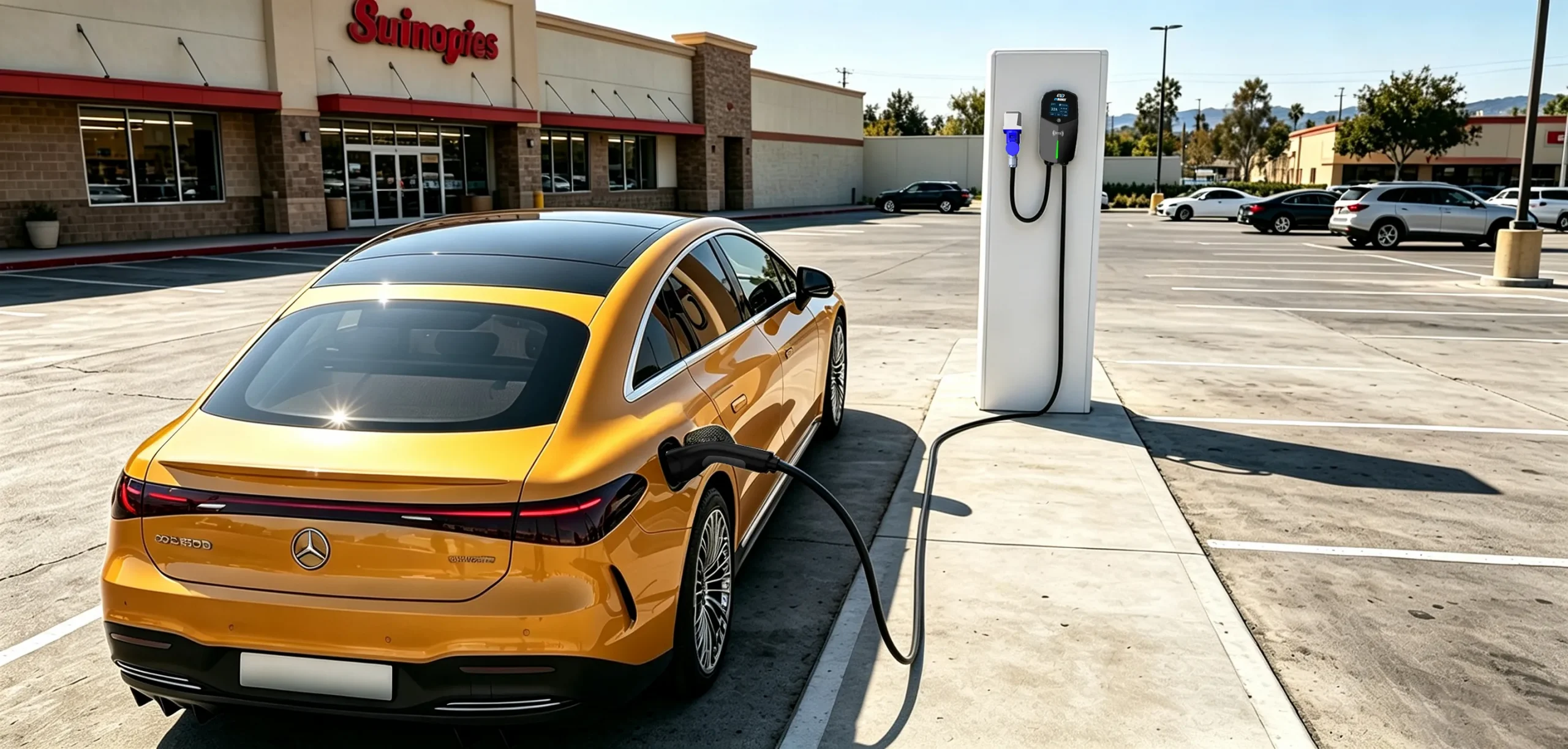
On the operator side, payment starts with the hardware. The EV-ACT3204PE 22 kW wallbox uses RFID and app control, so only authorised drivers can start a session. For shared or public sites, the EV-AC03201T dual-connector AC station adds OCPP 1.6J, which lets sessions be metered and billed through a charging management platform.
Frequently Asked Questions
Can I pay cash at a charging station?
No. Public chargers have no cash handling. The closest thing to cash simplicity is a contactless bank card, which needs no account on stations that have a reader.
Why is there a hold on my card after charging?
Many stations authorise a temporary amount before the session to confirm the card works, then settle the real total afterwards. The hold amount and how fast it is released are set by the operator and your bank, not by the charger itself.
Do I always need the operator’s app?
Not always. Contactless readers are spreading, and federally funded corridor stations in the US must accept contactless cards with no membership. Older or smaller sites can still be app- or RFID-only, so check the listing for a site before a trip depends on it.
Related Reading
- How to Use a Public EV Charger (and How to Stop It)
- Do EV Charging Stations Take Credit Cards?
- Do EV Charging Stations Cost Money? Free vs Paid Charging Explained
- Can You Use Any EV Charging Station?

