
Your EV will not tell you its battery size on the dashboard, and the badge does not either — the same model is often sold with two different packs. The rated capacity is published, though: in the specification sheet for your exact trim and model year, the owner’s manual, and the original window sticker. One caution: check whether the figure is the pack’s total capacity or the smaller usable one.
Key Takeaways
- The same model can carry different packs; the badge and the dashboard settle nothing about size.
- Rated capacity is published in the spec sheet, brochure and manual for your exact trim and year.
- Read whether a figure is total or usable capacity before comparing cars — usable is always lower by design.
- A charging session overstates what the battery stored, so it can cross-check the documents but never replace them.

Where the Rated Figure Is Published
Battery capacity in kilowatt-hours is a headline specification, so it appears wherever makers publish specifications:
- The specification sheet or brochure for your model year. Makers revise packs mid-cycle, so use your year, not the current one.
- The owner’s manual. It documents the battery for the version it was written for — check it matches your trim.
- The original window sticker or order paperwork, if it survives — it ties the specification to the individual car.
- The maker’s own listing for the trim. Treat third-party databases and forum lists as leads to verify, not answers.
Total or Usable? Read the Number Carefully
Two different figures circulate for the same pack. The total (gross) capacity is everything the cells hold. The usable (net) capacity is what the car lets you spend: makers hold back a buffer at the top and bottom to protect the cells, so usable is always the lower number. Brochures usually headline the total; some makers publish both. Comparing two cars only works if you compare the same kind of figure.
A charging session will not settle it either: the kilowatt-hours delivered are more than the battery stores, because some energy is lost on the way in — which is why how many kWh it takes to charge an EV is a different question from battery size. A session is a rough cross-check, never the nameplate figure.
| Source | What it gives you |
|---|---|
| Spec sheet / brochure for the year | Rated capacity for each trim — usually the total figure |
| Owner’s manual | The battery documented for your version of the car |
| Window sticker / order paperwork | The specification of the individual car |
| Dashboard and charge-port label | Charge percentage, range estimate, connector type — not capacity |
What the Car Itself Won’t Show You
The dashboard shows state of charge as a percentage and an estimated range. Both are calculated live from the pack, but neither displays its rated size — two cars showing the same range can carry different batteries. The pack carries a manufacturer’s label, but it is a sealed, structural assembly under the car — reading it is workshop work on a lift, not a home job.
Why the Exact Figure Matters
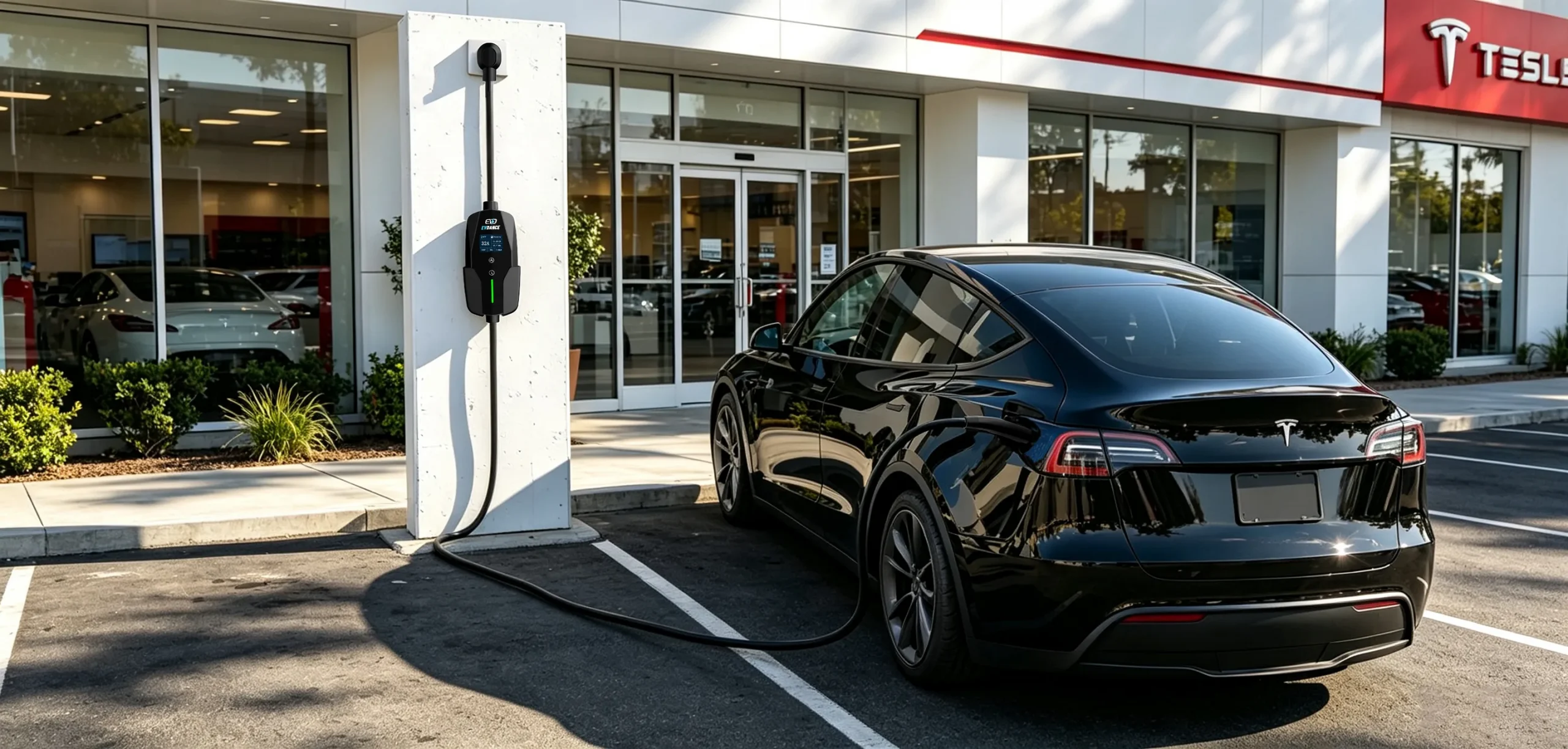
Battery health is expressed as a percentage of the original capacity, so judging a used car starts from knowing what it had when new — how to check EV battery health walks through those readings. The same figure anchors expectations about loss over the years, covered in whether EV batteries degrade over time, and any warranty or repair conversation, which begins from exactly which pack is fitted, as the battery replacement and repair guide shows. Chemistry is a separate identification job, with its own tells in the manual’s charging guidance and the car’s charge-limit screen. Once you know the pack, charger choice follows from it: the EVDANCE EV-ACS3210T 32A NACS portable charger delivers about 7.7 kW for overnight fills, and the EV-ACT5006T 48A wall charger suits a large pack filled daily.
Frequently Asked Questions
The window sticker is gone. What is the next best source?
The specification sheet for your model year and trim, checked against the owner’s manual. If the car was sold with two pack sizes that year and doubt remains, a dealer can confirm the fitted battery from the build record.
Can I work out the capacity from one full charge?
Only roughly. Delivered energy exceeds stored energy because of charging losses, and the car rarely starts from a true zero. Treat the result as a sanity check against the published figure, not a measurement.
My car’s range estimate looks low. Does that mean the battery is small?
Not necessarily. The estimate reflects recent driving, weather and the battery’s current health as well as its size. Compare the car’s documents first; if the fitted pack is the larger one and the estimate still disappoints, that is a health question, not a size question.
Related Reading
- How to Check EV Battery Health
- Does an EV Battery Degrade Over Time?
- How Many kWh Does It Take to Charge an EV?
- Can an EV Battery Be Replaced or Repaired?

