
Nobody can tell you whether your EV charger installation business will be profitable — anyone who answers yes or no without your books is guessing. In a contracting business, profit is decided by variables you can measure yourself: billable hours, job mix, pricing discipline and callback costs. This article gives you the break-even test to run on your own figures. Station profitability is a different question — utilisation and tariffs — covered in is an EV charging station business profitable?
Key Takeaways
- The answer is a test, not a verdict: fixed costs ÷ contribution per job, compared with crew capacity.
- Six variables decide it — billable-hour ratio, job mix, price discipline, callbacks, hardware margin, payment speed — all measurable in your own books.
- Published U.S. project costs describe the customer’s side; they are not margin evidence for any installer.
- Incentives move demand, not your cost stack — verify current terms and keep them out of the break-even line.
The Break-Even Test, in Four Steps
- Total your monthly fixed costs from your own accounts: insurance, licences, vehicle, software, premises, and your own management time.
- Work out the contribution per job: the price charged, minus the job’s direct costs — crew time, materials, hardware at purchase price, travel, permit fees.
- Divide. Break-even jobs per month = monthly fixed costs ÷ contribution per job, using your average job, not your best.
- Compare with capacity. Count the jobs your crew can complete in a month at measured job times. If break-even sits above capacity, the model fails however much demand exists — the fix is price, mix or crew, in that order.
The Variables That Decide It
| Variable | Which way it pushes | How you measure it in your books |
|---|---|---|
| Billable-hour ratio | Higher ratio, lower break-even — the contracting equivalent of station utilisation | Fitting ÷ paid crew hours, monthly, from timesheets |
| Job mix | Small jobs starve contribution; panel-heavy commercial jobs steady it | Contribution per job type, averaged over a quarter |
| Price discipline | Discounting to win work cuts contribution on every job, not just the discounted one | Quoted vs charged price, per job |
| Callback rate | Every unpaid revisit is direct cost with no price attached | Revisits per hundred jobs, and their crew hours |
| Hardware margin | Supply-and-install adds a second stream; install-only removes it and the stock risk | Hardware contribution per job, kept on its own line |
| Payment speed | Slow payment does not change profit on paper but decides whether cash survives to payroll | Days from invoice to payment, per customer type |
What Published Numbers Can and Cannot Tell You
Published cost figures describe what customers pay for projects, not what an installer keeps. U.S. DOE-cited figures put public Level 2 at about $3,500 equipment plus $2,500 installation per connector, and DC fast charging at about $38,000–$90,000 equipment plus $20,000–$60,000 installation — U.S. context for the size of the jobs, useful for sanity-checking your prices, useless as margin evidence. Your margin evidence is your job costing. Incentives sit on the customer’s side: they shift demand and budgets, and their terms change — the U.S. Section 30C credit’s listed window covers property placed in service from January 1, 2023 to June 30, 2026 — so check your market’s current position before letting an incentive carry a go/no-go decision.
Where EVDANCE Fits the Calculation
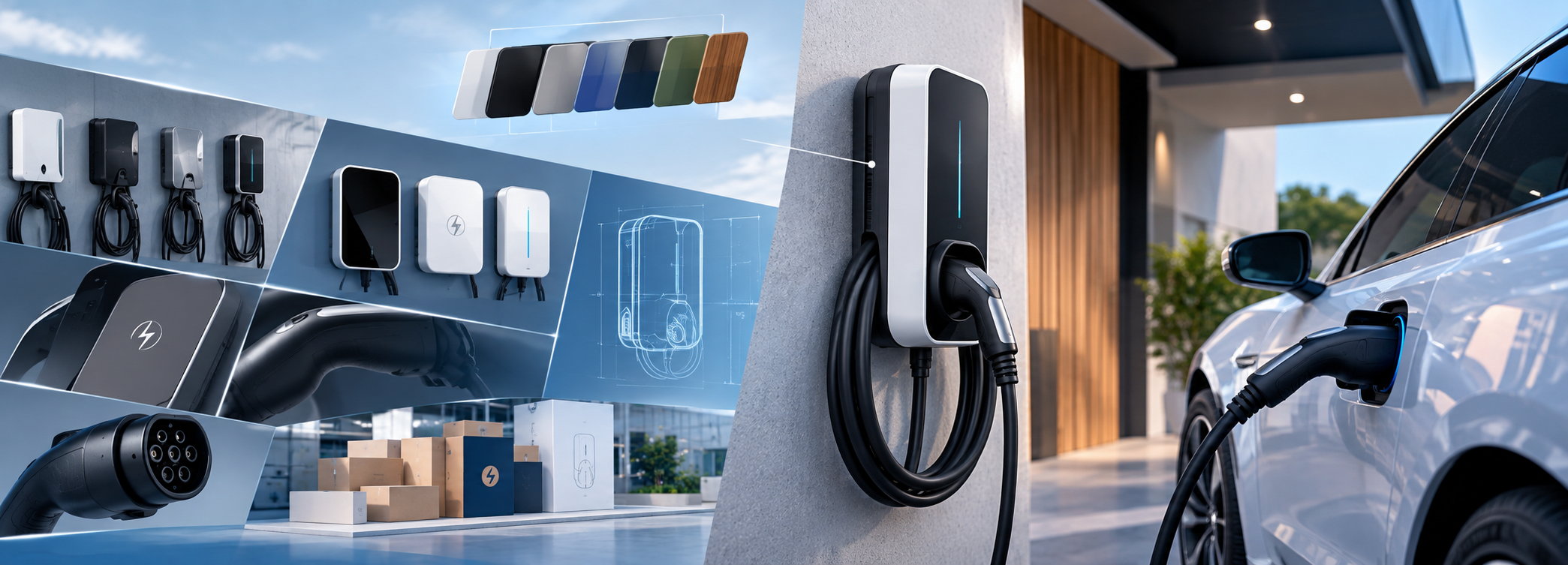
Hardware margin is one of the variables above, set by your supply terms. EVDANCE is a Shenzhen manufacturer founded in 2011, exporting to more than 30 countries, supplying installers through its distributor program, with a 3-year standard warranty. Repeatable-job models include the EV-ACS4005T portable (40 A, 16/24/32/40 A adjustable, 9.6 kW, IP66) and the EV-ACT5006T wall charger (up to 48 A, NACS, ETL/FCC/CE) — see the product range. Be precise on warranty: the manufacturer’s warranty covers the unit on its terms; your callback labour is your own cost unless supplier terms say otherwise. Price from your own contact us quote, not a brochure figure.

Frequently Asked Questions
Is supply-and-install more profitable than install-only?
It adds a hardware contribution stream, and stock cost and risk with it. Neither wins in general: measure contribution per job under each model for a quarter, and let that decide.
What utilisation does an installation business need?
Utilisation is station language. Your equivalent is the billable-hour ratio: fitting hours divided by paid crew hours. If it is low, break-even needs more jobs than the diary can hold — the diary has to change first.
Can incentives make the business profitable?
Incentives change the customer’s budget and timing, not your cost stack. The U.S. 30C credit’s listed terms cover property placed in service through June 30, 2026, and schemes everywhere change or close. Treat an incentive as a tailwind to verify at the time, never as a break-even line.
Related Reading
- Is an EV Charging Station Business Profitable?
- Are EV Charging Stations a Good Investment?
- How Much Does It Cost to Install a Commercial EV Charging Station?
- How Distributors Can Build a Profitable EV Charger Product Line

