
Yes — one NACS wall charger can serve a household with a NACS car and a J1772 car. The NACS car plugs in directly; the J1772 car charges through a JT02 adapter on the same charger. The hardware is the easy half; the nightly rota decides whether it works every morning.
Key Takeaways
- One NACS charger serves both cars: the NACS car directly, the J1772 car through the JT02.
- Each car charges at its own acceptance rate; the adapter’s 80 A ceiling never binds at home.
- The rota and the adapter’s one fixed home decide whether mornings work.
- When both cars need a full charge every night, a second J1772 point beats sharing — a convenience call, not a safety one.
One Charger, Two Inlets: How the Sharing Works
The two cars take turns on one charger, and each session is ordinary Level 2 charging. A Tesla Wall Connector, for example, offers up to 48 A / 11.5 kW. The NACS car draws what its onboard charger accepts. The J1772 car draws what its onboard charger accepts, through the adapter — the adapter’s 80 A ceiling sits far above anything a home wallbox offers, so it is never the limit. That chain rule — charger output, car acceptance, adapter ceiling, lowest figure wins — is the whole technical story. Whether your panel can carry two cars’ charging is a separate capacity question, covered in our guide to charging two EVs at home; this article is about the plug mismatch, which the adapter solves.
The Rota Is the Real System
One charger means one car at a time, so the household runs a pattern — pick the one your mornings resemble:
| Household pattern | Who charges when | Why it works |
|---|---|---|
| One long commute, one local car | The commuter takes the overnight slot; the local car tops up in the evening | The big battery gets the long window; the small need fits around it |
| A plug-in hybrid as the second car | The PHEV charges first, early evening; the battery-electric car takes the night | A PHEV’s small battery fills in a short session, then the charger is free |
| Two similar EVs, alternating days | Each car takes alternate nights, topped up rather than filled | Neither car needs a full battery daily, so half the nights serve both |
Give the adapter one home so the rota survives busy evenings. It belongs to the J1772 car’s routine: it lives in that car’s glovebox, or it hangs at the charger — but always the same place. The NACS car never needs it, and an adapter left in the wrong car is a rota failure, not a hardware failure.

When Sharing Stops Working
Sharing fails honestly: two cars that both need a long charge every night, with similar morning deadlines, will eventually queue past the rota’s goodwill. That is the fork. The adapter route costs one small part and a routine. The alternative is a second charging point that speaks J1772 natively — for example the EV-AC04001U, a 40 A J1772 portable charger (9.6 kW, NEMA 14-50P, IP66, 25 ft cable) on its own outlet, so both cars charge at once. Neither choice is a safety question; it is a convenience decision. Buy the second point when the pattern fails weekly, not the first time it fails once.
The JT02 in a Mixed Household
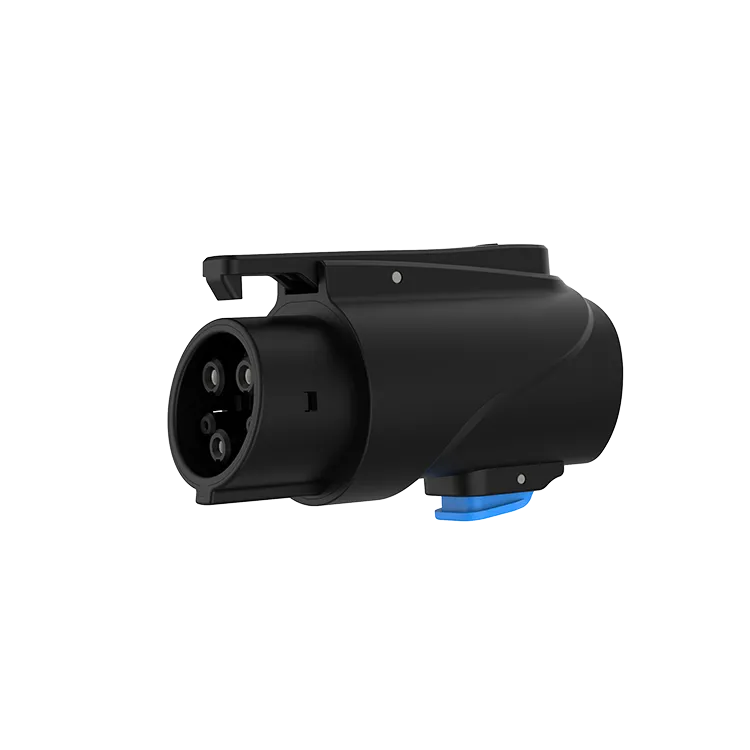
The EVDANCE JT02 is a NACS-to-J1772 adapter for AC charging, rated up to 80 A at AC 250 V, with silver-plated copper terminals and an IP65 seal. It changes the charger’s plug shape and nothing else — no added power, no electronics to configure, nothing to pair. It also works at NACS destination chargers away from home — why it earns its place in the car, not on a shelf. It is an AC adapter only: it has no role at a Supercharger or any DC fast charger, for either car.
Frequently Asked Questions
Does the Tesla in the household ever need the adapter?
No. Its inlet is NACS, so it plugs into the NACS charger directly. The adapter exists for the J1772 car only — which is why it should live with that car’s routine.
Does the J1772 car charge more slowly through the adapter?
No. Its speed is set by its own onboard charger and what the wall charger offers — the lower of the two. The adapter’s 80 A rating sits above both figures in a home setup, so it is never the limit.
Can a plug-in hybrid be the second car?
Yes, and it is often the easiest version of this household. A PHEV’s smaller battery and lower acceptance rate mean a short evening session, after which the charger is free for the battery-electric car all night.
Related Reading
- The Charging Duo Problem: How Two-EV Households Can Charge Smarter, Not Harder
- Can a Tesla Use J1772 Chargers?
- Is the Tesla Wall Connector Level 2? How Many kW Does It Deliver?
- Can I Use a Tesla Charger for Other Cars?

