
An electric pickup uses a JT08 or JT09 under the same rules as any CCS1 car: your maker must approve a third-party DC adapter for your truck, and the Supercharger site must be open to it. What the pickup changes is the handling. Charge ports sit in different places on trucks than on cars, the vehicle takes more room around the stall, and many owners plug in wearing work gloves. Fit and handling are the pickup owner’s real variables.
Key Takeaways
- The rules do not change for a pickup: maker approval and an open site first, handling second.
- Your port’s position class decides how you park; a short, straight cable run is the goal at every stall.
- Gloves blunt the seating push — the JT09’s handle is the grip answer, the JT08 the bare-handed form.
- A stretched, angled cable run strains the joint all session; choose the stall that avoids it.
Port Position Decides How You Park
Supercharger cables are short by design — built for a quick connection beside the stall, not a walk around the vehicle. On a car that rarely matters. On a pickup, your inlet’s position class decides whether you nose in or back in:
| Port position (class) | Parking consequence |
|---|---|
| Front — nose or front fender area | Nose in, and the inlet usually lands within the cable’s easy reach. |
| Front side — ahead of or behind the front wheel | Choose the stall on the port’s side; a short, square run beats an angled stretch across the front corner. |
| Rear quarter | Back in. Nose-in leaves the cable short of the inlet, or pulled tight along the bodywork for the whole session. |
Know your truck’s port position before you arrive. When two stalls are free, the one that gives the cable a short, straight run is worth the extra manoeuvre — every session, not just the awkward ones.
Gloves, Grip and the Handle Question
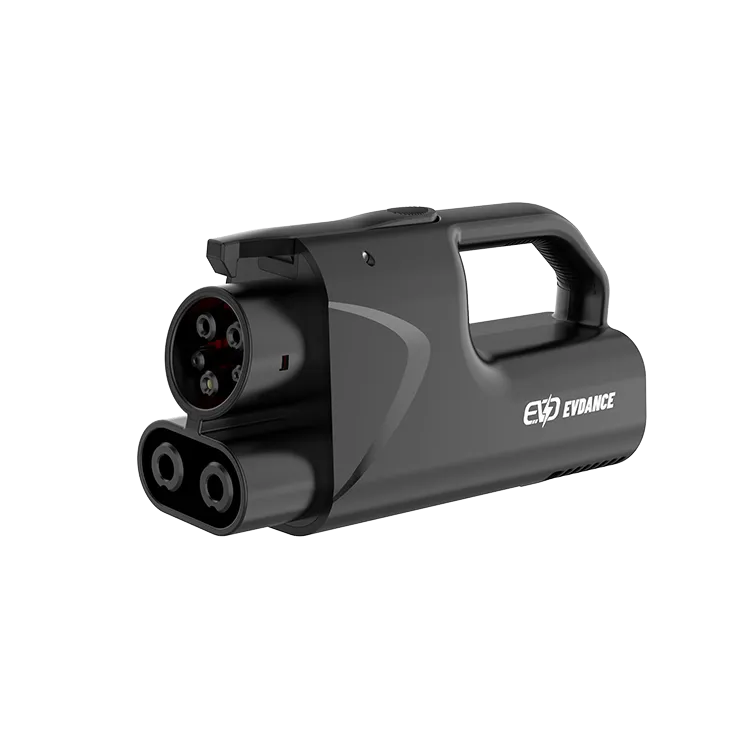
Seating a DC connector is a straight, two-handed push, and it should end fully home. Work gloves blunt the feel of that push and make a wet or cold connector slippery, so a half-seat is easier to miss with gloves on. This is where the two models split. The JT09’s handle gives gloved hands something solid to hold and push against. The handleless JT08 asks for a bare, careful grip — manageable, but less forgiving. Neither model changes the ratings; the difference is control while seating. Our step-by-step for how to use a DC fast charger shows the sequence the adapter joins.
Keep the Run Straight While It Charges
A long vehicle tempts a long cable run. Resist it. Park so the cable hangs in a short, easy curve: a run pulled sideways holds the connector at a steady angle for the entire session, which is strain the joint — and your truck’s inlet — does not need. Supporting the adapter and cable during the session starts with this parking choice, not with anything you prop or tie after plugging in. If the only free stall forces a stretched, angled run, a different stall or site is the kinder choice.
The JT08 and JT09 for Pickup Owners
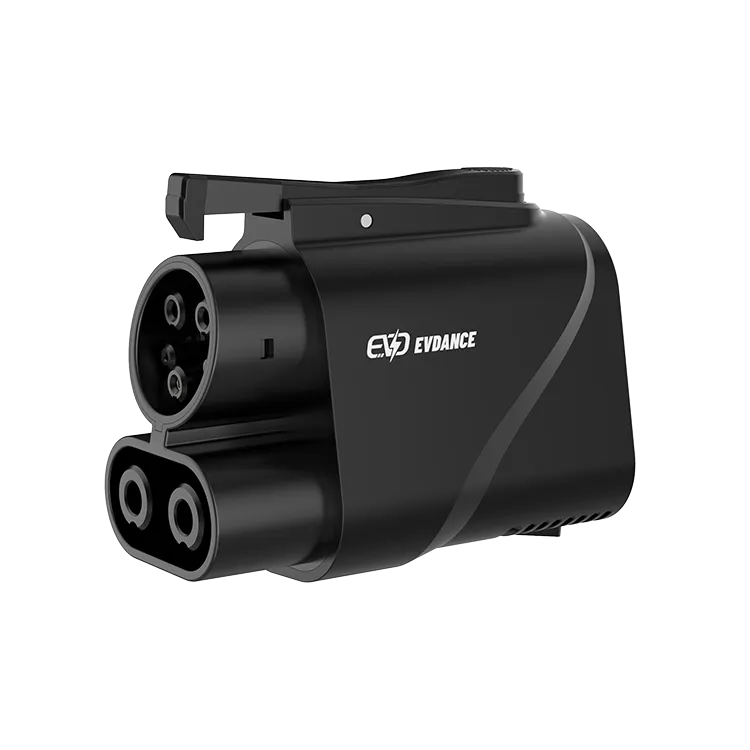
Both are NACS-to-CCS1 DC adapters for CCS1-inlet vehicles at NACS DC stations, including Superchargers open to your truck. The EVDANCE JT08 is the handleless form, up to 500 A / 1000 V with IP66 sealing; the EVDANCE JT09 adds a handle, up to 500 A with IP66 sealing. Neither adds power: the session is set by what the station delivers, what your truck’s battery accepts, and the adapters’ ceilings. And neither grants permission — approval from your truck’s maker and an open site are checked before the handling ever starts.
Frequently Asked Questions
Will the adapter make my truck charge faster?
No. The adapter is a ceiling, not a throttle. The station’s delivery and your truck’s own acceptance curve set the rate, and the rate tapers as the battery fills — the same session you would get through any approved adapter.
JT08 or JT09 if I always wear work gloves?
The JT09. Its handle gives gloves a real hold for the seating push. The JT08 suits drivers who plug in bare-handed and prefer the compact form. The ratings family is the same either way.
My port is at the rear. Is there a parking rule?
Back in, and take the stall on the port’s side when you can. The cable is short: a nose-in park either falls short or holds the connector at an angle all session.
Related Reading
- How to Use a DC Fast Charger: Step by Step
- Can I Use a Tesla Charger for Other Cars?
- Are EV Charging Adapters Safe?
- How Do DC Fast Chargers Work?

