
On a road trip, a plug-in hybrid inverts the battery-electric rule: stopping specifically to charge is rarely worth it. The battery is small and the car accepts AC power slowly, so a detour buys few electric miles. Charge where you stop anyway — overnight at your destination above all — run the long fast miles on petrol, and save the battery for town driving at each end.
Key Takeaways
- Stopping specifically to charge a plug-in hybrid rarely pays: small battery, slow AC acceptance.
- Charge where you stop anyway — overnight at the destination costs no travel time.
- Hold the battery on fast roads and spend it in towns, where electric driving displaces petrol best.
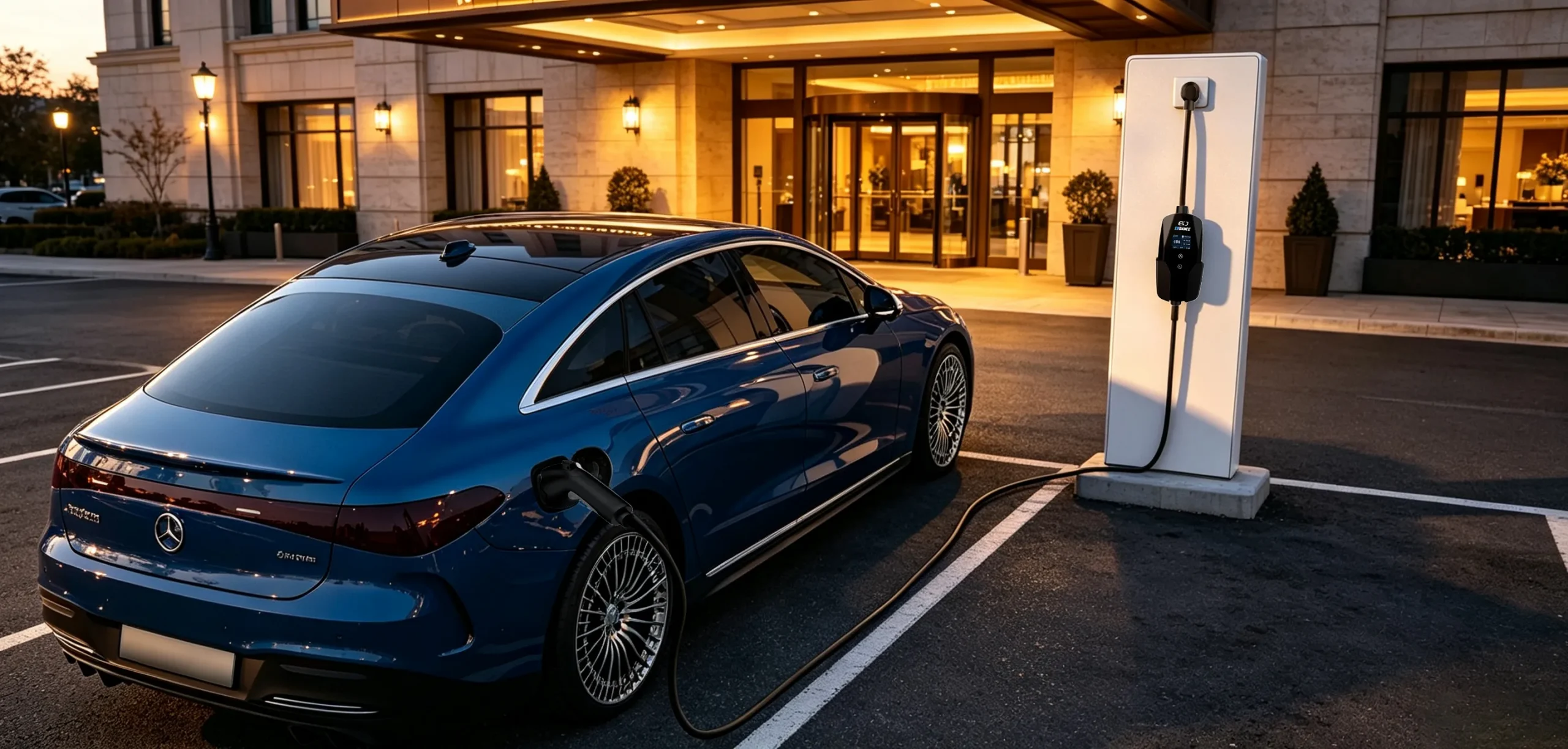
The Arithmetic of a Charging Stop
Most plug-in hybrids accept only about 3.3 to 7.4 kW on AC, because their on-board chargers are small. That caps what any stop can deliver, whatever the post is rated at:
| Stop | Energy added (example) | What it buys |
|---|---|---|
| 30 minutes at 3.3 kW | About 1.6 kWh | A small top-up — a fraction of a typical 10–25 kWh battery |
| 30 minutes at 7.4 kW | About 3.7 kWh | Roughly a quarter of a mid-size plug-in hybrid battery |
| Overnight, 8+ hours | A full battery | The whole electric range, ready for the next day — at no cost in travel time |
A battery-electric car takes on energy far faster at a DC post and plans its day around stops. Your car’s petrol engine is its fast charger: the efficient division of labour is petrol for the distance, electricity for the destinations. Our guide to how to use a public EV charger covers the mechanics when you do plug in en route.
Where Charging Is Worth It on a Trip
- Overnight at the destination. A hotel, rental or family driveway gives the one fill that costs no travel time. Ask when booking about a charger or outdoor outlet, and bring your portable cord.
- Stops you are making anyway. A long lunch or a town visit: if a reasonably priced AC post is there, plug in. The stop must justify itself — charging is a bonus, never the reason.
- Free or per-kWh pricing. Session fees and per-minute pricing punish a slow-charging small battery hardest. If the post charges by the minute or adds a fee, petrol is usually the better buy for those miles.
Use the Battery Where It Works Hardest
Electric driving earns most in towns: stop-start traffic, low speeds, short hops. Petrol earns most at steady motorway pace. So hold the charge on the fast road — most plug-in hybrids have a Hold mode for exactly this — and spend the battery in the town at the far end. Arriving with an empty battery where a charger waits is perfect planning, not a failure: the car behaves as an ordinary hybrid on the way, and whether a plug-in hybrid needs a dedicated charger matters even less on the road, since a standard outlet refills it overnight.

What About DC Fast Charging?
Most plug-in hybrids cannot use it at all — the DC hardware is simply not fitted — and the few that can gain little, because the battery is small. Do not plan a route around DC posts. If your itinerary passes one your car supports, treat it as a short top-up during a break you were taking anyway, not a scheduled stop.
The One Accessory That Changes Trip Charging
A portable charger in the boot turns any suitable outlet at your destination into an overnight fill. The EVDANCE EV-AC04001U 40A J1772 portable charger (9.6 kW, NEMA 14-50P, IP66, 25 ft) matches the connector most North American plug-in hybrids carry; the car takes only the rate its on-board charger allows. For NACS cars, the EV-ACS3210T 32A NACS portable charger plays the same role, adjustable from 10 to 32 A.
Frequently Asked Questions
Is it worth a 20-minute top-up at a service area?
Only if you are stopping there anyway and the pricing is per kWh or free. At 3.3 to 7.4 kW, 20 minutes adds a small slice of a small battery — fine as a bonus during a coffee stop, poor value as a detour with a session fee on top.
Will motorway driving recharge the battery for the town at the end?
Many plug-in hybrids offer a Charge mode that uses the engine to top the battery up, but it burns petrol to make electricity — rarely the efficient route. Holding the charge you have, and refilling at the destination, almost always beats generating it on the move.
Should I arrive home with an empty battery?
Yes — that is the trip working as intended: every electric mile was spent where it displaced petrol best, and the car goes straight on charge at home. The comparison in whether charging an electric car is cheaper than gas shows why home-charged miles are the ones worth maximising.
Related Reading
- Do I Need an EV Charger for a Plug-In Hybrid?
- How to Use a Public EV Charger (and How to Stop It)
- Is Charging an Electric Car Cheaper Than Gas?
- How Much Does It Cost to Charge an Electric Car at Home?

