
An EV battery usually warns before it burns: a sweet, chemical smell, hissing or popping sounds, white vapour from under the car, or a battery that feels unusually hot. These signs can appear minutes before flames — or not at all. If you notice any of them, stop, move away from the car, do not plug it in, and call emergency services or the car maker.
Key Takeaways
- The warning signs are a sweet chemical smell, hissing or popping, vapour from under the car, unusual heat, and battery warnings on the dash.
- Your response is distance: stop, get people clear, do not charge the car, and call emergency services or the car maker.
- Signs that stop are not an all-clear — a vented pack needs inspection before the car is driven or charged again.
- After any hard underbody strike or flood soak, get the battery checked even if the car seems fine.

The Signs, One by One
A battery fire starts as a failure inside sealed cells. As a cell fails, it can vent gas, build pressure and heat the cells around it — each stage producing something you can smell, hear or see:
| Sign | What you notice | Why it matters |
|---|---|---|
| Unusual smell | A sweet or chemical smell near the car that was not there before | Failing cells can vent electrolyte vapour before anything burns |
| New sounds | Hissing, popping or crackling from under the car | Venting gas and pressure changes inside a damaged pack |
| Vapour or smoke | White or grey vapour drifting from underneath, not from the tyres or brakes | Vented gas can ignite; vapour is a late warning, not an early one |
| Heat | The underbody feels hot, or cooling fans run constantly at standstill | The pack is generating heat it cannot shed |
| Dashboard warnings | Battery or “service EV system” warnings, sudden range loss, or the car refusing to charge | The battery management system has detected a fault |
| Recent damage | A hard underbody strike, a flood soak, or visible swelling or deformation near the pack | Damage done days earlier can start a failure, even if the car drove normally since |
One sign alone can have a harmless explanation. Two together — smell plus hissing, vapour plus heat — are an emergency in progress.
What To Do When You See Them
- If you are driving: pull over somewhere open, away from buildings and other cars, switch off, and get everyone out.
- If the car is charging: do not touch the connector if there is vapour, smoke or strong heat. Stop the session from the app if you can do it without going near the pack, and move away.
- Call emergency services if there is vapour, smoke, flame or intense heat, and tell them it is an electric vehicle with a suspected battery problem.
- Call the car maker or dealer the same day for warning lights or damage without active signs, and follow their instruction on driving it.
- Keep people and pets away until the car has been checked, and park it in the open, not against the house.
What Not To Do
- Do not plug the car in “to see if it charges normally.” Charging a failing pack adds energy and heat.
- Do not drive to the dealer with vapour, smoke or hissing present. That trip is for a recovery truck.
- Do not ignore a battery warning because the car still drives — the warning is the early, cheap version of the event.
- Do not park the car in a closed attached garage while signs persist.
The Charging Side of Prevention
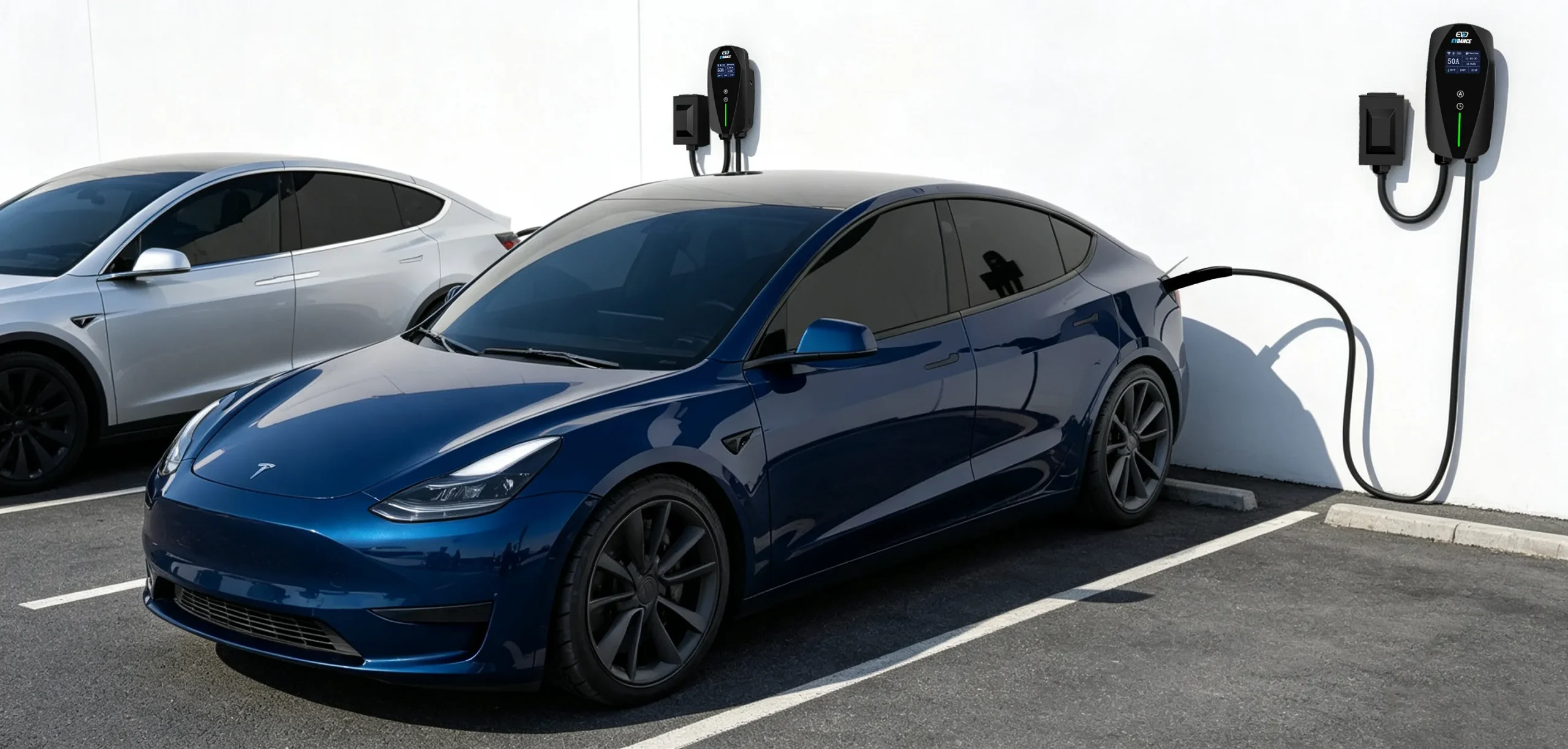
The signs come from the car; no charger causes or cures them. What an owner controls is the equipment feeding the car — certified chargers, a sound circuit, undamaged cables — as our guide to whether home EV chargers are safe sets out. A listed unit such as the EVDANCE EV-ACT5006T 48A Level 2 wall charger (ETL/FCC/CE) is built to that regime; our guide to EV charger certifications explains the marks. A hot-plastic smell at the outlet is a different, circuit-side problem: stop charging and have the outlet and circuit checked.
Frequently Asked Questions
Can an EV battery fire start with no warning signs at all?
Yes. A severe internal failure or major crash damage can move too fast for signs to help. The signs matter because many failures develop over minutes or hours — and then the early action is simply distance and a phone call.
The warning signs appeared, then stopped. Is the car safe now?
Not necessarily. A pack that vented once has still failed inside. Treat stopped signs as a reason to get the car inspected before driving or charging it again — not as the all-clear.
My car struck something on the road but seems fine. Should I do anything?
Yes — underbody damage can start a delayed failure. Have the pack inspected by the maker or dealer, even if no warning light has appeared.
Related Reading
- Are Home EV Chargers Safe?
- Is a NEMA 14-50 Outlet a Fire Hazard for EV Charging?
- EV Charger Certifications Explained: CE, UKCA, UL, ETL, CB

