
For the driver it is free. For the business, it is not: a public Level 2 connector costs about $3,500 in equipment and $2,500 in installation on U.S. Department of Energy-cited figures, and every session draws electricity bought at commercial rates — an average of 14.53 cents per kWh in the EIA’s July 2026 figures. The surprise is which part is small: the energy in a typical session costs the site less than a cup of coffee.
Key Takeaways
- Free charging costs the site about $6,000 per Level 2 connector before the first session, on DOE-cited figures.
- The electricity is the small part: about $1.45 for a typical 10 kWh session at the commercial average rate.
- Networking, maintenance and standby draw are the ongoing costs drivers never see.
- Businesses pay for dwell time, bookings and goodwill — and add prices or limits when use outgrows that return.
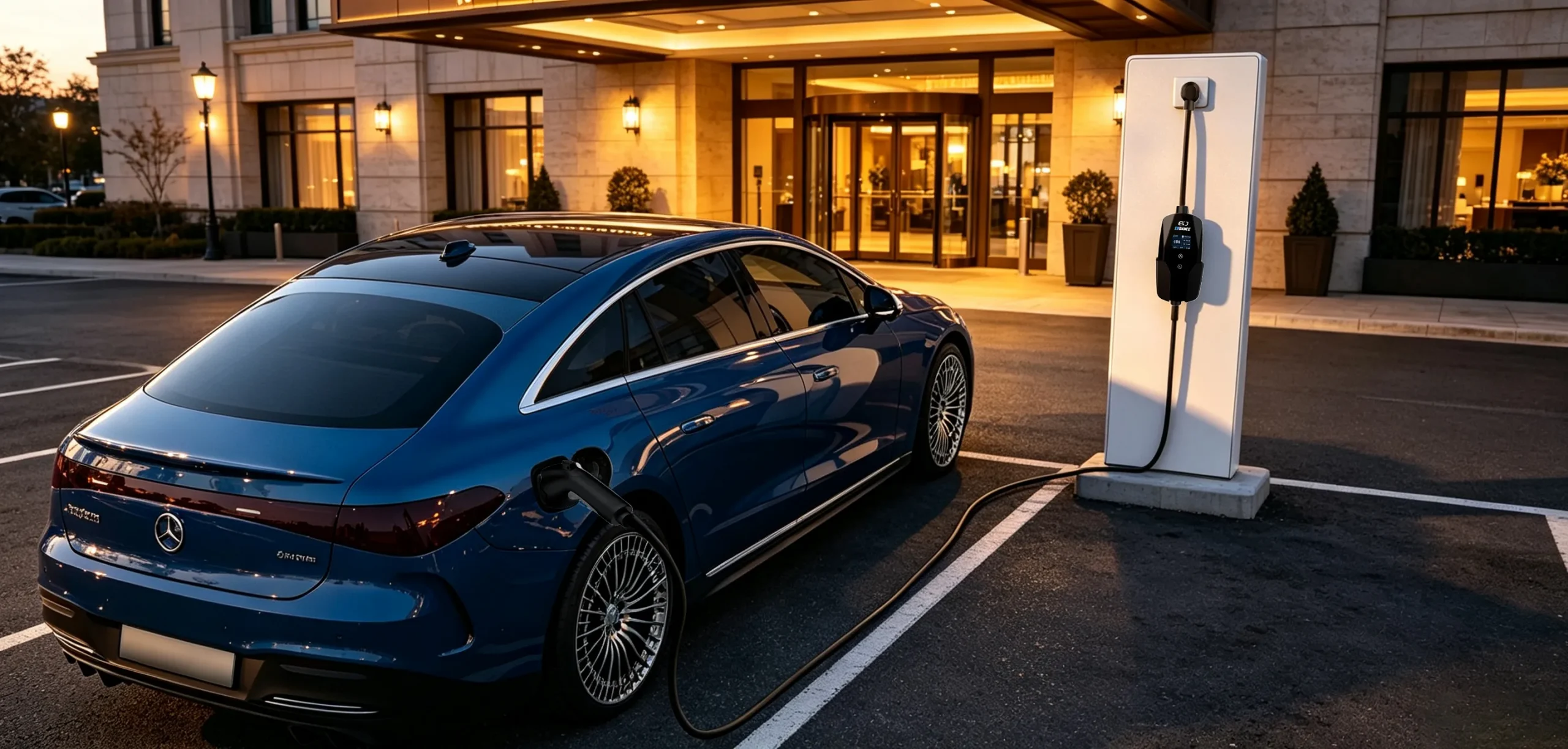
The Upfront Cost per Connector
The charger itself is the first and largest bill: about $3,500 for equipment plus about $2,500 for installation per Level 2 connector, on DOE-cited figures. For scale, a DC fast charger runs about $38,000–$90,000 in equipment plus $20,000–$60,000 installed — which is why free charging is almost always Level 2.
| Cost item | DOE-cited figure | Paid by |
|---|---|---|
| Public Level 2 equipment, per connector | About $3,500 | The site, once |
| Public Level 2 installation, per connector | About $2,500 | The site, once |
| DC fast charger equipment | About $38,000–$90,000 | The site, once |
| DC fast charger installation | About $20,000–$60,000 | The site, once |
| Electricity for each session | Commercial rate — 14.53¢/kWh US average | The site, every session |
What One Free Session Costs in Electricity
Worked examples at the EIA commercial average of 14.53 cents per kWh — your site’s own rate will differ, so treat these as the shape of the cost, not a quote:
| Energy delivered | Typical stop | Energy cost to the site |
|---|---|---|
| 7 kWh | About an hour on Level 2 | About $1.02 |
| 10 kWh | A shopping or meal stop | About $1.45 |
| 20 kWh | A long dwell — a workday or a hotel night | About $2.91 |
That is the arithmetic behind the amenity: ten typical sessions a day cost a site roughly a few coffees in electricity, while drivers value the offer against home charging at the residential average of 18.31 cents per kWh, as our comparison of whether charging is cheaper than gas shows. The hardware, not the energy, is the real commitment.
The Ongoing Costs Drivers Never See
- Networking and software. A managed charger carries a data connection and usually a platform fee, free sessions or not.
- Maintenance and repairs. Cables, connectors and screens wear and get damaged; someone budgets for replacements.
- Standby draw. An idle charger still uses a little power around the clock — small per unit, real across a row of posts.
- The option to charge later. Sites that start free often keep payment hardware fitted; switching it on is how many move to the priced models in our guide to how much charging stations charge.
Why Businesses Offer It Anyway
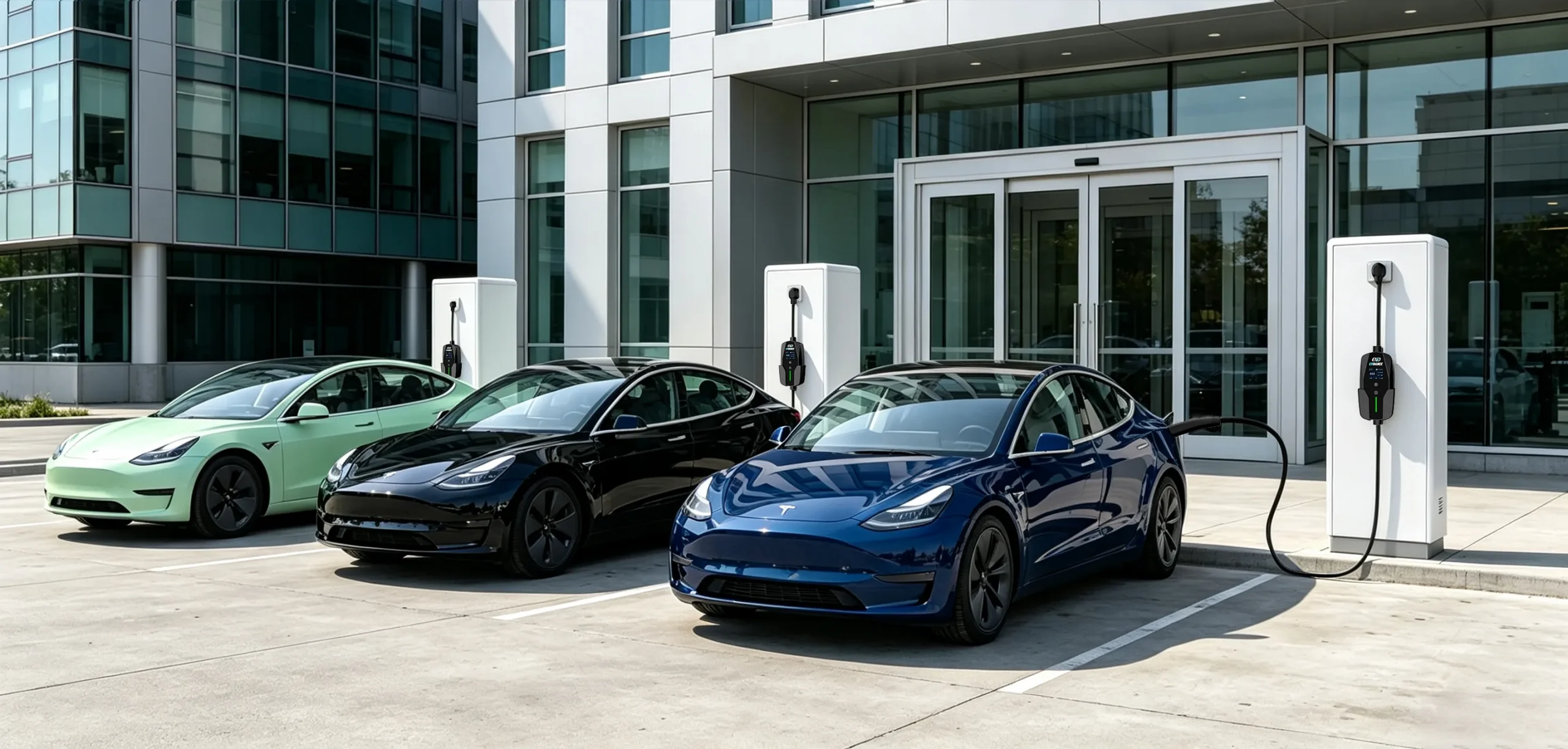
Because the return is not in the electricity. A driver plugged in for an hour is a customer inside the building for an hour; a hotel with chargers wins the booking over the one without; an employer counts charging as a low-cost perk next to the figures above. When the sums stop working — heavy use, long stays, rising tariffs — sites add time limits, restrict charging to guests or customers, or turn the payment system on.
Chargers Suited to Amenity Sites
A shared dual-connector post is the common free-charging shape: the EVDANCE EV-AC03201T dual-connector AC station serves two cars at up to 22 kW per connector with OCPP 1.6J management, so a site can run sessions free today and enable payment later. Our commercial charging solutions page covers layouts, and the breakdown of commercial installation costs shows where the install figure goes.
Frequently Asked Questions
Is free charging really free for the driver?
Usually, yes — the site absorbs the energy cost. Check the post or the app before assuming: some “free” chargers still need an account, a parking payment, or a purchase in the building, and some limit session length.
How much electricity does one free session use?
It depends on dwell time and charger power. An hour on a typical Level 2 post adds roughly 7 kWh; a long hotel or workday stop can reach 20 kWh or more. At the commercial average those cost the site about $1.02 and $2.91 respectively.
Why do some free chargers later start charging money?
Because usage grows. Hardware cost is fixed, but energy, maintenance and blocked bays scale with sessions. Adding a price — or restricting the charger to customers and guests — keeps the amenity affordable.
Related Reading
- Is Charging an Electric Car Cheaper Than Gas?
- How Much Do EV Charging Stations Charge? Pricing Models Explained
- How Much Does It Cost to Install a Commercial EV Charging Station?
- How Much Does It Cost to Charge an Electric Car at Home?

