
The charging itself does not stop. At a managed site, the conversation between charger and car is local and wired, so a session already running normally continues to the car’s limit. What an internet outage pauses is the management layer above it — authorisation checks, app starts, live status and billing sync — and how much of that layer keeps working is a setting in your platform, decided before the outage, not during it.
Key Takeaways
- An outage pauses authorisation, app starts, live status and billing sync — not the session already running.
- RFID starts, record-keeping and free-vend behaviour during an outage are platform settings, not charger facts.
- Store-and-forward records and offline modes must be verified in the platform’s documentation in advance.
- No EVDANCE page states offline behaviour — for platform-run units it is a written-confirmation item.

Two Layers, Only One Goes Dark
A networked site runs two systems at once. The session layer is the charger and the car agreeing on current over the cable — no internet involved, which is why home chargers do not fundamentally need Wi-Fi to charge either. The management layer is the platform: it holds the user accounts, prices, RFID lists and session records, and it is reached over the site’s connection. An outage separates the two. Everything the platform was doing live — approving a new driver, showing a green dot on a map, posting a session to a billing account — waits until the link returns. How a platform connection works is covered in OCPP explained for charge point operators.
What Drivers Notice
| Situation | Likely behaviour | What decides it |
|---|---|---|
| Session already running | Charging continues to the car’s limit | The local charger–car link; unaffected |
| Starting with an RFID card | Works if the charger holds the card list locally; refused if every check goes to the platform | A platform/charger setting — verify it in the platform documentation |
| Starting from an app | Usually unavailable: the command path runs through the platform | Whether the site offers a local fallback start |
| Paying for the session | Card payment at the charger depends on the terminal’s own connection; account billing settles later | The payment route fitted at the site |
| Finding the charger in an app or map | Status freezes at the last report — “available” may be stale | Nothing the driver can fix; the site’s link is down |
What the Operator Loses — and Keeps
- Records. Many platforms store sessions on the charger and forward them when the link returns — store-and-forward behaviour. Whether yours does, and for how long, is stated in the platform’s documentation; confirm it before you rely on it for billing.
- Control. Remote start, stop, price changes and user management pause. A driver locked out by an authorisation problem cannot be rescued from the office until the link is back.
- Offline modes. Some platforms offer a free-vend or offline mode that lets sessions start without authorisation during an outage. It is a setting to choose deliberately in advance — free energy for anyone who plugs in is the trade.
- Reporting duties. On US corridor sites built under the NEVI rules, operators must hold average annual uptime above 97% and report on their stations — the connection is part of how that is evidenced, so repeated outages are a compliance problem, not just an inconvenience.
EVDANCE Stations and the Offline Question
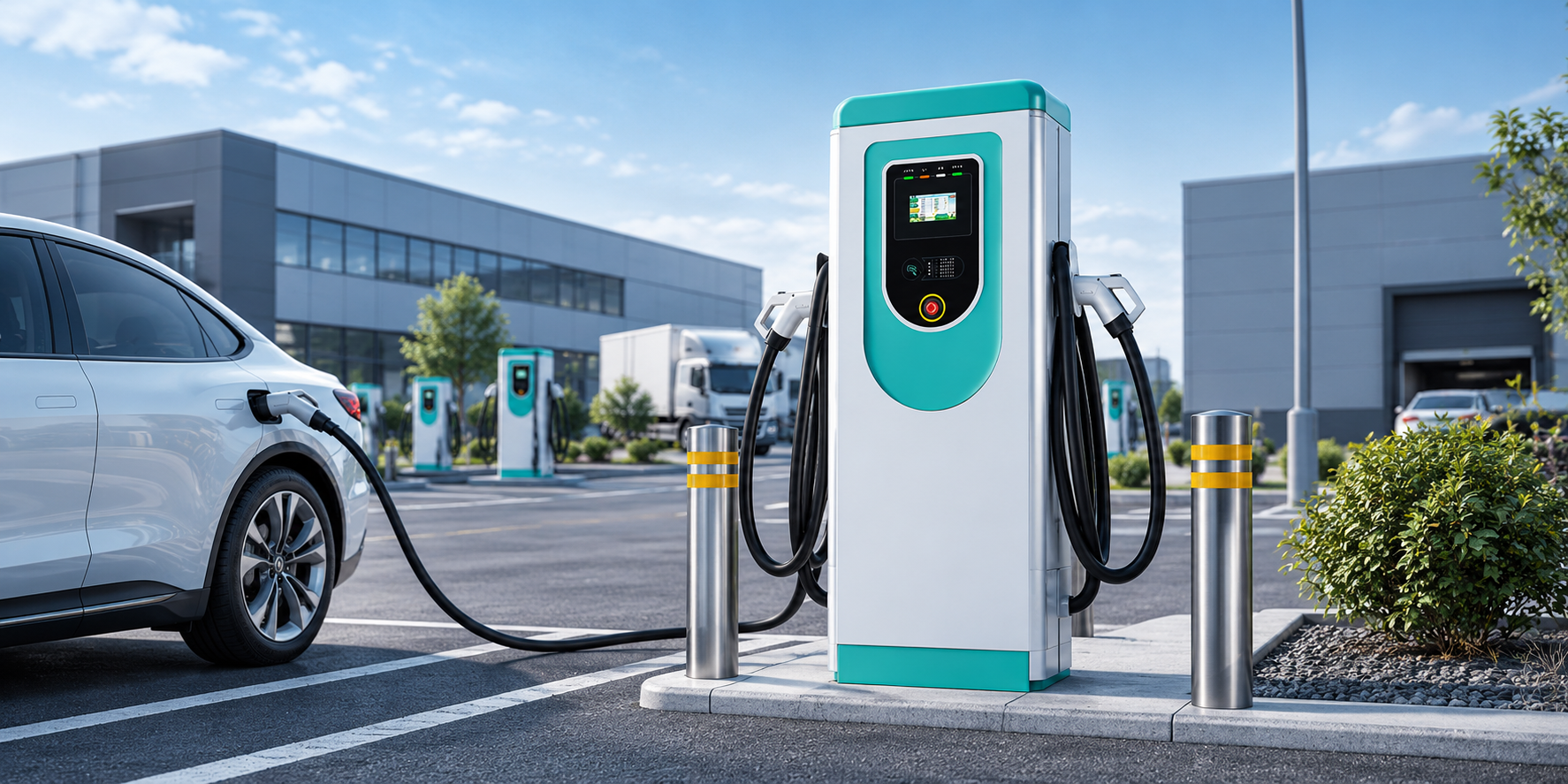
The EV-AC03201T dual-connector AC station states OCPP 1.6J and RFID, and the EV-RHDC30K-L compact DC charger states OCPP 1.6J — both are built to run under a management platform, as the range overview on commercial EV charging sets out. No EVDANCE page states how a unit behaves when the connection drops, so treat offline behaviour as a written-confirmation item: ask the platform provider what is stored locally, what is forwarded later, and which offline modes exist — and get the answer before the first outage, not after it.
Frequently Asked Questions
Will a driver be billed correctly for a session held during an outage?
On platforms with store-and-forward records, the session is uploaded when the connection returns and billed from that record. Platforms without it may lose the session data. Which one you have is a documentation question — ask it at purchase, not at the first outage.
Does an outage stop a session in the middle?
Normally, no. The running session is a local arrangement between charger and car and finishes on its own terms. What the outage removes is supervision: starting new sessions, stopping remotely, and seeing what is happening.
Should a site keep a non-network way to start charging?
For most shared sites, yes — a local route such as RFID cards held on the charger, where the platform supports it, keeps the site usable through a broadband failure. The pattern is the same one installers recommend for homes: never let a router problem become a can’t-charge problem.
Related Reading
- OCPP Explained: Charge Point Operators, EV Charger Hardware
- Do Home EV Chargers Need Wi-Fi?
- Smart vs Non-Smart EV Chargers: What Installers Actually Want
- How Do Smart EV Chargers Work?

