
When an insurer writes off an EV, the battery normally leaves with the car: in most total-loss settlements, ownership of the whole vehicle — pack included — passes to the insurer, which sells it into the salvage chain. There, specialists test and grade the pack. A healthy pack can be reused or moved into stationary storage; a damaged or worn one is recycled. It is not a part the owner unbolts and keeps.
Key Takeaways
- In most total-loss settlements, the insurer takes the whole car — the battery is not a separate part you keep or sell.
- A crash-damaged pack is a hazard first: do not charge it, garage it, or open it.
- Specialists test and grade the pack; healthy packs are reused or given a stationary second life, damaged or worn ones are recycled.
- Claim terms vary — your settlement documents decide buy-back and ownership questions.
Who Owns the Pack After a Write-Off
A write-off (a total loss) means the insurer has decided repair costs more than the car is worth to them. The settlement pays you the car’s agreed value, and in return the insurer takes the vehicle to recover what it can at salvage auction. That transfer covers the traction battery, because the pack is part of the car, not a separate asset on the claim.
Two consequences follow. You cannot usually sell the battery yourself after accepting a total-loss payout — it is no longer yours. And if you buy the car back as salvage, the paperwork and local rules decide what you may do with it; any work on the high-voltage pack belongs to qualified specialists. Claim terms vary, so your settlement documents govern your case.
Why a Crashed Pack Is Treated as a Hazard First
Before anyone thinks about value, a crash-damaged pack is a safety question. Impact damage can be invisible from outside, and a compromised pack should not be charged or parked in an enclosed space while its condition is unknown. Recovery drivers and salvage yards use high-voltage procedures for exactly this reason.
- Do not plug in a crash-damaged EV to “see if the battery still works.”
- Tell the insurer and the recovery company that the car is electric, so it is handled as a high-voltage vehicle.
- Keep the car out of an attached garage until it has been assessed.
- Never attempt to remove or open the pack yourself; there are no owner-serviceable parts inside.
Where the Pack Goes Next
Once the car reaches a specialist, the pack is tested and graded — its remaining capacity and physical condition decide the route:
| Grading outcome | Usual route |
|---|---|
| Undamaged, healthy capacity | Reused as a replacement pack, or retired into stationary storage for a second life |
| Undamaged, heavily worn | Recycled: materials recovered by a specialist processor |
| Impact-damaged or untestable | Handled as hazardous material by specialists; dismantled under high-voltage procedures, then recycled |
This grading step is the same fork a pack reaches at natural end of life — our overview of whether an EV battery can be replaced or repaired covers how condition decides between repair, reuse and replacement. The write-off path simply reaches the fork early, through the insurer rather than the owner. Given that FuelEconomy.gov cites DOE estimates of 12–15 years of battery life in moderate climates, a young written-off car’s pack often has real value left — which is precisely why insurers sell the whole car into the chain rather than scrapping it outright.
If You Replace the Car
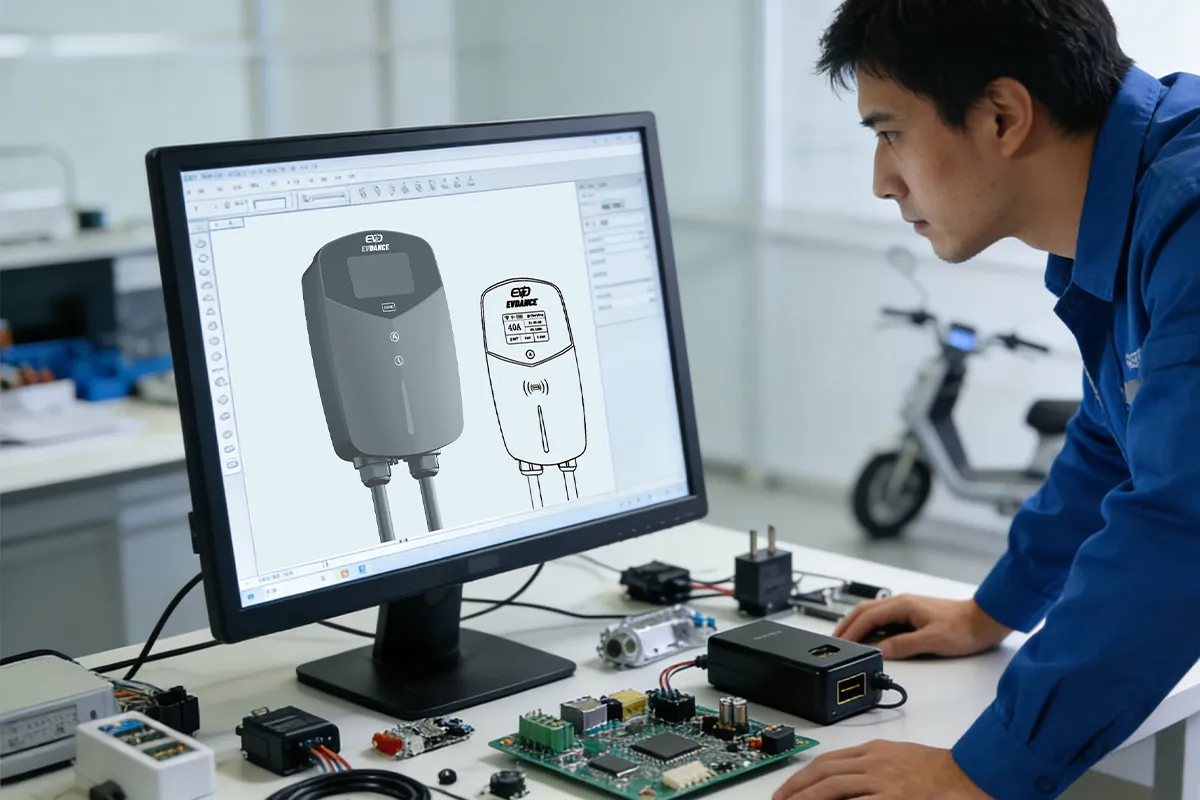
Most write-off stories end with a replacement car, and the battery questions restart — this time as a buyer. If the replacement is used, checking its battery health matters more than its mileage. And home charging carries over: your existing wallbox usually serves the new car as-is.
If a new setup is needed, EVDANCE covers both patterns: the EV-ACT5006T 48 A wall charger (hard-wired or NEMA 14-50P, NACS, 25 ft, IP65/IP66) for a permanent install, and the EV-ACS4005T 40 A portable charger (9.6 kW, adjustable 16–40 A, IP66) that can move house with you.
Frequently Asked Questions
Can I buy my written-off EV back and keep the battery?
Sometimes owners can buy the salvage back, depending on the claim terms and local rules. Even then, the pack is a high-voltage component: assessment and any removal are specialist work, and a damaged pack may be restricted from reuse regardless of who owns it.
Is the battery of a written-off EV worth money?
Often, yes — a graded, healthy pack has value as a replacement part or for stationary storage, part of what the insurer recovers at auction. There is no standard figure: value depends on model, age and grading result.
My EV was written off for body damage. Is the battery automatically fine?
No. Cosmetic damage says little about the pack, which is why the salvage chain tests rather than assumes. The same caution applies in reverse: a car can look untouched and still hide underbody or pack damage.
Related Reading
- Can an EV Battery Be Replaced or Repaired?
- How to Check EV Battery Health
- Does an EV Battery Degrade Over Time?

