
A charging port is the socket on the car itself: the inlet behind the flap that the charger’s plug pushes into. It belongs to the vehicle, not the charger, and its shape is fixed when the car is built. That shape decides which chargers you can use — an AC inlet takes home and destination charging, while a fast-charging inlet adds the extra connections a DC rapid charger needs.
Key Takeaways
- The charging port is the inlet on the car; the plug belongs to the charger.
- Combined inlets add DC sockets below the AC section; CHAdeMO cars carry a separate DC inlet.
- The port is fixed at the factory and decides which chargers and adapters fit.
- Check the car’s inlet standard before buying any home charger or adapter.
Port, Plug and Outlet: Which Part Is Which
The words are often mixed up, and the mix-up matters when buying equipment. Three parts are involved in every home charge:
| Part | Where it is | What it does |
|---|---|---|
| Charging port (inlet) | On the car, behind a flap | Receives power; its shape is fixed by the car maker |
| Plug (connector) | On the end of the charger’s cable | Carries power from the charger and locks into the port |
| Wall outlet | On the wall of your home | Feeds a portable charger (for example, NEMA 14-50) |
One caution: charger networks also use “port” for one charging point at a public site. On the car, it always means the inlet behind the flap.

What Is Inside the Port
Look into the inlet and you see a pattern of sockets. The upper group carries AC power for home charging, plus small signal contacts that let car and charger confirm a safe connection before power flows. On many cars the inlet is a combined design: below the AC section sit two large extra sockets that only a DC fast charger uses. That is how a CCS inlet works, explained in Does J1772 Work With CCS?
A NACS inlet is a single compact socket that handles both AC and DC through the same openings. Cars built for CHAdeMO rapid charging carry a completely separate second inlet, used only for DC, beside their AC inlet. The AC part is the one your home charger uses every night — our explainer What Is J1772? covers the most common North American version.
Where the Port Sits, and How It Locks
There is no standard position. Ports sit at the front, in a front wing, or at the rear quarter, and where yours sits decides how you park relative to your home charger. Most cars lock the plug in while charging; the car releases it when you unlock the car or press a release button. The flap and seals keep weather out between charges, and wiping the connector clean — see How to Clean an EV Charger Connector — keeps the contact faces in good condition.
Why the Port Decides What You Can Use
Compatibility is set at the factory. A charger whose plug does not match your port will not connect, which is why the comparison in Type 2 vs J1772 vs NACS starts from the car, not the charger. Before ordering a charger or adapter, check three things:
- The inlet standard — J1772, Type 2 or NACS — printed in the car’s manual and visible in the port’s shape.
- Whether the car takes DC fast charging at all, and through which inlet.
- The adapter direction. Adapters bridge AC standards; they cannot give a car a fast-charging system it was not built with.
Hardware Matched to the Port
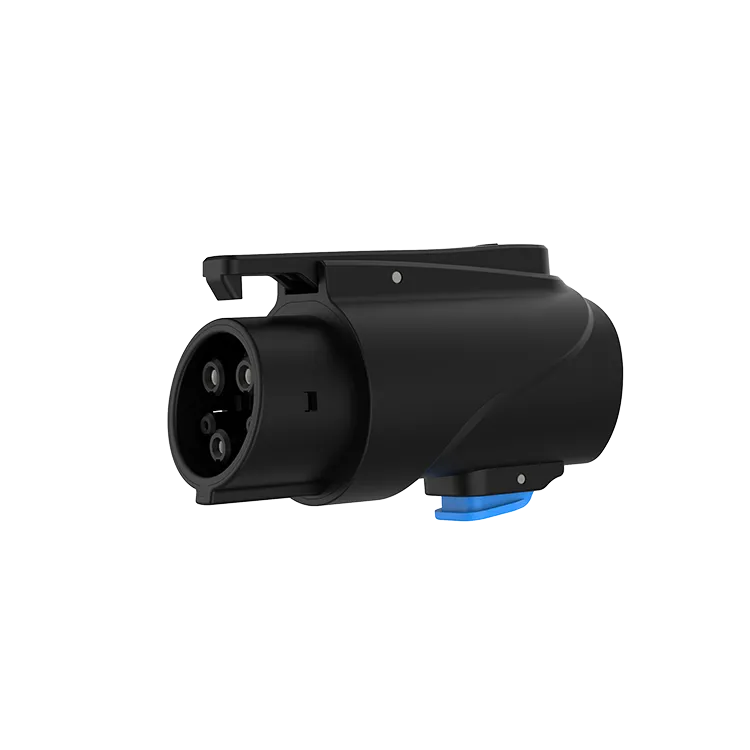
For a car with a J1772 inlet that visits a home with a NACS charger, the EVDANCE JT02 adapter (AC, up to 80 A, IP65) bridges the two AC standards. If the car itself is J1772 and you charge from a 240 V outlet, the EV-AC04001U is a 40 A portable charger (9.6 kW, NEMA 14-50P, 25 ft cable, IP66) built for that inlet. Either way: match the equipment to the port the car already has.
Frequently Asked Questions
Is a charging port the same thing as a plug?
No. The port is the socket on the car; the plug is the connector on the charger’s cable that fits into it. You choose plugs and chargers; the port comes with the car.
Can I change or upgrade my car’s charging port?
Not in any practical sense. The inlet is wired into the car’s charging system at the factory. Adapters can bridge AC standards, but they cannot add DC fast charging to a car that lacks the hardware.
Why does my car appear to have two ports?
Some cars carry two inlets: one for AC home charging and a second, larger one for DC rapid charging. Combined inlets such as CCS merge both jobs into one socket.
Related Reading
- What Is J1772? The North American EV Plug Explained
- Does J1772 Work With CCS? CCS Connectors Explained
- Type 2 vs J1772 vs NACS: Which EV Charger Connector Does Your Market Need?
- How to Clean an EV Charger Connector

