
A pre-charge test is the short sequence of checks a DC fast charger and the car run together after you plug in and before full power flows. In those few seconds the charger verifies that the DC circuit is properly insulated, and brings its output voltage in line with the car’s battery voltage so the main contactors can close without a surge. It is why every DC session pauses briefly between plugging in and charging — the equipment proving the path is safe first.
Key Takeaways
- The pre-charge test runs after plug-in and before power: an insulation check, then voltage matching with the battery.
- The brief pause at the start of every DC session is these checks, not a fault.
- A failed check refuses the session with no power flow — reseat once, try another unit, then let the operator or the car’s maker read the fault.

The Two Checks Inside the Pause
The first check is insulation. Before the high-power path is connected, the charger tests that the DC circuit between itself and the car is properly isolated — that no leakage path exists toward earth or the vehicle body through a damaged cable, water ingress or a fault in the car. If that check fails, the session is refused rather than started.
The second check is voltage matching — the pre-charge itself. The car’s battery sits at its own voltage, set by its state of charge. The charger raises its output stage to sit close to that voltage before the contactors close. If two different voltages met across a closing switch, the difference would rush across as a surge of current; pre-charging removes the gap, so closing the contactors is a quiet event instead of a spark. Only then does the session settle into the pattern described in our explainer on how DC fast chargers work: the car requests current, and the charger follows.
| Step | What it proves | If it fails |
|---|---|---|
| Insulation check | The DC path is isolated, with no leakage path to earth or the car body | The session is refused before power flows |
| Voltage matching (pre-charge) | Charger output and battery voltage sit close together | The session waits or aborts; the main contactors stay open |
| Charging begins | Both checks passed and the limits were agreed | — |
Why DC Charging Cannot Skip It
DC charging feeds the battery directly, bypassing the car’s onboard charger, at the power levels the U.S. DOT puts at 50–350 kW for DC fast charging. Current that large is not switched onto an unproven circuit. The insulation check protects people and the car; the voltage match protects the equipment on both sides of the connector. Home AC charging starts with barely a pause by comparison, because the wall unit hands AC to the car and the conversion — and the battery-side control — happens inside the car. On DC, the station holds the power stage, so the station and the car have to agree the path is sound before either commits.
What a Failed Check Looks Like
To the driver, a failed check is undramatic: the session will not start, the charger reports a fault, and no power flows. The sensible responses:
- Reseat the connector once and retry — a poorly seated plug can fail the start sequence.
- Try another charger. If the refusal follows your car to a second unit, the car’s side needs its maker’s service route; if every car fails at one unit, report it to the site operator.
- Do not keep forcing retries. A persistent refusal is the check doing its job; the fault is recorded for the operator or the car’s maker to read.
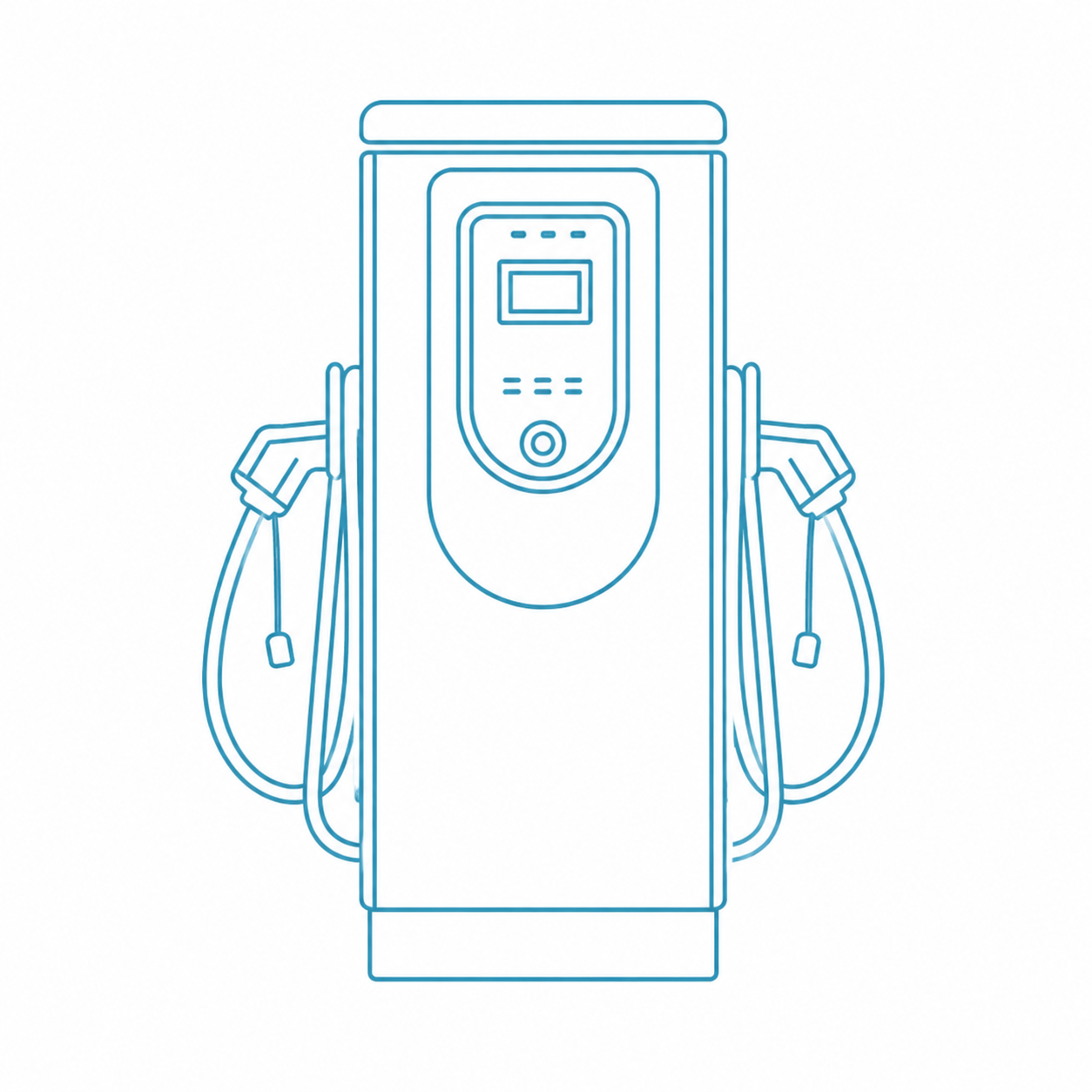
DC Charging From EVDANCE
The EVDANCE EV-RHDC30K-L is a compact DC charger of 22 kW with OCPP 1.6J and an IP54 rating, built for sites below corridor power. Its listing states those figures and no start-up test behaviour, so no specific sequence is described for it here — the steps above are how the DC category works. For site planning around compact DC, see our commercial EV charging page.
Frequently Asked Questions
Does every DC fast charger run a pre-charge test?
Yes, in substance. The DC start sequence includes isolation verification and voltage matching before full current, whatever the screen calls it. Messages vary; the two jobs do not.
Why does the charger pause for a few seconds before charging starts?
That pause is the checks running: insulation first, then the output voltage rising to meet the battery’s. A few seconds of testing is what makes closing the contactors safe at DC power levels.
Is pre-charge the same as battery preconditioning?
No. Preconditioning warms or cools the car’s battery before you arrive. The pre-charge test happens at the charger, after you plug in, and is about the electrical path — not the battery’s temperature.
Related Reading
- How Do DC Fast Chargers Work?
- How to Use a DC Fast Charger: Step by Step
- How Fast Is a DC Fast Charger?
- Level 1 vs Level 2 vs DC Fast Charging: A Practical Comparison

