

A rough-in inspection is a mid-job checkpoint some areas require during an EV charger installation: a look at the wiring run before it disappears behind drywall, finishes, or backfilled soil. The inspector checks the parts about to become impossible to see. Not every installation has one, and it never replaces the final inspection.
Key Takeaways
- A rough-in inspection checks a charger installation mid-job, before walls or soil hide the run.
- Same permit as the final inspection — but it examines the hidden half of the work.
- Covering the run before the visit is the expensive mistake — the inspector cannot pass unseen work.
- Choose the charger before the run is covered: its size fixes the circuit being checked.
Why the Hidden Parts Get Their Own Visit
Once a wall is closed or a trench is filled, nobody can check how the cable was routed or protected. The rough-in visit exists so those hidden parts are seen once, while they still can be. At that point the breaker is in the panel and the run is routed, but the charger itself is often still in its box. The jobs that trigger this stage are the ones that bury the work:
- Runs inside finished walls, where the cable will sit behind drywall.
- Trenched runs to a detached structure or outdoor post, where the cable will sit under soil.
- Circuits inside a wider remodel, checked along with the rest before the walls close.
A run that stays visible, such as surface-mounted conduit, can be checked at the end instead — so many jobs skip this stage.
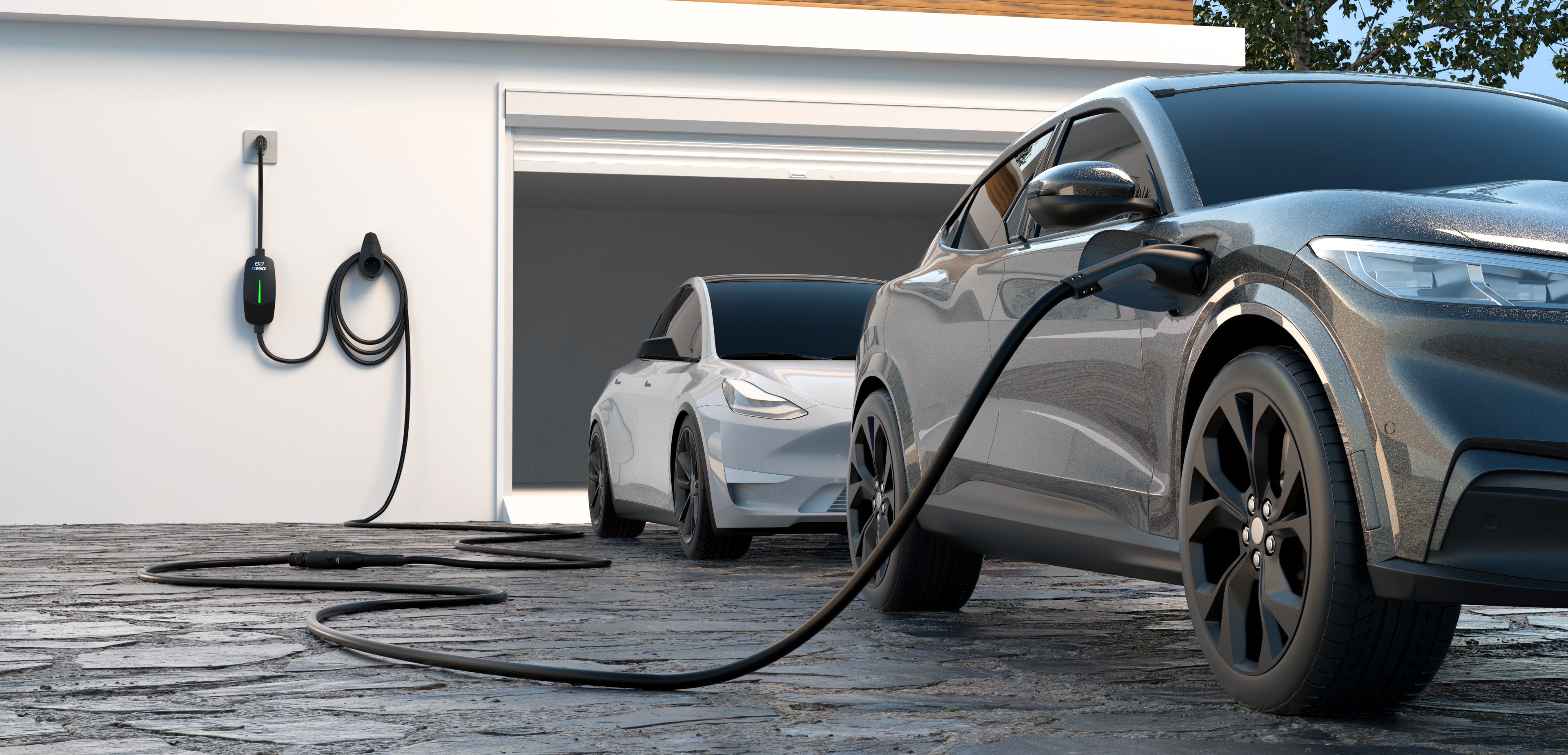
Two Checkpoints, Two Different Jobs
Both visits belong to the same permit, but they examine different things:
| Rough-in inspection | Final inspection | |
|---|---|---|
| When | Wiring in place, still uncovered | Everything finished |
| What exists | Breaker, run and boxes; charger may not be mounted yet | Charger mounted, circuit labelled, ready to use |
| Compared against | The permit; the run’s route and protection | The permit and code: sizing, protection, listing |
| If something is wrong | Corrected while the work is still open and reachable | A correction list, the electrician’s fixes, then a re-inspection |
| Passing allows | Walls to close and trenches to be backfilled | The permit to be closed |
It is the same comparison as the final visit in our guide to what a standard EV charger installation includes — made earlier, on the hidden half of the job.
The Mistake That Makes This Visit Expensive
The classic failure at this stage is not bad wiring — it is good wiring covered too soon. A drywall crew closes the wall, or a trench gets backfilled, before the inspector has seen the run. An inspector cannot pass unseen work; depending on the area, the job stalls or finished work is opened up again.
- Your electrician sequences the visit. Booking it, and holding the covering work until it passes, is normally part of their job — confirm that up front.
- Your part is coordination. Make sure no other trade closes a wall or fills a trench on the charger’s route before the visit.
- Ask at the quote stage. It changes the timetable, as our guide to how long an installation takes shows.

Decide the Charger Before the Run Is Covered
A rough-in also freezes a decision: the run being inspected was sized for a specific charger. Charging is a continuous load under the National Electrical Code, so the circuit is built at 125% of the charger’s draw — a 32 A charger sits on a 40 A breaker, a 48 A charger on a 60 A breaker. Pick the unit before the walls close. The EV-ACT5006T 48A Level 2 wall charger is the full-size case, with ETL, FCC and CE marks, IP65/IP66; the EV-ACS3210T portable charger adjusts from 10 A to 32 A in six steps, suiting a smaller service. Changing to a bigger charger after the run is buried can mean reopening the wall you just closed.
Frequently Asked Questions
Does every EV charger installation need a rough-in inspection?
No. It appears where local rules require it and the job hides work — in-wall or underground runs. Plug-in and visible surface runs usually have only the final inspection, if one is required at all. Your electrician or building department can say which stages your permit carries.
What happens if the work is covered before the rough-in visit?
The inspector cannot verify what is hidden, so the job cannot proceed on trust. What follows varies locally — anything from a delay to opening finished work. If it happens, tell your electrician and the building department promptly.
Is the charger mounted before or after the rough-in inspection?
Usually after: the visit is about the run — cable, conduit, boxes, panel end — not the finished appliance, though practice varies.
Related Reading
- What Is a Standard EV Charger Installation?
- How Long Does EV Charger Installation Take?
- Can I Install a Level 2 Charger Myself?
- What Qualifications Do You Need to Install EV Chargers?

