
Type 3 is a legacy European charging connector: a shuttered socket design that was fitted to some charging posts, mainly in France and Italy, before Type 2 became the European standard. It is not fitted to new cars or new posts. What remains is older equipment still in service — and a modern Type 2 car cannot plug into one directly.
Key Takeaways
- Type 3 is an older, shuttered European connector, found mainly on legacy posts in France and Italy.
- Type 2 replaced it as the European standard; no new car or post uses Type 3.
- A Type 2 car cannot use a Type 3 post, and adapters are not something to plan a trip around.
- Check the socket type before buying any used European charging equipment.
Where Type 3 Came From
In the early years of public charging, Europe had not yet settled on one plug. Type 3 was one of the designs put forward, promoted in particular in France and Italy. Its selling point was the shutter: spring covers over the electrical contacts, intended to keep fingers and objects away from live parts in a public socket.
The design that spread across Europe was Type 2 instead. As our comparison of Type 2, J1772 and NACS connectors explains, Type 2 became the standard socket for European AC charging, and new posts stopped being built with Type 3. The Type 3 posts that remain are survivors from that earlier period, still working but no longer added to.

Type 2 and Type 3 at a Glance
| Type 2 | Type 3 | |
|---|---|---|
| Status | The current European standard | Legacy — no longer installed |
| Where you meet it | Posts and cars across Europe | Some older posts, mainly in France and Italy |
| Socket face | Open socket | Shuttered face, with covers over the contacts |
| Your car | European EVs have a Type 2 inlet | No new car is built with one |
The practical result is the one covered more broadly in our explainer on whether EV chargers are universal: within a region, standards converge, but older and foreign equipment can still catch a driver out.
If You Meet One on a Trip
- Do not try to make it fit. Type 3 is a different connector system from Type 2, not a variation of it.
- Do not count on an adapter. A Type 3-to-Type 2 adapter is not a standard accessory you can rely on finding or borrowing, so it should never be part of a journey plan.
- Find a Type 2 post instead. Use the network’s app or a station map before you set off, following the same checks as for using any public charging station: connector, access and payment.
- In older areas, plan around modern posts. Where legacy posts survive, the reliable stop is the newer site nearby, not the nearest post of any age.
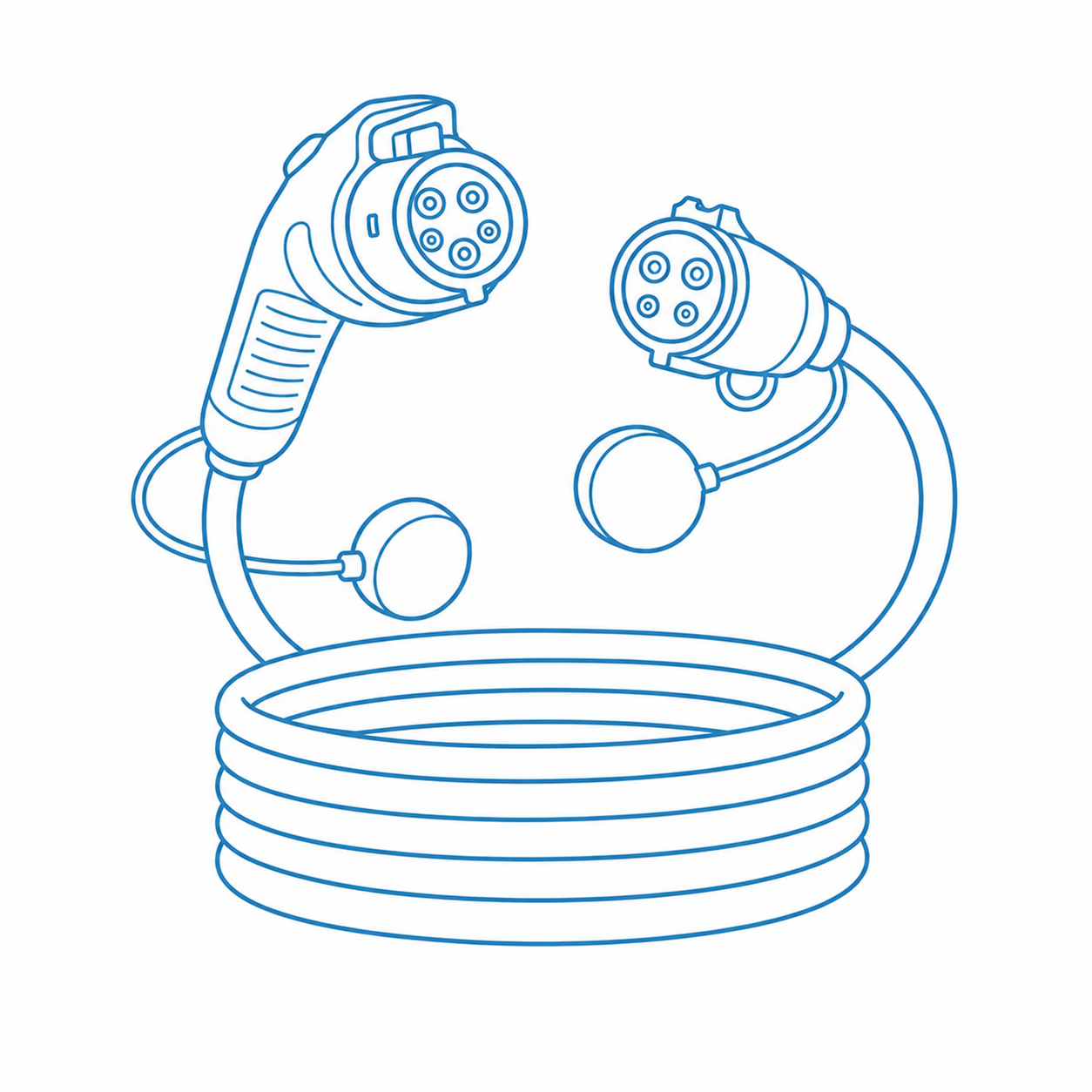
A Note for Buyers of Used European Equipment
Because Type 3 posts were once common in two large markets, older European charging equipment with Type 3 sockets still turns up second-hand. Before buying any used post, check which socket it carries: the socket defines who can ever use it, and a Type 3 unit excludes every modern European car. Current equipment is Type 2 throughout — EVDANCE’s European range, for example, is the EV-ACS3210E Type 2 portable charger and the EV-ACT3204E Type 2 wallbox, built for the standard that replaced Type 3.
Frequently Asked Questions
Can a Type 2 car charge at a Type 3 post with an adapter?
Not reliably. You may occasionally see an adapter advertised, but it is not a standard accessory, and network terms may not allow it. Treat a Type 3 post as unusable for a Type 2 car and find a Type 2 post instead.
Is Type 3 dangerous?
No. It was a certified standard of its time, and its shutters were a deliberate safety feature. The problem today is compatibility, not safety — the fleet has moved to a different plug.
Will the remaining Type 3 posts be replaced?
Operators retire or upgrade legacy posts over time, but there is no single timetable. Old listings can outlive the equipment, so check a current station map rather than relying on an old guide.
Related Reading
- Type 2 vs J1772 vs NACS: Which EV Charger Connector Does Your Market Need?
- Are EV Chargers Universal?
- Can You Use Any EV Charging Station?

