
An OEM charger is a charger built by a specialist manufacturer to another company’s design or specification, and sold under that company’s brand. The complication is that suppliers use “OEM” loosely for four different arrangements — OEM, ODM, private label and white label. The terms decide different things: who owns the design, whose name sits on the certificate, who carries responsibility. A buyer who can separate them can read any quotation and tell which deal is actually being offered.
Key Takeaways
- OEM builds to your design; ODM and private label brand the manufacturer’s design; white label supplies it unbranded.
- Design, tooling, the certificate and customer responsibility move differently under each term.
- Identify any offer by its details — design source, certificate holder, minimums — not by its heading.
- Get tooling ownership and certificate questions settled in writing before production.
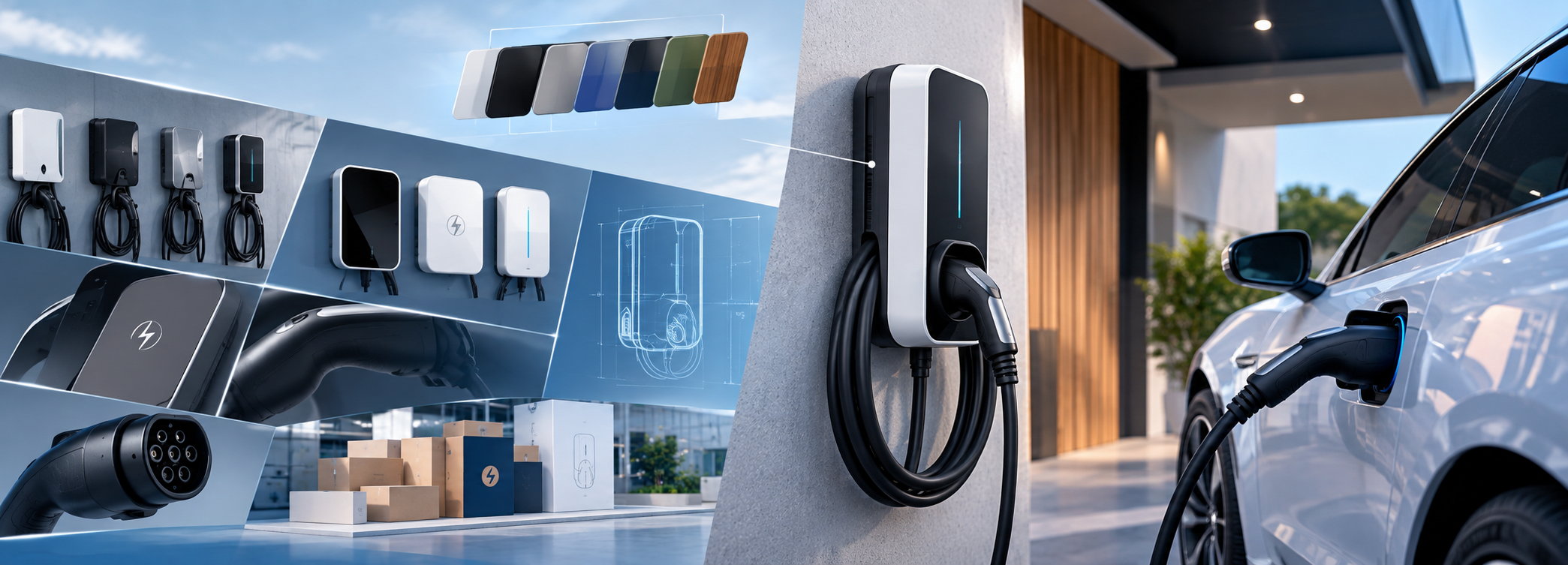
The Four Terms, Side by Side
| Term | The design comes from | The brand on the product | The certificate names |
|---|---|---|---|
| OEM | You: your drawings or specification | Yours | You or the manufacturer, as agreed in writing |
| ODM | The manufacturer: an existing, proven design | Yours, applied at the factory | The manufacturer, for the base model |
| Private label | The manufacturer: an existing product | Yours, applied at the factory with your packaging | The manufacturer, for that product |
| White label | The manufacturer: an existing product | None, or yours applied later by you | The manufacturer, for that product |
In everyday supplier language the middle two blur together: many private-label projects are ODM arrangements in practice. Our comparison of OEM vs ODM chargers works through how the two design models differ in depth and time to market. The boundary cases matter most: true OEM starts from your design, and white label is the only arrangement where the product can arrive with no brand on it.
What Actually Changes Hands
Four assets or duties move differently under each term:
- Design ownership. Under OEM the design is yours and the manufacturer builds to it. Under the other three, the design stays the manufacturer’s: you are buying units of it, not rights to it.
- Tooling. A custom enclosure under OEM may need moulds you pay for. Who owns those moulds afterwards is a contract point, not an assumption.
- The certificate. Test reports and certificates name a holder and an exact model. Under ODM, private label and white label that holder is normally the manufacturer, which is why certificate ownership in private-label deals deserves its own check before you build a brand on someone else’s file.
- Responsibility to the end customer. The brand on the product is who the customer comes back to. Warranty handling between you and the factory is set in the supply agreement.
Reading a Quotation: Which Deal Is This?
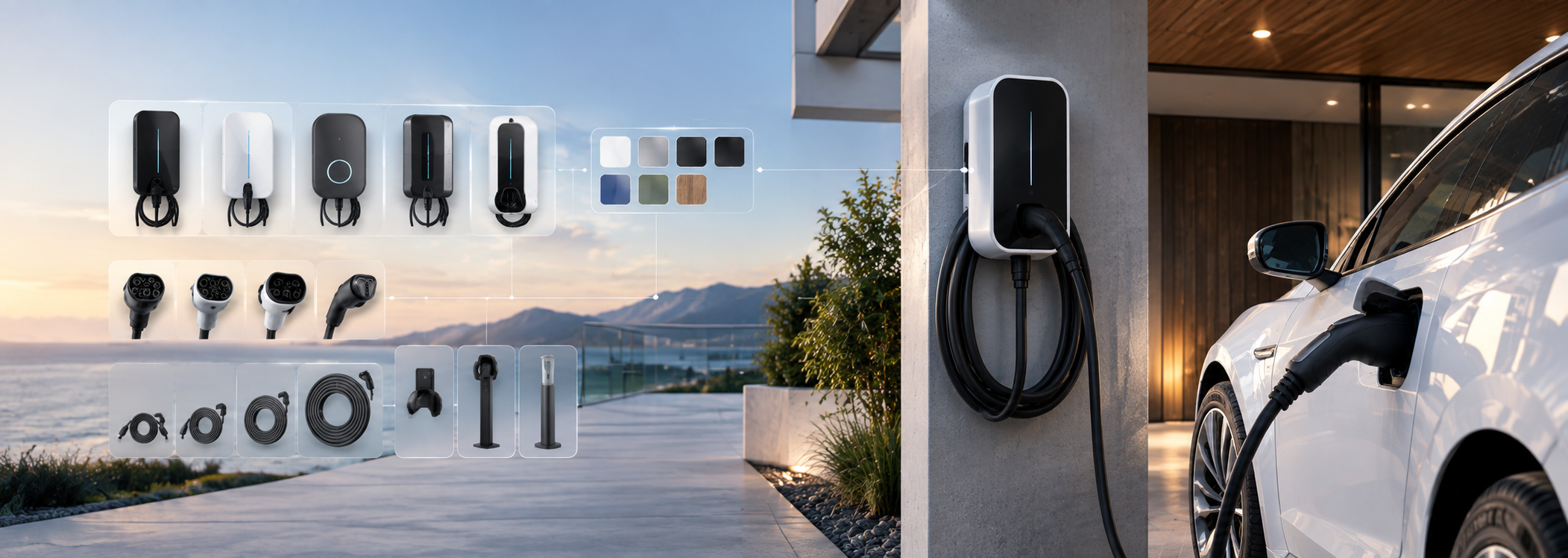
Suppliers rarely label their offers with these terms, so identify the deal from the details. A quotation built on a catalogue model with your logo added is ODM or private label, whatever the heading says. One that prices design work, new tooling and fresh certification is OEM. Goods offered unbranded from stock are white label. Two checks settle most confusion: whose name is on the certificate for the exact model, and what the minimum order covers — our explainer on what sets minimum order quantities shows why minimums differ sharply between a branding run and a design project. Our outline of how an OEM project runs shows the sequence a genuine design-led project follows.
EVDANCE’s Stated Offer
EVDANCE is a Shenzhen EV charger manufacturer founded in 2011, with its own factory, exports to more than 30 countries and a 3-year standard warranty. The offer stated on our site is private label from 100 units: existing EVDANCE models carrying your brand, set out on our OEM and private-label program page, with the full range on the products page. If your project starts from your own design, put the design, tooling and certificate questions in writing through our contact page before asking for a price.
Frequently Asked Questions
Is private label the same thing as OEM?
No. Private label puts your brand on the manufacturer’s existing product; OEM builds to your design or specification. Suppliers often use “OEM” for both, so judge the offer by whose design it is and whose name is on the certificate.
Who is responsible if a charger sold under my brand fails?
Towards the customer, the brand on the product carries the responsibility. Between you and the factory, warranty handling and failure costs are whatever your supply agreement says — those clauses matter more than the term you bought under.
Do I need my own design to work with a charger factory?
No. Most first-time buyers start from the manufacturer’s existing certified models under ODM or private label, and commission design-led OEM work only when volume justifies its own tooling and certification.
Related Reading
- OEM vs ODM EV Chargers: How Private-Label Charging Works
- OEM and Private-Label EV Chargers: A Complete Guide for Brands
- How an OEM EV Charger Project Works, Step by Step
- EV Charger MOQ Explained: What Sets Minimum Order Quantities
Sources & Standards
- U.S. DOE AFDC — Procurement and Installation for EV Charging Infrastructure
- OSHA — Nationally Recognized Testing Laboratory (NRTL) Program
Working with a factory on OEM or ODM? See how our EV charger OEM & ODM service works, or browse portable EV charger wholesale and private label options.

