
Cell-to-pack is a way of building an EV battery. Instead of grouping cells into modules first and then putting the modules into the pack, the cells go straight into the pack itself. Removing the module layer frees up space inside the same outer case, so more of the pack’s volume is battery and less is packaging. The car charges and drives exactly the same way.
Key Takeaways
- Cell-to-pack skips the module layer so more of the pack’s volume holds working cells.
- Charging, connectors and daily use are unchanged; the difference is internal.
- The trade-off is repair: mid-level module swaps give way to pack-level specialist work.
- Battery life still follows use and climate, per the DOE’s 12–15 year moderate-climate estimate.

Three Ways to Build the Same Pack
Every EV battery holds the same basic parts: cells, connections, cooling and a control system. What changes between designs is how many layers sit between the individual cell and the finished pack.
| Design | How it is built | What it means in practice |
|---|---|---|
| Cell-to-module-to-pack | Cells are grouped into modules, and the modules are bolted into the pack case | The traditional layout. A faulty module can sometimes be exchanged on its own |
| Cell-to-pack | Cells are fitted directly into the pack, with no module layer | More of the case volume holds cells. Repairs lean toward pack-level specialist work |
| Cell-to-body (structural) | The pack forms part of the car’s floor structure | The furthest step in the same direction: the battery case and the car body share one structure |
Why Makers Are Dropping the Module Layer
Modules were never there for the driver’s benefit. They made factories easier to run: cells could be tested, grouped and handled in standard blocks. The cost is space and weight that store no energy.
- Module cases and frames take room. Every module wall, lid and connector is volume that could hold cells instead.
- Fewer parts to assemble. Skipping a layer removes handling steps on the production line.
- More range from the same footprint. The space under the floor does not grow, so filling more of it with cells is one of the few ways to add capacity without a bigger car.
- Simpler cooling paths. Cells can sit directly against the pack’s cooling plate instead of through a module base.
What It Changes for Owners — and What It Does Not
Charging does not change. A cell-to-pack car uses the same connectors and the same charging levels as any other EV. Level 1 still adds roughly 2–5 miles of range per hour, Level 2 roughly 10–20, and DC fast charging sits in the 50–350 kW band, per U.S. DOT figures. The pack’s internal layout is invisible to the charger.
Longevity is still about use and climate, not layout. The U.S. Department of Energy’s FuelEconomy.gov puts EV battery life at roughly 12–15 years in moderate climates and 8–12 years in severe ones, whichever way the pack is assembled. How a battery ages day to day is covered in Does an EV Battery Degrade Over Time?
Repair is where the difference shows. With modules, a workshop could sometimes replace one failed block. With cells fitted directly into the pack, mid-level repairs get harder and work shifts toward the pack-level specialist process described in Can an EV Battery Be Replaced or Repaired? That is a trade-off makers accept in exchange for the extra capacity, and it is worth knowing before you buy rather than after a fault appears.
Charging a Cell-to-Pack Car
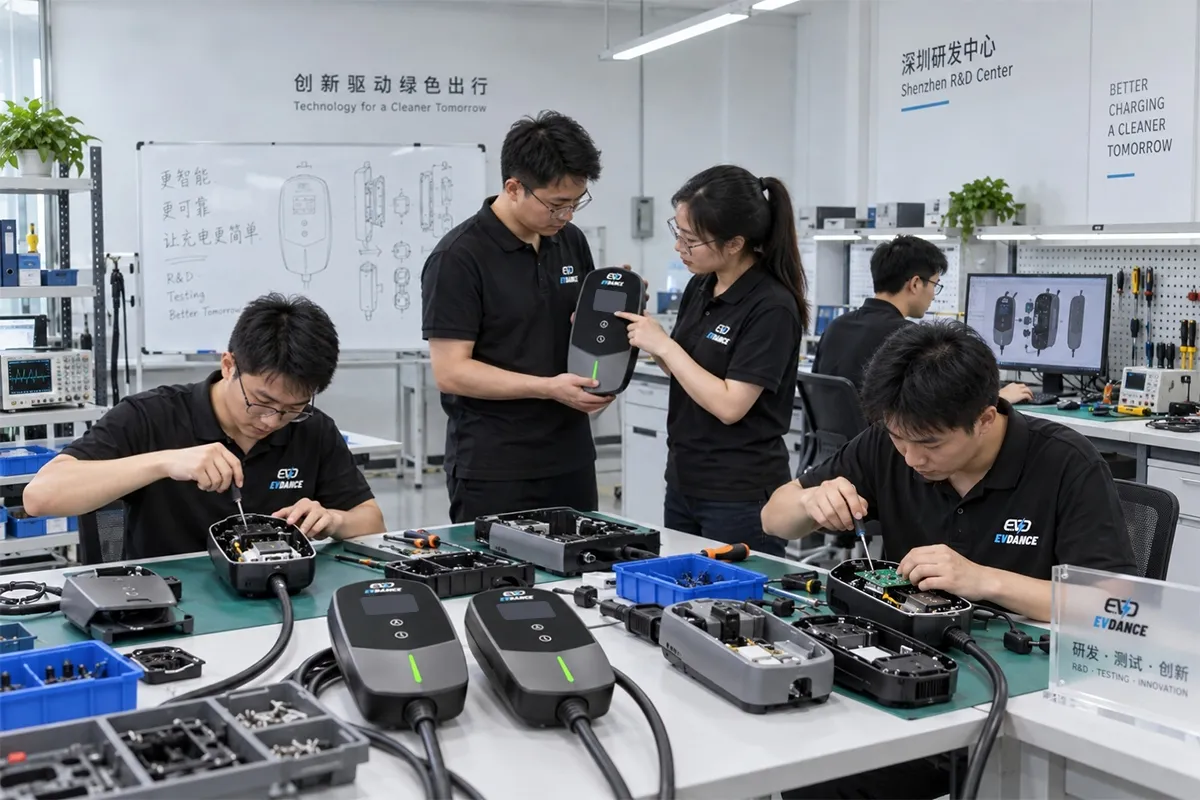
No special charger is needed, and none exists: the car asks for power exactly like a module-built car. For home charging, a 48 A wall charger such as the EV-ACT5006T covers overnight charging for any pack design, and the EV-AC04001U portable charger does the same job from a NEMA 14-50 outlet when a fixed install does not suit. Pick the charger for your parking and your mileage, not for the battery’s internal layout.
Frequently Asked Questions
Can I tell if a car has a cell-to-pack battery?
Not from outside, and not from the charge port. Makers mention it in technical material and launch coverage rather than on the badge. If repairability matters to you, ask the dealer what a mid-life battery repair looks like on that model before you buy.
Does cell-to-pack make a battery last longer?
There is no basis for claiming that. Expected life still follows the DOE’s climate-based estimates and how the battery is used. What cell-to-pack changes is how much capacity fits in the space, not how fast the cells age. How to Check EV Battery Health shows what you can actually measure on a used car.
Is a cell-to-pack battery harder to recycle?
The recycling routes are the same: packs are discharged, dismantled and processed for their materials. Fewer module parts can mean fewer steps at dismantling, but the pack still goes through specialist facilities, never general waste.
Related Reading
- Can an EV Battery Be Replaced or Repaired?
- Does an EV Battery Degrade Over Time?
- How to Check EV Battery Health

