
A CPO runs the chargers; an eMSP runs the driver’s account. The charge point operator owns or operates the hardware, sets the price at its stations and keeps them working. The e-mobility service provider gives the driver the app or card, takes the payment and sends one bill — including for sessions on other operators’ chargers. The two meet at every public session, which is why their names get mixed up, and one company often does both jobs.
Key Takeaways
- CPO = the chargers: hardware, station prices, uptime and repairs.
- eMSP = the driver relationship: accounts, apps, cards, payment and one bill.
- On a roaming session both appear: the provider authorises and bills, the operator delivers and records the charge.
- One company can hold both roles, which is why the names blur — the job split still explains any session.

Two Jobs, Side by Side
| Question | CPO (charge point operator) | eMSP (e-mobility service provider) |
|---|---|---|
| What do they own or run? | The chargers and the platform they report to | The driver accounts, app and RFID cards |
| Who is their customer? | Drivers at their stations, site hosts, and partner providers | Drivers and fleets who hold an account |
| Who sets the price? | The price at its own stations | What its account holders pay — on partner networks this can be its own price for that station |
| Who keeps things working? | Repairs, uptime and the support number on the charger | The app, the account, the payment method and the invoice |
| How do they get paid? | From charging revenue at their stations, settled directly or through providers | From their account holders, per session or by subscription |
The technical link between them is the operator’s platform: chargers report to it over a protocol such as OCPP, and providers connect above that layer to authorise their drivers — the layering our OCPP explainer for operators walks through.
One Session, Two Companies
The split is easiest to see by following a driver through a single charge on a partner network:
| Step | Who the driver is dealing with |
|---|---|
| Finding the charger | Usually the eMSP: its app shows partner stations, not only its own network’s |
| Starting the session | Both: the eMSP’s card or app proves who pays; the CPO’s charger and platform accept it |
| Charging | The CPO: its hardware delivers the energy and records the session |
| Paying | The eMSP: it bills the driver and settles with the CPO afterwards |
| Something goes wrong | A broken charger is the CPO’s job; a wrong bill is the eMSP’s |
Where no provider relationship exists, the CPO sells directly: U.S. NEVI-funded stations must accept contactless card payment with no membership, so any driver can charge without an eMSP account.
When One Company Is Both
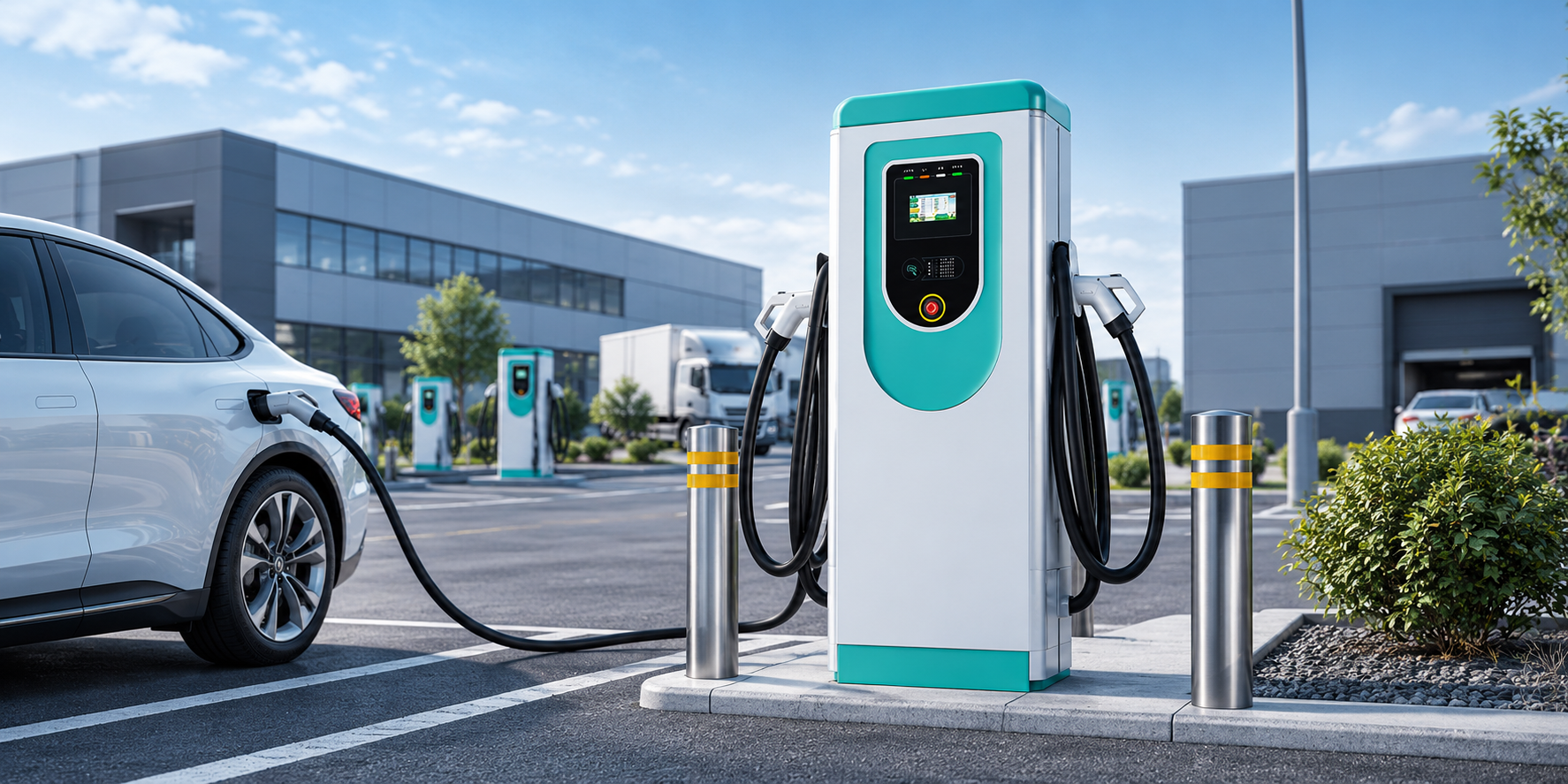
Many networks are CPO and eMSP at once: they run chargers and issue the app that starts them. The roles separate when a company specialises — an operator that opens its stations to many providers, or a provider whose account works across many operators’ networks. Fleets meet the split most often, holding one provider account while charging on whatever operator runs the depot or destination site. The brand on the charger tells you the operator’s side; the brand in your app tells you the provider’s — as our guide to RFID cards for EV charging shows, the card itself is a provider credential, not part of the charger.
Where Charger Hardware Sits
Hardware answers to the CPO’s side of the line: a charger must connect to the operator’s platform and accept the credentials providers issue. The EVDANCE EV-AC03201T dual-connector AC station (up to 43 kW shared, OCPP 1.6J, RFID) and the EV-RHDC30K-L compact DC fast charger (22 kW DC, OCPP 1.6J) are built for that layer. EVDANCE manufactures the hardware; it is neither a CPO nor an eMSP, and runs no driver accounts. Operator-ready models are listed under our commercial charging solutions.
Frequently Asked Questions
Who do I actually pay at a public charger?
Whoever’s credential you used. Pay by app or RFID card and your eMSP bills you; pay by contactless card at the station and you pay the CPO directly. The energy comes from the operator’s charger either way.
Why is the price in my app different from the price on the charger?
Because they are set by different companies. The charger shows the operator’s price; your app shows your provider’s price for that station, which can include the provider’s own pricing on partner networks. Check the app price before starting.
Who do I contact about a broken charger?
The CPO — the operator named on the unit and its support line. Your provider can help with billing or a failed authorisation, but it cannot repair or reset hardware it does not operate.
Related Reading
- OCPP Explained: What Charge Point Operators Need From EV Charger Hardware
- What Is an RFID Card for EV Charging?
- How Much Do EV Charging Stations Charge? Pricing Models Explained
- How to Use a Public EV Charger (and How to Stop It)

