
“Best supplier” is not a ranking anyone can honestly publish — it is a question list asked before a business pays. The questions fall into four groups: hardware evidence, commercial terms, the service system, and platform pairing. Judge answers by one test: a good answer is a document you can file, not an adjective.
Key Takeaways
- No honest “best supplier” ranking exists — there is a four-group question list, answers judged as documents, not adjectives.
- Hardware evidence = the certificate and label for the exact model in your quote.
- Platform pairing is asked before purchase: a stated version is testable, an “OCPP-ready” phrase is a question to close in writing.
- Warranty term, spares route and claim mechanics belong in writing before the first order.
The Four Groups of Questions
| Group | The questions to ask | A good answer looks like |
|---|---|---|
| Hardware evidence | Which certificate names this exact model and variant? What does the model’s own listing state — and not state? | The certificate file for the model as configured, a photo of the rating label as shipped, spec lines from the model’s own page |
| Commercial terms | What does the price include — delivery, commissioning support, documentation? Payment terms, lead time, price validity? | An itemised quote in writing, compared line by line against what commercial chargers cost |
| Service system | Who answers a fault, from where? Which parts are orderable spares? What is the claim route, and who pays carriage on a failed unit? | Written warranty terms, a spares list, a named claims route — the ground covered by our guide to how suppliers should handle common faults |
| Platform pairing | Which protocol version does this model state? With which platforms is the pairing evidenced? If the listing says “ready”, what remains unproven? | A stated version on the model’s own listing, plus pairing evidence — not verbal assurance. Our OCPP explainer sets out the versions |
The platform group is the one buyers most often skip, and the hardest to retrofit. A model whose listing states a protocol version — the EV-AC03201T dual-connector AC station and the EV-RHDC30K-L compact DC charger both state OCPP 1.6J — gives you a claim you can test against a platform. A model described as “OCPP-ready”, as the EV-ACS3210E is, states something narrower: the version and tested pairing are questions to close in writing before building a billing or access plan on it. Neither answer is a reason to walk away; both are reasons to ask before, not after.
Answers That Should Slow You Down
- Adjectives without documents. “Industrial grade”, “full support”, “seamless integration” — each stands where a file, a list or a stated version should be.
- Family figures quoted for a cheaper variant. A range’s top specification is not your unit’s. Ask which lines belong to the exact model, against its own page.
- A warranty described, not shown. Term, coverage and claim route exist as text or not at all. EVDANCE’s standard warranty is 3 years; hold the equivalent sentence in writing from any supplier — the warranty and after-sales checklist shows a complete answer’s shape.
- Compatibility claimed for a silent listing. If the model’s page states no protocol, platform compatibility is a promise made by a person, not by the product file.
Putting the Questions to EVDANCE
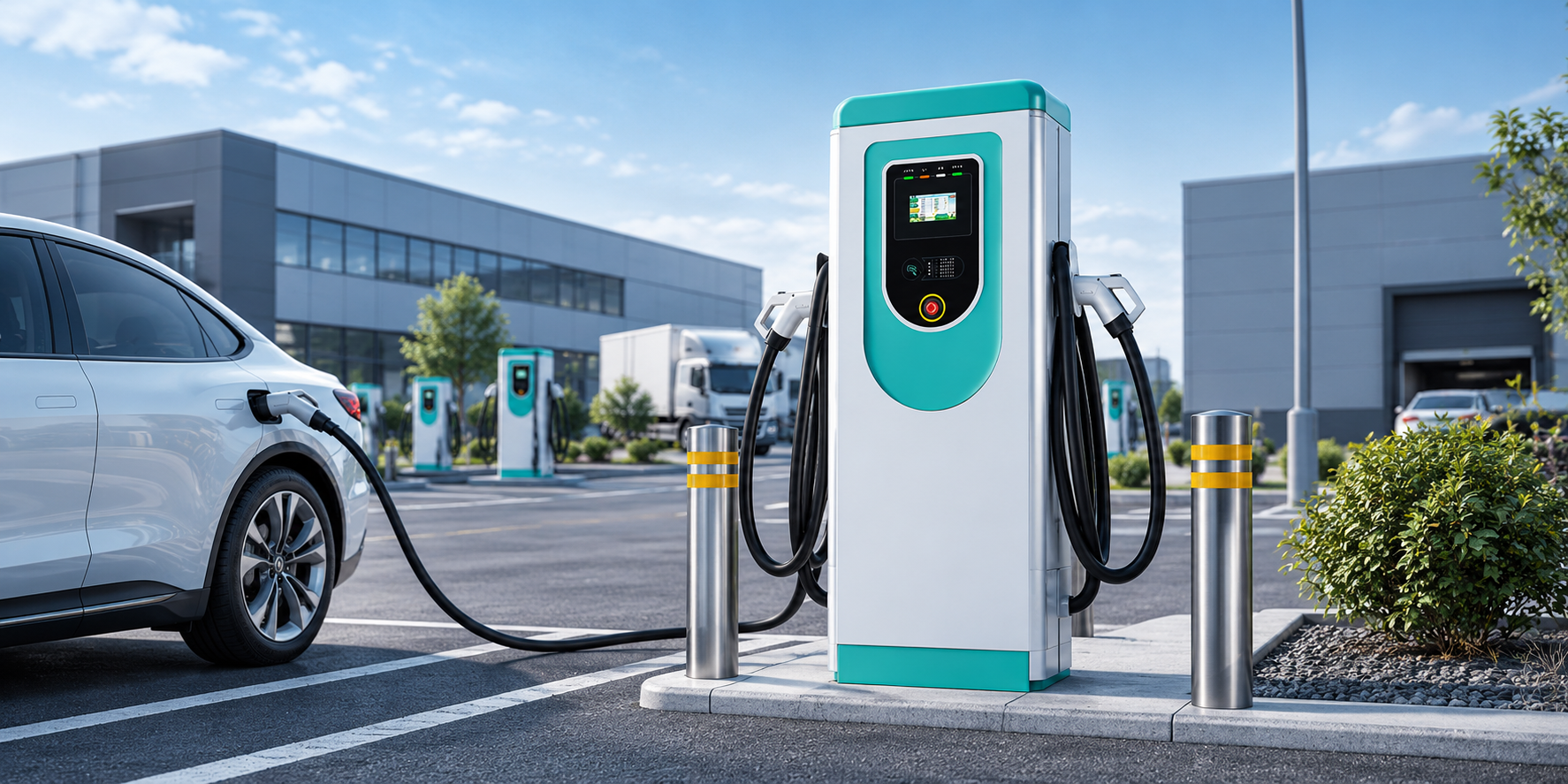
Ask us the same four groups. The documentary answers: EVDANCE is a Shenzhen manufacturer founded in 2011 — own factory, exports to more than 30 countries, private label from 100 units, 3-year standard warranty. For a business site, the EV-AC03201T serves two bays from one floor-standing unit — two Type 2 connectors sharing up to 43 kW (22 kW per connector), OCPP 1.6J, RFID, IP54 — with documentation pack, spares route and warranty terms available for the exact model before an order. An invitation to test the answers, not a claim to a ranking: run the same list against every quote. Start from the commercial EV charging range, the full product range, or contact us.
Frequently Asked Questions
What is the single most important question to ask a supplier?
“Show me the document for this exact model.” The certificate that names it, the warranty text that covers it, the listing line that states its protocol. A supplier producing those three files has answered most of the list; one answering with adjectives has answered none.
Is the cheapest supplier the best value?
Compare installed, supported cost, not unit price. A charger without a spares route, a written warranty or a platform pairing prices that risk into your operation for years. The cheapest quote wins only when its documents match the dearer ones.
Should I ask about platform pairing if I do not bill drivers yet?
Yes: access control, session records and fault reporting may need the pairing even when charging is free, and hardware silent on protocol cannot grow into a networked site later. The question costs nothing before the order, a replacement after.
Related Reading
- Common EV Charger Faults and How Suppliers Should Handle Them
- EV Charger Warranty and After-Sales Terms: A Distributor’s Checklist
- How Much Do Commercial EV Chargers Cost?

