
Keep five things in the car: a portable charger that fits your inlet, your car’s charging cable, any adapter your car maker approves for your exact car, payment-ready charging accounts, and your roadside cover’s number saved where you can find it half asleep. The rest of a good kit is knowledge, not hardware; every piece answers a specific way a trip can strand you.
Key Takeaways
- Assemble the kit by scenario: flat night, dead 12-volt morning, silent post, unusable DC stop.
- The portable charger is the centrepiece; speed is not the point, a socket and time are.
- Adapters ride along only with your car maker’s approval; DC adapters need an open station too.
- Accounts, payment and the roadside number are kit, and they are set up in advance.
Build the Kit by Scenario, Not by Gadget
Charging emergencies come in four shapes. Build for the shapes, not for the gadgets, and the kit stays small.
| Scenario | What strands you | What answers it |
|---|---|---|
| The flat night: battery near empty, no charger where you sleep | No fixed charger at the destination | A portable charger and any socket the host lets you use: a slow top-up overnight |
| The dead morning: car will not wake up at all | Often the 12-volt auxiliary battery, not the traction battery | Knowing the difference, and your car maker’s documented jump procedure |
| The post that will not talk to your car | A broken unit, a network outage, or an adapter question | Accounts and payment ready in advance, a second network’s app, maker-approved adapters |
| The DC stop on a route your car cannot use natively | A NACS DC station and a CCS1 car | A DC adapter, only where both conditions hold: your car maker approves a third-party DC adapter for your exact car, and the station is open to it |
The Hardware That Earns Its Space
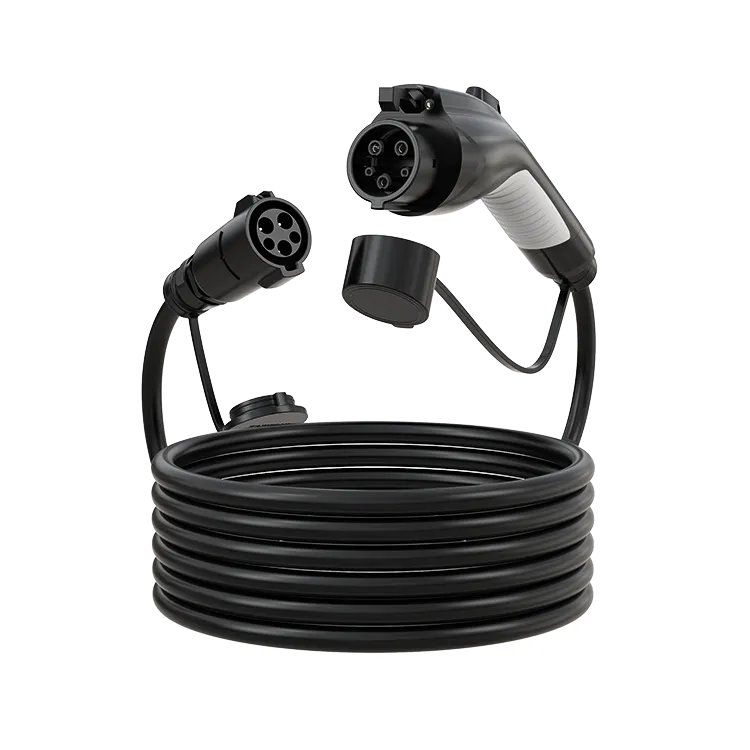
The portable charger is the kit’s centre of gravity. Level 1 charging adds roughly 2-5 miles of range per hour on U.S. DOT figures, and a suitable outlet gives faster Level 2, but an emergency charger is not about speed: it turns “no charge at all” into “enough by morning.” Our roundup of roadside options when an EV runs low covers the carry-nothing case. Your car’s own charging cable belongs with it: at socket-style posts with no cable, yours is the only link.
Adapters face a stricter test: carry only ones your car maker approves for your car, checked before trips the way our guide to whether EV charging adapters are safe sets out. An adapter bought on hope is dead weight.
The Other Half of the Kit Is Knowledge
- Accounts before emergencies. Set up charging apps, accounts and payment cards on the sofa, not at a dark post with 4% battery. A session failing at authorisation is an account problem until proven otherwise.
- The roadside number, saved. Know what your cover includes for a flat EV; keep the number in the car, not just in an inbox.
- The 12-volt lesson. A car that will not wake or start a session often has a flat auxiliary battery and a healthy traction battery. The fix is your car maker’s documented procedure, not a charging cable.
- A way to find chargers. The DOE station locator and your network apps are part of the kit; check them before the low-battery light, not after.
Two Pieces Worth Carrying
The EV-AC04001U is a 40 A J1772 portable charger: 9.6 kW from a NEMA 14-50P outlet, IP66, 25 ft cable: strong kit where that outlet exists, honestly slow where only a plain socket does. The JT02 AC adapter (up to 80 A) lets a J1772 car use NACS AC chargers such as destination units. The DC member of the family, the JT08, joins a kit only under its two conditions, restated here because they are not fine print: your car maker’s approval of a third-party DC adapter for your exact car, and the station being open to your car.
Frequently Asked Questions
Can a portable battery or power bank replace this kit?
Not really. A battery box holds a small fraction of a car battery’s energy: a top-up of a few miles. Our explainer on charging an EV from a portable battery works through the maths. A portable charger plus a socket beats it in nearly every real emergency.
Should the emergency charger live in the car permanently?
If your charging depends on sockets away from home, yes: coiled loosely, dry, in its case, inspected with the rest of the kit. If you charge on a tethered home wallbox and rarely roam beyond public networks, the accounts half matters more.
What should I check before a long trip?
Cable and adapter contact faces, the portable’s cable and plug, that your apps still log in, and that any adapter’s two approval conditions still hold for your route’s stations.
Related Reading
- Does AAA Have Portable EV Chargers? Roadside Options When Your EV Runs Low
- Are EV Charging Adapters Safe?
- Can You Charge an EV With a Portable Battery or Power Bank?
- Where to Buy a Portable EV Charger and What to Check First

