
The right time to launch your own charger brand is when your own records — not your ambition — show three things: repeat volume on a narrow set of models, customers who already treat you as the name behind the product, and a service operation able to carry a label owner’s duties. Until the evidence shows up, a label’s certification, warranty and support duties are a cost looking for a reason.
Key Takeaways
- Launch when your records show repeat model volume, customers asking for your name, and a service operation already doing the work.
- A label moves the certification file, warranty fronting, liability and first-line support onto your name — settle all four in writing first.
- Staying a distributor keeps those duties with the manufacturer; the step can be taken per model as the evidence hardens.
- An order minimum is not a readiness threshold; the evidence test is.
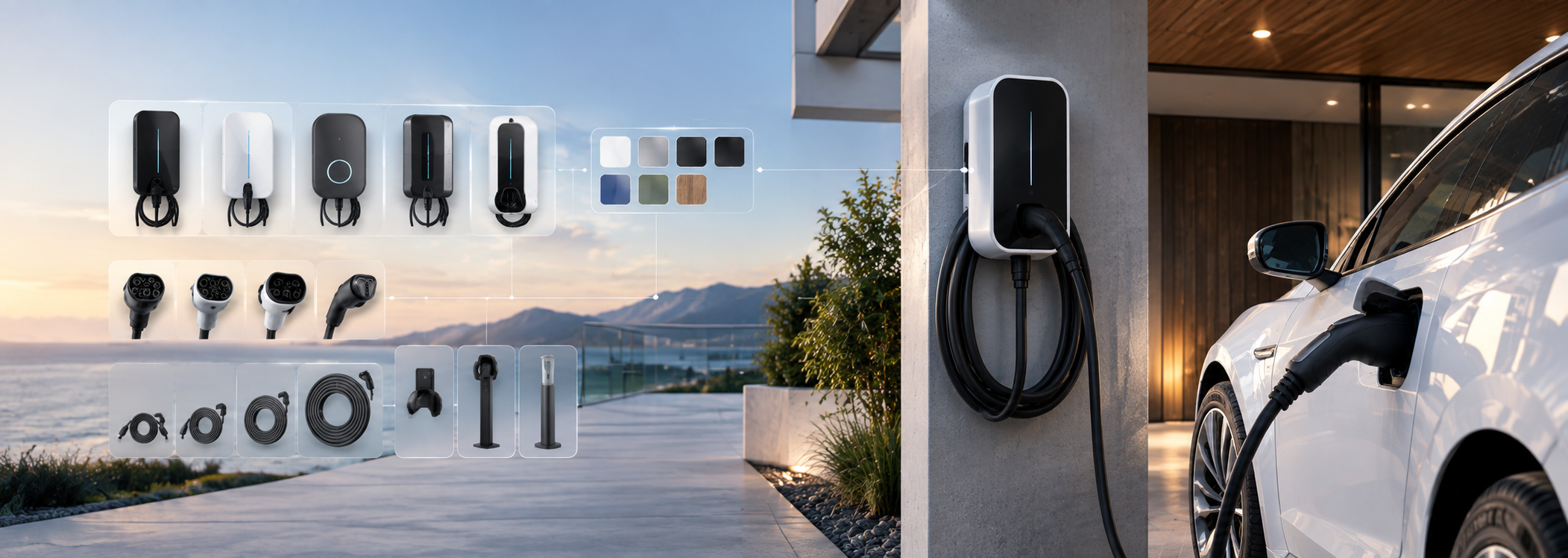
The Readiness Evidence in Your Own Records
| Signal | What it proves | What to check next |
|---|---|---|
| The same few models reorder, period after period | Volume sits on proven hardware, not trials — a label multiplies whatever it is printed on | Whether the volume survives stripping out one-off project orders |
| Installers and buyers ask for your name, your warranty, your support | The market already treats you as the brand; the label formalises an existing fact | Whether those customers would follow the same hardware under your name |
| Your team already fronts support and handles returns informally | You already do a label owner’s work, without a label owner’s control of the documentation | Whether your serial, ticket and returns records are clean enough to run a warranty book |
What Changes When the Label Is Yours
Our article on private label vs reselling a branded EV charger compares the two routes honestly. In duties, the label means:
- The certification file points at you. Who holds the certificate for a private-label charger — you, the factory, or shared — is a decision with legal weight, worked through in our guide to who owns the certificate in a private-label EV charger.
- Warranty is fronted by you. The customer claims against your name first. Your recovery from the factory is a separate matter, governed by a supply contract that has to be written for the day a batch fails, not the day it ships.
- Liability follows the label. In most markets the brand owner carries product-liability exposure for what it sells; our article on product liability for private-label EV charger brands sets out the shape of it. Confirm your position with a local adviser.
- Support becomes your product. Manuals, labelling, first-line answers and spare parts carry your name. Buyers forgive a reseller a slow factory; they do not forgive a brand.
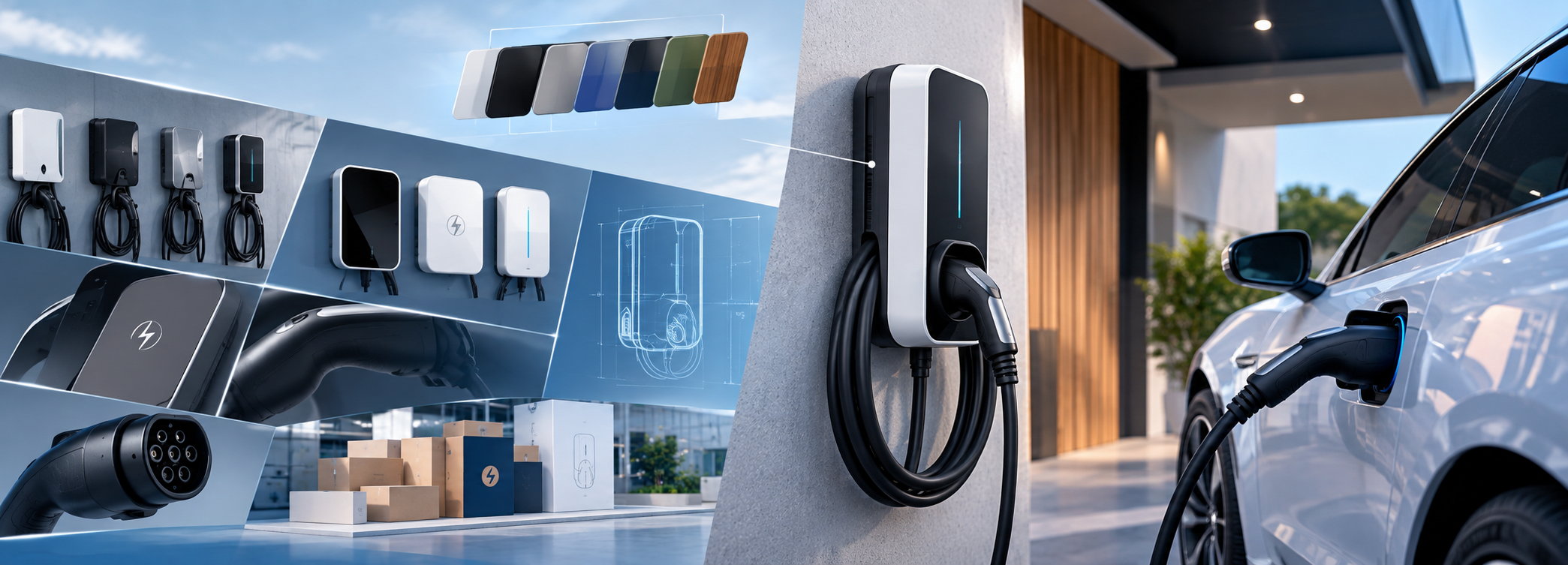
The Honest Case for Waiting
Staying a distributor is not a failure state. The manufacturer’s label carries the certification file, the liability and the engineering answers; your capital stays in stock breadth and service quality. The step need not be taken whole or early: take it per model, when that model’s evidence hardens. Launch costs are a real budget with real line items — covered in our article on how much it costs to start an EV charger brand; this article adds no figures of its own.
The EVDANCE Route
EVDANCE is a Shenzhen EV charger manufacturer founded in 2011, exports to more than 30 countries and carries a 3-year standard warranty. Its stated private-label route starts from 100 units, so the label step can be sized to the evidence: one proven model first. A wallbox such as the EV-ACT5006T (up to 48 A, hard-wired or NEMA 14-50P, NACS, IP65/IP66, ETL/FCC/CE) is the kind of line distributors prove before branding. Start from the OEM and private-label program and the full product range, and open the conversation through our contact page.
Frequently Asked Questions
How many units do I need to sell before launching a brand?
There is no universal threshold, and any article quoting one is inventing it. Run the evidence test instead: repeat reorders on a few models, customers asking for your name, a service operation already running. An order minimum is a different thing — EVDANCE’s private label from 100 units is an order fact, not a readiness measure.
Can I run my own label and manufacturers’ labels side by side?
Yes — the common path. Put your label on the models your records prove, keep maker’s labels where their name or range wins the work, and let each line’s numbers argue for its place at range review.
What should be settled in writing before the first branded order?
Certificate ownership, warranty fronting and recovery terms, spare-parts supply, and who answers what in support. If any of the four is verbal, the launch is not ready, whatever the sales evidence says.
Related Reading
- Who Owns the Certificate in a Private-Label EV Charger?
- Product Liability for Private-Label EV Charger Brands
- Private Label vs Reselling a Branded EV Charger: Pros and Cons
- How Much Does It Cost to Start an EV Charger Brand?

