
Almost anywhere a full electric car can charge — and a plug-in hybrid needs far less of it. Because the battery is small, one session at a workplace post, a public Level 2 charger near home, or a destination charger can fill it completely. It works when one dependable spot lines up with a place your car already sits for a few hours.
Key Takeaways
- A plug-in hybrid’s small battery fills in a single Level 2 session, so public-only charging can genuinely work.
- Workplace posts are the strongest substitute; a public post near home and destination charging fill the gaps.
- A portable charger widens the map to any 240 V outlet you have permission to use.
- With no dependable spot at all, the car’s electric miles fade — judge the purchase on your real routine.
Why a Small Battery Makes This Work
Take a battery of about 14 kWh as a labelled example — the middle of the plug-in hybrid range. On a Level 2 post, most plug-in hybrids accept roughly 3.3 to 7.4 kW, set by the car, so a full charge takes about two to four and a half hours. One visit fills the car; a battery-electric car with several times the capacity needs the same post far more often.
The other advantage is forgiveness. Miss a day and nothing strands you: the petrol engine simply covers more driving until you plug in again. That tolerance is what makes public-only charging workable for a plug-in hybrid in a way it often is not for a full EV.
The Places That Actually Work
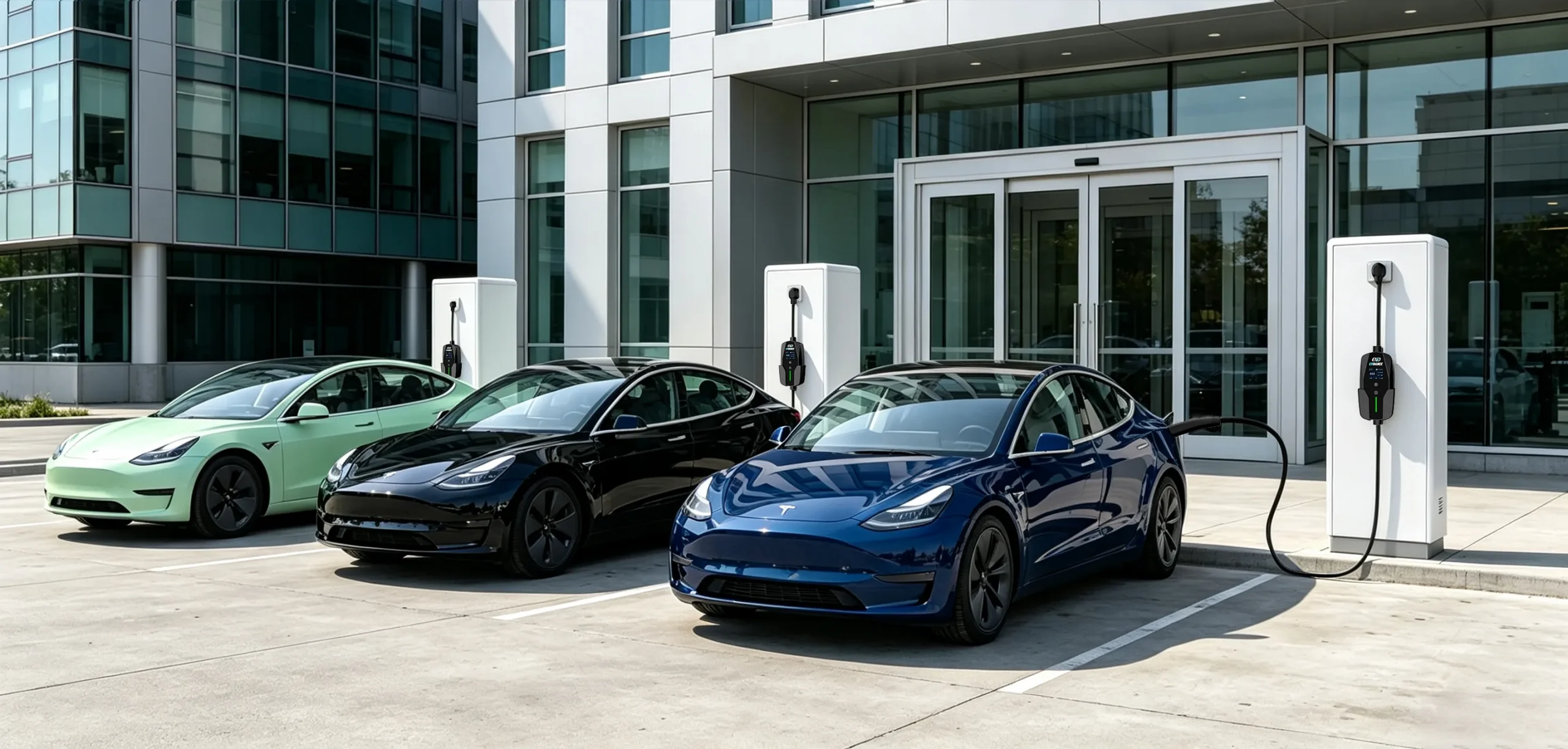
- Workplace charging. The car sits there all day, so even a modest post fills a small battery with hours to spare. Ask your employer what exists and who may use it.
- A public Level 2 post near home. An evening session within walking distance can become the routine; the maps and apps in our guide to where to find EV charging stations show them.
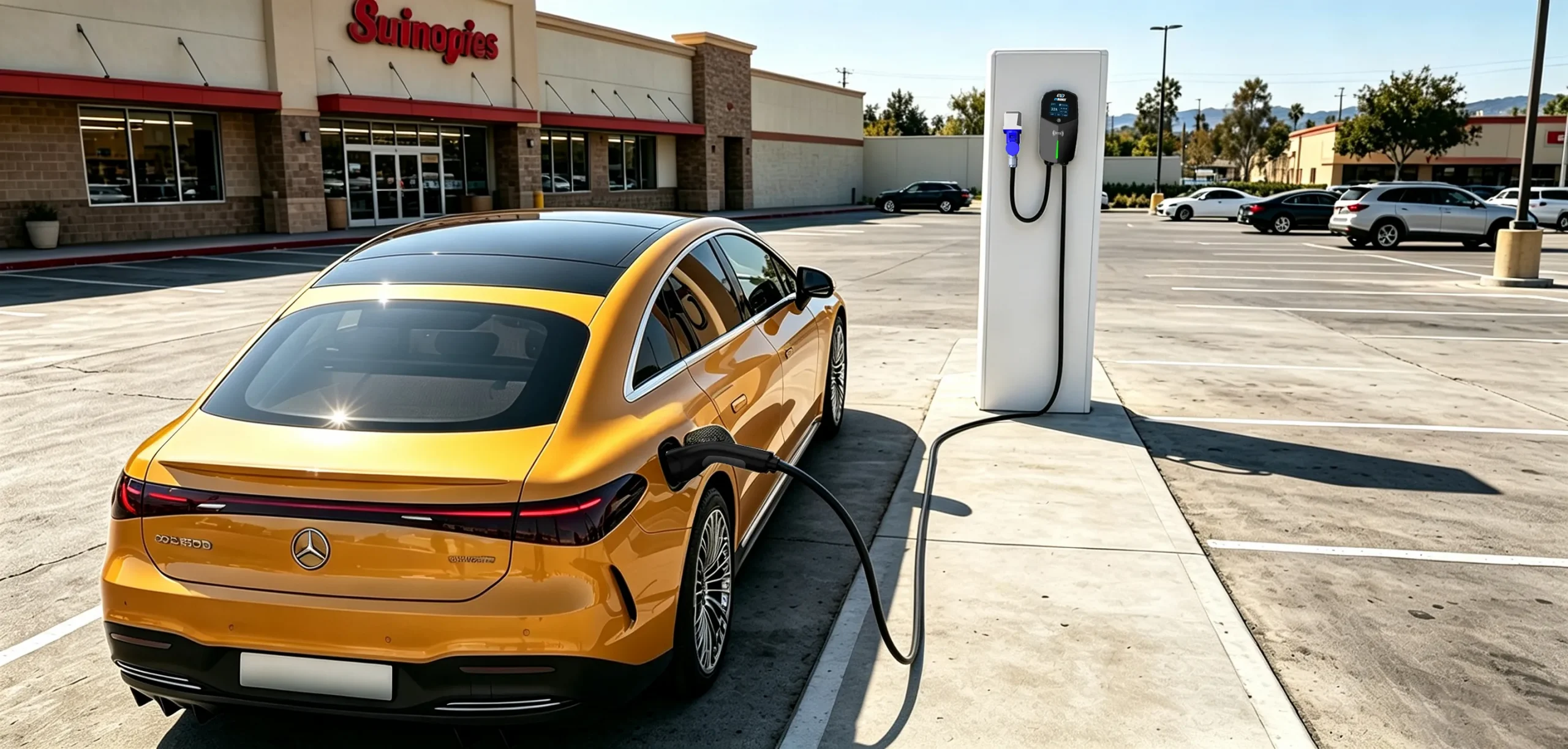
- Destination charging. Supermarkets, gyms and hotels increasingly offer posts; at hotels with charging stations the battery is full long before checkout.
- A wall socket where you have permission. At a partner’s or friend’s house, the cord supplied with the car and a sound household outlet will do the job, as our explainer on charging an electric car from a normal socket sets out. Ask first — charging draws current for hours.
| Place | Why it suits a small battery | Check first |
|---|---|---|
| Workplace | All-day parking dwarfs a two-to-four-hour charge | Permission and cost |
| Public Level 2 near home | One session fills the car | Price per session, time limits, reliability |
| Destination posts | Charging hides inside shopping, sport or a hotel stay | Whether the post is for customers or guests |
| A socket at a house you visit | Slow is fine when the visit is long | Permission, socket condition, where the cable runs |
The One Piece of Gear That Widens the Map
A portable charger turns any suitable 240 V outlet you are allowed to use into your own charging point — at a relative’s house, or a workplace that offers power but no posts. The EV-AC04001U 40A J1772 portable charger (9.6 kW, NEMA 14-50P, SAE J1772, IP66, 25 ft cable) speaks the connector language most plug-in hybrids use; the car takes what its onboard charger allows, so the unit stays useful if your next car is fully electric. More layouts are on our residential EV charging page.
When Public-Only Stops Being Worth It
Be honest about the pattern before you pay a plug-in hybrid premium. If no dependable spot exists near home or work, the electric miles shrink, and the car behaves like a heavier hybrid carrying a battery it rarely fills. It still works — it just stops delivering the cheap, quiet electric driving that justified it. One reliable location is the threshold; two make it comfortable.
Frequently Asked Questions
Can I rely on public charging alone, long term?
Yes, if one location fits your routine — most owners settle on a workplace post or a charger near home and top up around it. It is the pattern that decides, not the size of the network.
Should I use DC fast chargers instead?
Most plug-in hybrids cannot use them at all, and the few that can gain little: on a small battery the session is short either way, and Level 2 posts are cheaper and far easier to find near homes and workplaces.
How much will it cost compared with charging at home?
It varies by network, site and time of day, and no single figure holds — which is why this article quotes none. Check the price in the operator’s app or the U.S. DOE AFDC Station Locator before building a routine around a post, and weigh session or parking fees as well as the energy price.
Related Reading
- Do I Need an EV Charger for a Plug-In Hybrid?
- Where to Find EV Charging Stations: Maps, Apps and Tips
- Do Hotels Have Charging Stations for Electric Cars?
- Can I Have an Electric Car Charger at Home? Houses, Rentals and Condos

