
Because of current. A DC fast charger pushes 50 to 350 kW straight into the battery, and moving that much power without the cable overheating takes thick copper conductors, a large connector with extra DC pins, and — on the highest-power units — liquid cooling running through the cable itself. Your home charger’s cable is thin for the same reason in reverse: it carries far less power.
Key Takeaways
- Cable thickness follows current: 50–350 kW of DC power needs far more copper than 7–19 kW of AC.
- The CCS1 connector is bigger because it adds two large DC pins, sensors and a heavy latch to the AC plug.
- The highest-power cables are liquid-cooled, which is why they feel stiff and heavy.
- Lower-power DC and home Level 2 chargers use much lighter cables because they move less power.

It Starts With Power, Not With the Plug
Every cable is sized for the current it must carry. Push more current through the same conductor and it heats up; the fix is more copper, which means a thicker, heavier cable. The U.S. Department of Transportation puts DC fast charging at 50–350 kW, against 7–19 kW for Level 2 and about 1 kW for Level 1. That is why cable bulk rises so steeply across the three:
| Charging type | Typical power (U.S. DOT) | What the cable feels like |
|---|---|---|
| Level 1 | About 1 kW | Thin and light, similar to an appliance cord |
| Level 2 (home and public AC) | 7–19 kW | Noticeably thicker; coils and handles easily |
| Compact DC | About 20–30 kW | Heavier again, with a chunkier connector |
| DC fast | 50–350 kW | Thick, stiff and heavy, especially at the top power levels |
Our breakdown of how fast a DC fast charger is covers what those levels mean in miles per hour; here the subject is the hardware consequence.
The Connector Is Bigger, Too
A CCS1 connector is a J1772 plug with two large DC pins added underneath, as our explainer on whether J1772 works with CCS sets out. Those pins, their insulation, the latch that locks them under load and the temperature sensors watching the contact points all take space. The handle you grip is bigger because there is more inside it: conductors for power, signal contacts, seals, and in cooled designs, coolant passages as well.
Liquid Cooling: Why the Thickest Cables Feel Different
At the highest power levels, conductor size alone stops being practical — a passively cooled cable would be too heavy to lift. So many of the highest-power cables are liquid-cooled: coolant circulates through the cable and connector, carrying heat away so a manageable cable can sustain very high current. It adds weight, stiffness and cost, which is why you mainly meet these cables at highway fast chargers.
Two habits keep any heavy cable healthy:
- Do not kink it or drive over it. A cooled or conventional cable damaged internally can overheat or fail; if a public cable looks cut or crushed, treat it as out of service.
- Dock it properly. Let the connector seat fully in its holster so the weight is carried by the station, not hanging off the cable.
Smaller DC, Slimmer Cable
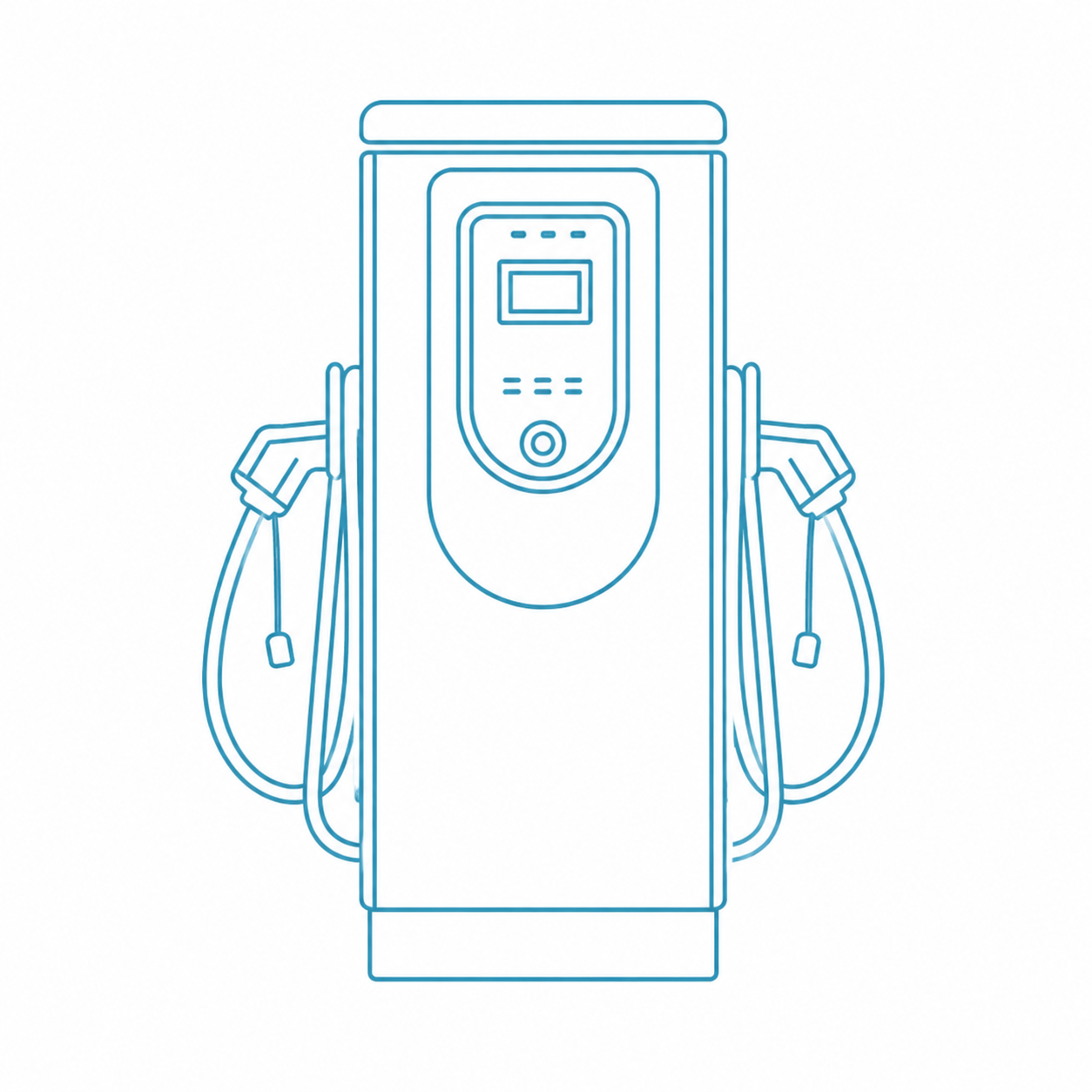
Power is a dial, and sites that do not need 350 kW can choose cables that are far friendlier to handle. The EVDANCE EV-RHDC30K-L compact DC fast charger delivers 22 kW DC — several times a home Level 2 rate — with a cable sized for that class, which suits depots, workplaces and retail sites. At the other end of the day, home charging on a unit like the EVDANCE EV-ACT5006T 48A Level 2 wall charger uses the light, flexible cable most drivers know, because 11 kW or so simply does not need more copper. Cable care matters at every size; our guide to how long EV charging cables last covers wear and when replacement is due.
Frequently Asked Questions
Why is a fast-charging cable heavier than my home cable?
Current. A DC fast charger delivers many times the power of a home Level 2 unit, and carrying that current safely needs much thicker conductors, a bigger connector and, at the highest power, liquid cooling — all of which add weight.
Are all DC fast charging cables liquid-cooled?
No. Lower-power DC cables rely on conductor size alone. Liquid cooling appears mainly on the highest-power cables, where a passively cooled cable big enough for the job would be too heavy to handle.
Does a thicker cable charge my car faster?
The cable does not set the speed on its own. The car’s maximum charging rate, the station’s output and the battery’s state of charge decide that, as our guide to using a DC fast charger explains. The thick cable is what allows the station to offer its rated power safely.
Related Reading
- How Fast Is a DC Fast Charger?
- Does J1772 Work With CCS? CCS Connectors Explained
- How Long Do EV Charging Cables Last, and Can They Be Repaired?
- How to Use a DC Fast Charger: Step by Step

