
Because an EV charging cable is not a wire. It is a certified assembly built to carry its full rated current for hours at a time, outdoors, while being coiled, dragged and dropped daily: heavy power conductors, extra signal cores, two engineered connectors with seals and latches, and testing of the whole finished part. A household extension lead is built for none of that — which is why the two sit at such different prices.
Key Takeaways
- A charging cable’s price is a stack: continuous-duty conductors, signal cores, two sealed connectors, a flex-rated jacket and assembly-level certification.
- The comparison that matters is duty: hours at full rating, outdoors, handled daily — nothing like an extension lead’s job.
- Cheap cables save on invisible parts; the printed legend and the assembly’s certification file are the checks.
- Length, rating and phase count multiply the costly parts, which is why prices climb steeply between cable classes.

What Is Actually Inside the Price
| Part of the assembly | What it does | Why it costs |
|---|---|---|
| Power conductors | Carry the charging current, sized so the cable runs safely at its rating for hours — a continuous load, not a burst | Copper is the material bill: more current and more phases mean more of it, in fine strands that survive daily flexing |
| Signal cores | Thin extra wires carrying the control and proximity signals the charger and car negotiate with | More cores, more assembly steps — and a cable without them is not a charging cable at all |
| Two connectors | Engineered plugs with precision contacts, a latch, moulded seals and strain relief at each end | Each connector is a small manufactured product of its own, and it is where heat and wear concentrate |
| Jacket and build | Flex-rated, weather-resistant outer layer over the laid-up cores | Compounds and wall thickness chosen for outdoor, drive-over-adjacent daily duty |
| Testing and certification | The finished assembly is type-tested as one part, under a recognised laboratory programme | Testing, listing and the file behind the printed legend are production costs a bulk wire never carries |
This is also why two cables with the same rating can be built — and priced — differently: the layer specifications are choices, which is the short answer to whether all EV charging cables are the same.
The Duty Is the Difference
An extension lead expects a lamp or a drill: modest current, short runs, indoors. A charging cable expects the opposite on every axis — full rating for an entire evening, in rain and frost, handled by someone in the dark. Every layer in the table above is a response to that duty. The scale grows again at DC: the U.S. DOT puts DC fast charging at 50–350 kW, and moving that power is why station cables are heavier still. Heat is where undersizing shows first, as whether charging cables get hot explains.
Where a Suspiciously Cheap Cable Cuts Corners
The savings on a too-cheap cable are taken from exactly the parts you cannot inspect: a smaller conductor cross-section than the rating claims, contact material and finish that run hotter and wear faster, thinner seals that admit water, and no certification of the finished assembly at all — at most a claim about a component. The checks that expose this are documentary, not visual:
- The printed legend on the jacket names the cable type and ratings; a vague or missing legend is a finding, not a detail.
- The seller can produce a certification file naming this exact assembly — connectors alone being certified does not certify the lead between them.
- The stated rating matches your charger’s and car’s requirements, as choosing the right cable sets out.
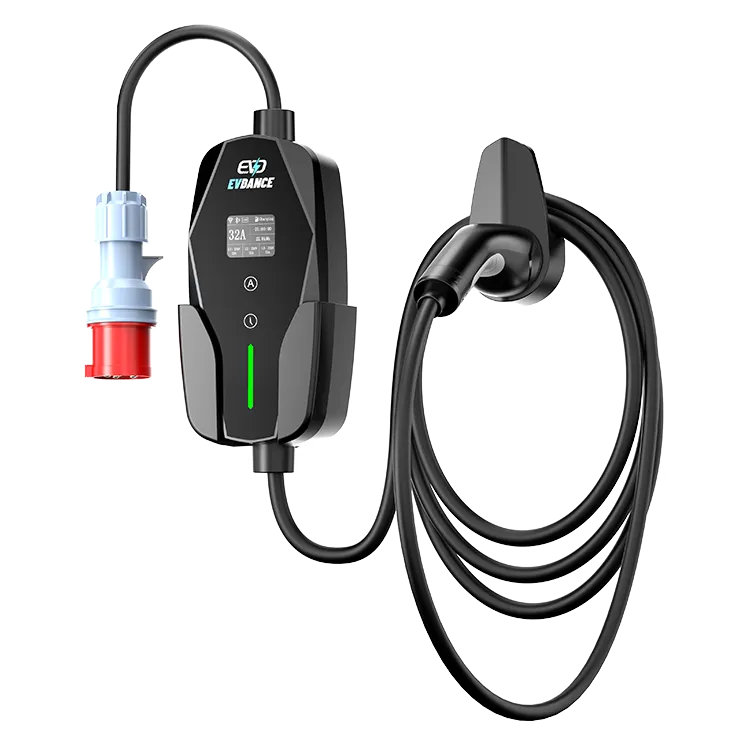
On EVDANCE products the cable is specified as part of the charger: the EV-ACS3205PE (22 kW three-phase, CEE 32A plug, Type 2, IP66) and the EV-ACS4005T (9.6 kW, NEMA 14-50P, IP66, 25 or 28 ft cable) carry their cable facts on the listing — the rating and length you are paying for are printed there before you buy.
Frequently Asked Questions
Is the price mostly the copper?
Copper is the largest single material, but not the whole story: signal cores, two engineered connectors, seals, strain relief and assembly-level testing each add a layer an ordinary lead does not have.
Why does a longer or higher-rated cable cost more?
Both multiply the expensive parts: length adds conductor metre for metre, and a higher rating means larger conductors and heavier-duty connectors. Three-phase adds a third power core on top.
Is a premium-brand cable automatically better?
Not automatically. Judge the specification and the certification file for the exact assembly — those documents, not the badge, are what the price should be buying.
Related Reading
- Are All EV Charging Cables the Same?
- Which EV Charging Cable Do I Need?
- How Long Do EV Charging Cables Last, and Can They Be Repaired?
- Do EV Charging Cables Get Hot?

