
Orange is the industry’s warning colour for high voltage. Car makers sheath the cables that carry traction-battery power — between the battery pack, the inverter and the motor — in orange so that anyone who opens the car up can spot the dangerous wiring at a glance. If you see orange cabling, the rule is simple: it is not for owners to touch, cut or repair.
Key Takeaways
- Orange identifies the high-voltage harness inside an EV: pack, inverter and motor wiring.
- The colour is a cross-brand warning convention for technicians, responders and owners.
- The charging cable you handle is protected by insulation and interlocks instead — it is not orange because it is meant to be used.
- Never cut, drill near or repair orange cabling; damage means a specialist inspection before charging.
What the Orange Wiring Is
An EV has two electrical systems. The familiar 12-volt system runs lights, screens and locks. The high-voltage system moves the energy that drives the car, and its cables run under the floor and body panels, not under the bonnet trim an owner usually opens. Those high-voltage runs, and the connectors and service points on them, are the orange parts. The colour is a convention across makers rather than one brand’s styling: a technician, a tow operator or a firefighter who has never seen that model before still knows which cables can injure them.

| Charging cable and inlet | Orange high-voltage harness | |
|---|---|---|
| Who handles it | The driver, every session | Trained technicians only |
| Where it lives | Between the charger and the charge port | Inside the car: pack, inverter, motor |
| How safety is managed | Insulation, interlocks and signals stop power before unplugging | Colour identification, shielding and service disconnects |
| Owner’s job | Inspect for damage, keep it dry and stored | None — recognise it and leave it alone |
Why a Colour, of All Things
High-voltage parts are often hidden, and the risk is worst exactly when someone unfamiliar works fast: a mechanic doing unrelated work, a responder cutting into a crashed car, an owner poking around after a fault. A colour code needs no manual, no language and no power to work. It also survives the car’s life — the tenth person to open that car, years later, gets the same warning as the first. That is the same thinking behind the installation rules on the home side, covered in our guide to whether home EV chargers are safe: identification and certified equipment do the work that memory cannot.
The Rules That Follow From the Colour
- Never cut, splice or probe orange cabling. There is no owner-level repair on a high-voltage run. Damage means a specialist inspection, not tape.
- Do not drill or screw near it. Fitting accessories, sound deadening or tow gear can cross a harness you cannot see from the other side of the panel.
- Treat crash, flood or fire damage as a stop sign. If the car has been in any of these, have it inspected before charging again — damaged orange cabling is one of the things the inspection is looking for.
- Tell responders it is an EV. The colour code is partly for them; knowing the car is electric tells them to expect it.
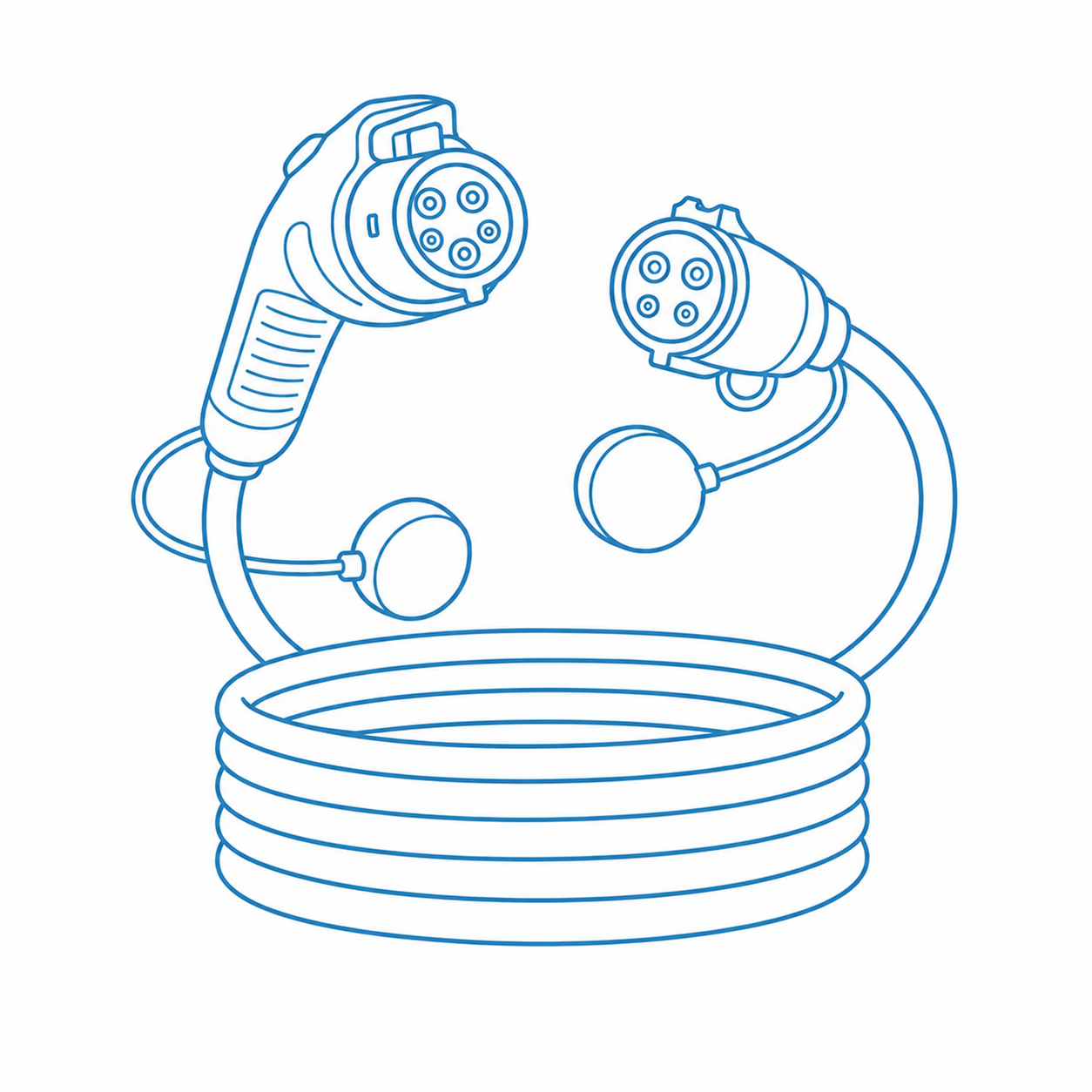
Where the Owner’s Side Ends
Everything you are meant to handle is on your side of the charge port: the charger, its cable and the inlet. The EVDANCE EV-ACT5006T 48A Level 2 wall charger (up to 48 A, 25 ft cable, IP65/IP66) connects there, and our residential charging range covers the portable units that do the same job. The orange harness begins inside the car and belongs to the manufacturer’s service network — the same boundary that applies when you use the car while it is charging: the systems are managed for you, not opened by you.
Frequently Asked Questions
Is every orange part in an EV high voltage?
Orange is used for the high-voltage harness and its connectors and service points. Treat any orange cable or cover as high voltage until a technician tells you otherwise — the cost of being wrong is not symmetric.
Why is my charging cable not orange, if it carries high power?
Because it is designed for you to handle. Its protection is insulation, sealed connectors and the signalling that stops power flow before the plug can be removed — the checks behind outlet questions such as whether a NEMA 14-50 outlet is a fire hazard. Orange is reserved for wiring that is never meant to be handled at all.
I can see an orange cable and it looks damaged. What now?
Do not drive or charge the car, and do not touch the cable. Contact the manufacturer’s service network and describe what you can see. High-voltage damage is assessed with insulated equipment and procedures that owners do not have.
Related Reading
- Are Home EV Chargers Safe?
- Is a NEMA 14-50 Outlet a Fire Hazard for EV Charging?
- Can I Turn On My EV and Use It While Charging?

