
If your EV charges normally at home and at other stations, the car is almost certainly fine. A failure that follows one specific charger points at the pairing between post and car: its connector variant, its software, worn contacts, or an adapter in between. The checks below sort the pairing out, with no tools and no parts.
Key Takeaways
- A car that charges everywhere except one post has a pairing problem, not a car problem.
- Sort it by pattern: every car failing means the station; one network failing means the pairing; everywhere failing means the car.
- Connector variant, adapter approval, worn contacts and station software are the four usual mismatch points.
- Test with the next post, report with the station ID — and never force a connector.
Which Side Is the Problem On?
Compare your result with other cars at the same post, and your car at other posts, before concluding anything:
| Pattern you observe | What it points to | Your next move |
|---|---|---|
| Every car fails at that one post | The station | Use another post and report this one |
| Your car fails at several posts of one network only | A pairing or software mismatch with that network | Report it with the posts, dates and times |
| Your car fails everywhere, including at home | The car, or your home setup | A driver checklist, then the dealer |
| It fails only when your adapter is in the chain | The adapter | Test without the adapter where the session allows |
A car that refuses everywhere belongs to a different story — our driver’s checklist for a charger that is not working. Below assumes yours charged fine somewhere else today.

The Usual Mismatch Points
Connector family vs connector variant. A plug that looks right may serve a different job. J1772 and CCS share the same upper handle shape, but a DC session needs the full inlet and the car’s DC path — our explainer on whether J1772 works with CCS shows the split. A car can charge perfectly on AC everywhere and still have a pairing problem that only appears on DC.
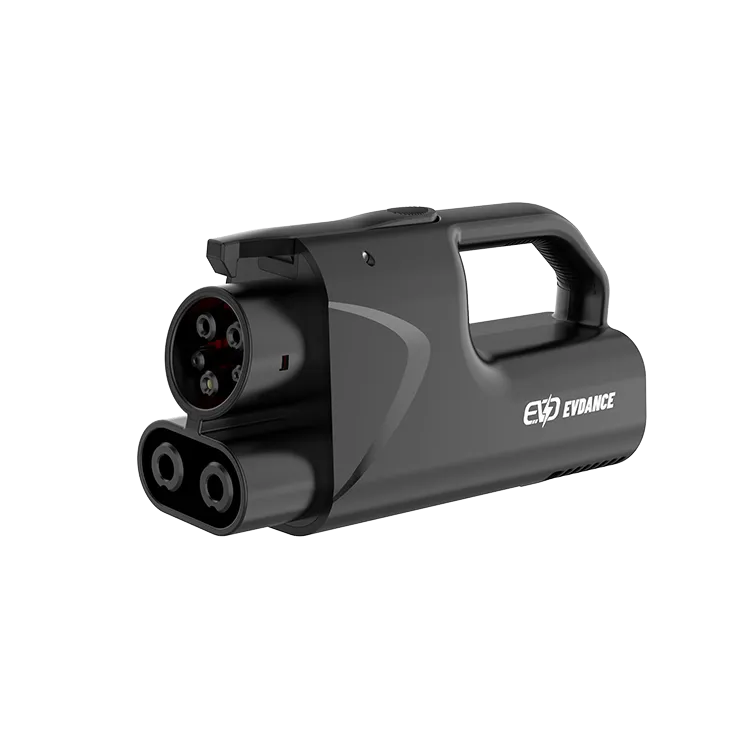
An adapter the pairing does not accept. DC adapters are approval parts, not universal bridges. EVDANCE’s own are documented for use only where the automaker approves — a car or station declining an unapproved pairing is behaving as designed.
That post’s contacts. One post in a row takes the weather and the rough handling. Bent, dirty or worn pins in that one connector can break a handshake your car completes everywhere else. Look before you plug in; visible damage means stop and report — see whether EV chargers are universal for the physical differences.
Station software and access. Charger and car exchange identification before power flows; a post that cannot read your app, card or account may never offer a session. Corridor stations built to the federal NEVI standard must accept contactless payment with no membership, so there a card tap cleanly tests whether access or the pairing is at fault.
What to Do at the Post
- Try the second connector or the next post. Two minutes, and the “that one post” question is settled.
- Inspect the connector, then reseat it once, firmly and straight — never force one that resists.
- Remove adapters and retry where a direct connection is possible.
- Watch another car. If it fails too, tell the operator — that is a station fault.
- Report with the station ID. Operators can see session attempts you cannot; the ID, the time and your result elsewhere is what they need.
Adapters, Specified Honestly
Where an adapter is the answer, it is a rated component: the JT08 NACS-to-CCS1 DC adapter is rated up to 500 A and 1000 V, IP66; the JT09 adds a handle in the same class; the JT02 covers AC pairings up to 80 A. Ratings do not override approval: on DC, use an adapter only where your car’s automaker allows it.
Frequently Asked Questions
It charges at home but not at one fast charger. Why?
Home charging proves the car’s AC path. A fast charger uses different contacts and a digital conversation, so the fault can exist on DC while AC is flawless. Our guide to using a public charger covers the session steps themselves.
Can a software update fix an incompatibility?
Sometimes, on either side: car makers and networks both update the handshake software, so a pairing failing this month may work after an update. Report it in detail either way.
Should I keep unplugging and retrying until it works?
No. One reseat and one retry is a fair test. Repeated forcing wears connector pins — yours and the station’s — and a fault surviving a clean retry will not be argued into working. Move on and report it.
Related Reading
- How to Use a Public EV Charger (and How to Stop It)
- Does J1772 Work With CCS? CCS Connectors Explained
- Are EV Chargers Universal?
- Why Is My Electric Car Charger Not Working? A Driver’s Checklist

