
On most chargers, a blinking green light is a status message, not a fault. Green is the colour makers use for the everyday states — ready, connected, charging, finished — and a blink is one of the ways they show them. Which state your blink means is written in the manual’s legend for your exact model, because no colour code is shared between brands. The check that settles doubt is the session itself: is the car actually taking charge?
Key Takeaways
- A blinking green light is usually a status, not a fault — but the exact state is your manual’s legend, not a universal code.
- Record the pattern in the legend’s terms: steady or blinking, the rhythm, and the moment it changes.
- Judge the session, not the lamp: if the car is not charging, check the car’s schedule, limits and session start first.

The States Makers Commonly Assign to Green
The patterns below are the ones makers commonly use; they are an orientation, not a translation. Your charger’s own legend is the only version that counts for your unit.
| Signal | Commonly used for | How to confirm |
|---|---|---|
| Steady green | Ready to charge, or a session running normally | The car’s charge indicator or app shows the session |
| Slow green blink | Charging in progress on some designs; standing by on others | The car’s state of charge is rising — or not |
| A blink that starts at plug-in | Connected: the session is negotiating, or waiting to start — for example on a schedule set in the car | The car’s schedule and charge settings |
| Green that stays on after charging | Session finished, cable still connected | The car shows charging complete |
Notice that every confirmation in the right-hand column sits on the car side or in the legend. The lamp reports; it never proves.
Record the Pattern the Way the Manual Writes It
Legends are written in three observations. Match yours against them:
- Steady or blinking. A steady green and a blinking green are separate entries in most legends.
- The rhythm. Slow, fast, or a counted number of blinks followed by a pause — watch one full cycle before deciding.
- The moment it changes. At plug-in, when the session starts, and when it ends are three different messages even in the same colour.
Then bring in the second witness: the car’s display or app states the session in words — charging, waiting, complete, or stopped — and between the legend, the pattern and the car, the meaning is settled.
Judge the Session, Not the Lamp
If the car is gaining charge, a blinking green light is doing its job; leave it alone. If the car is not charging, read the blink as “ready, or waiting for something.” The block is usually a setting rather than a fault: a charge schedule or a charge limit set in the car, a session that was never started in the app, or the vehicle holding the start for its own reasons. Work through the car side first — the driver’s checklist for a charger that is not working covers that order of checks. A green lamp by itself is never a reason to open the charger or to keep resetting the breaker, and it is a different message entirely from a charger flashing red, which does mean a fault.
What the Lamp Can Tell You on EVDANCE Chargers
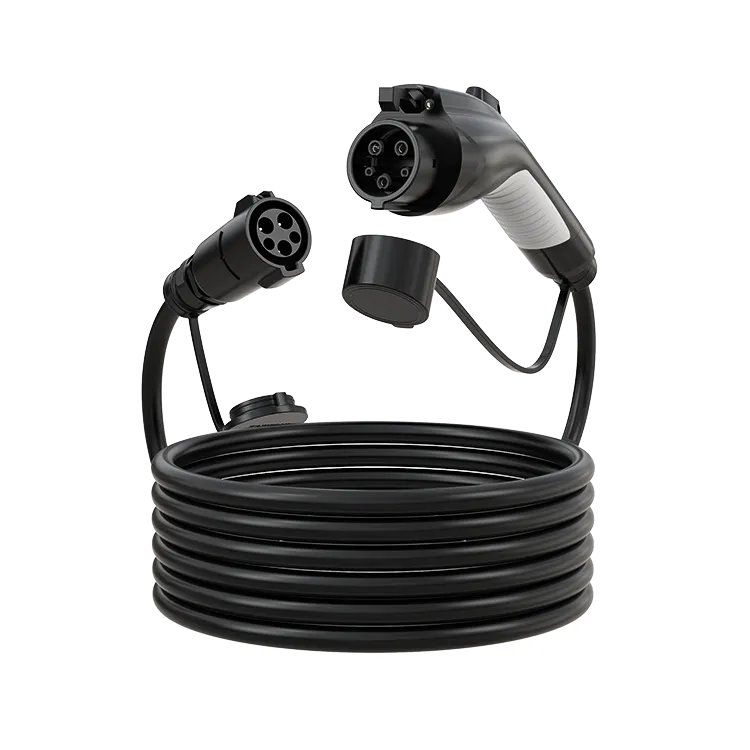
The EV-AC04001U 40A J1772 portable charger (9.6 kW, NEMA 14-50P, IP66) has no app and no timer of its own, so any delayed start lives in the car’s schedule — a waiting blink on a simple portable usually traces back to the car’s settings. The EV-ACS3210E 32A Type 2 portable charger is described with an app and energy monitoring, so its session state can be read in the app as well as at the lamp. On any model, the legend table in its manual is the dictionary; neither EVDANCE listing publishes its lamp patterns for us to quote here.
Frequently Asked Questions
Does blinking green always mean the car is charging?
No. Makers also assign green blinks to standby and connected states. The legend names your pattern, and the car’s rising state of charge is the proof that charging is really happening.
My charger blinks green but the car is not charging. What do I check first?
The car side: any schedule or charge limit set in the vehicle, and whether the session was actually started. A ready-or-waiting lamp plus no session usually means a setting is holding the start.
Should a green light ever worry me?
Only alongside behaviour — no charging when a session should run, heat, a smell, or visible damage. Then stop, and report it to the manufacturer as a fault, lamp colour aside.
Related Reading
- Why Is My Electric Car Charger Not Working? A Driver’s Checklist
- Why Is My EV Charger Flashing Red?
- Why Does My EV Charger Keep Tripping the Breaker?

