
Then plan backwards from the last charger on the map. A stay with no charging is workable when you treat the final public charger before the destination as your real fuel stop: charge there for the return leg as well as the trip in, and let anything you can plug into at the stay itself count as a bonus, never as the plan.
Key Takeaways
- The last charger before a charger-less destination is your real fuel stop — charge there for the round trip.
- Budget three legs: in, around during the stay, and back out, plus a margin.
- A permitted socket at the stay plus a portable charger adds slow miles overnight; treat it as a bonus, not the plan.
- Always know the second-nearest charger before you start the final stretch.

Work Backwards From the Last Charger
Find the last dependable charger before your destination — our guide to finding charging stations and the U.S. DOE station locator both show what is there. Then do the arithmetic in the direction most drivers skip: from that charger to the destination, around during the stay, and back to the same charger. That round trip is what your charge has to cover. Check the charger’s reported status before the final leg, and know your second-nearest option; a single charger is a plan with no spare.
| Leg | What to budget |
|---|---|
| Last charger to the destination | The one-way distance, at your car’s real consumption — hills and cold raise it |
| Driving during the stay | Every local trip, counted honestly; this is the leg that quietly grows |
| Destination back to the same charger | The one-way distance again, plus a margin for weather, detours and a slower day |
| What you arrive with | Enough to reach that charger — not zero. Arriving empty at a charger that turns out to be busy or broken is the failure this plan exists to prevent |
At the Stay: Small Top-Ups, Not a Full Charge
If the place you are staying has an ordinary socket you are allowed to use, a portable charger turns the stay itself into a slow charger. On U.S. DOT figures, Level 1 charging adds about 2–5 miles of range per hour — over a night, roughly 20–50 miles handed back, which can cover the stay’s local driving entirely. Two conditions: ask first, because the socket and the electricity are someone else’s, and keep the current modest on a circuit that is not yours. Whether a normal socket suits occasional charging is covered in our guide to charging from a normal socket. Treat it as a top-up, not a refill.
When the Numbers Do Not Work
Sometimes the honest answer is that the stay is beyond a comfortable round trip from the last charger. You still have options short of cancelling:
- Move the last charge later. A DC fast charger on the corridor — 180–240 miles of range per hour on DOT figures — buys the whole round trip in one short stop where a slow charger cannot.
- Shrink the stay’s driving. Plan one base and fewer, shorter local trips; the stay leg is the one you control.
- Stay somewhere with charging instead. Many hotels now list chargers — see whether hotels have charging stations — and for a long stay that can be worth more than the room difference.
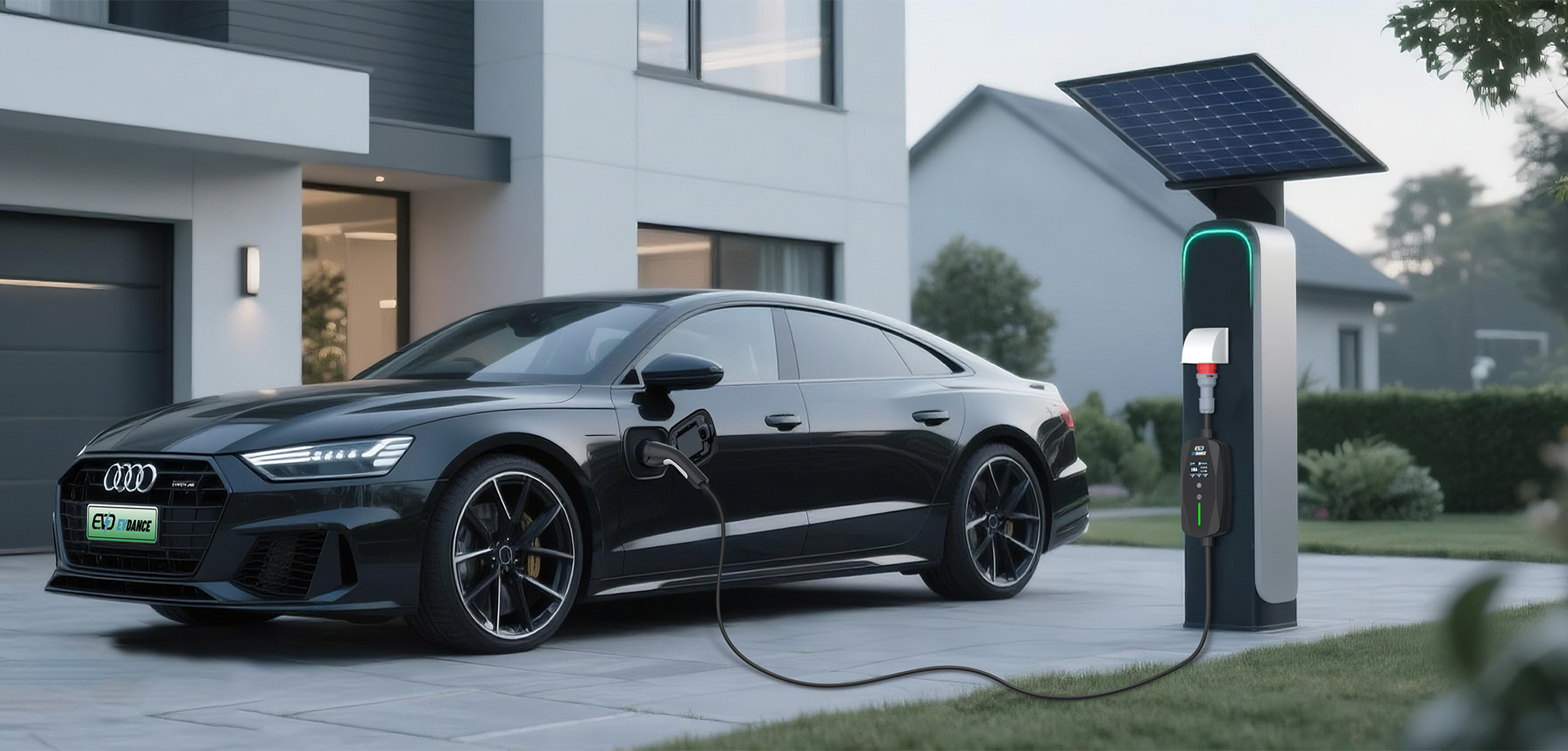
Once you do find a charger, the session itself works as in our walkthrough of how to use a public charger. The kit that makes the destination-socket option possible is a portable charger in the boot: the EVDANCE EV-ACS3210T 32A portable charger adjusts from 10 to 32 A in six steps, which lets you set a modest current on a borrowed circuit; the wider range is on the products page.
Frequently Asked Questions
How much charge should I arrive at the destination with?
Enough for the driving you will do there plus the whole return leg, with a margin on top. Work it out from your own consumption, not the car’s best-case range figure — the margin is yours to set, and setting it generously costs nothing.
Can I plug into a socket at a rented cottage or a friend’s house?
Only with the owner’s permission, and on their terms: their socket, their electricity, their circuit. Ask before you arrive, keep the charging current modest, and offer to pay for the energy you take.
What if the last charger is out of service when I reach it?
That is what the second option is for. Identify the next-nearest charger before the final leg, check the status of both before you commit to the stretch beyond them, and never start that stretch with only enough charge for one exact charger and no alternative.
Related Reading
- Where to Find EV Charging Stations: Maps, Apps and Tips
- How to Use a Public EV Charger (and How to Stop It)
- Can I Charge an Electric Car From a Normal Socket?
- Do Hotels Have Charging Stations for Electric Cars?

