
When the EV-AC04001U will not charge, start at the handle. The J1772 latch must click fully home: its proximity switch tells the car the connector is seated, so a half-latched handle means no charge, or a session that stops at once. Slow charging on this 40 A unit is usually the car’s acceptance or the slow top of the battery. A fault light means a protection stopped the session — record it before you reset anything.
Key Takeaways
- A half-latched J1772 handle is the first suspect: its proximity switch gates the session.
- The cross-test — another J1772 car, another post — splits car, charger and outlet without tools.
- Slow sessions are set by the car’s acceptance, the taper, or a current limit set in the car.
- Fault lights: stop on heat or damage, record the pattern, reset once, escalate if it returns.
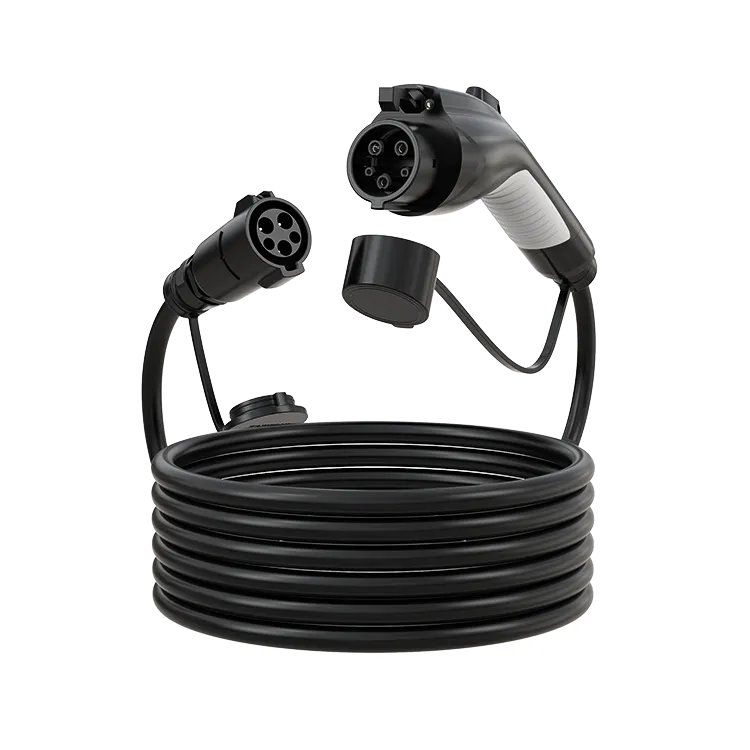
No Charge: Work the J1772 Connection First
Its failures are ones an owner can see and feel:
- Reseat until it clicks. The release button works the proximity switch: pressed, it tells the car to stop. A latch that never engages reads as a permanent release request. Push the connector straight in until it clicks.
- Look into the inlet and the handle. Dirt or ice can block a full seat; clear loose debris gently. A bent or discoloured pin is different: stop — pin damage is a repair, not a cleaning job.
- Check the supply end. The 14-50 plug must be fully seated, and the breaker on. A breaker that trips again is reporting a circuit problem (see a charger that keeps tripping the breaker).
The Cross-Test: Split Car From Charger
If the connection is sound and nothing starts, three suspects remain: the car, the charger, or the home outlet. Because this unit speaks standard J1772, you can split them without tools — another J1772 car on this charger, or your car on a public J1772 Level 2 post (federal standards put J1772 on Level 2 ports):
| Test | Result | What it points to |
|---|---|---|
| This charger, another J1772 car | Charges normally | The first car |
| This charger, another J1772 car | Same refusal | The charger or the home outlet |
| Your car, a public J1772 post | Charges normally | The charger or the home outlet |
| Your car, a public J1772 post | Same refusal | The car |
The full generic method is in our driver’s checklist for a charger that is not working; this is the J1772 layer.
Slow Charge: The Usual Pace-Setters
This unit has one output: 40 A, up to 9.6 kW. A slower session is being paced elsewhere:
- The car’s acceptance. A car that takes less than 9.6 kW on AC charges at its own rate; check the figure in its specification.
- The top of the battery. Charging tapers as the pack fills; the last part of a session is the slowest — the effect behind an EV charging slowly at home. A cold pack starts slowly for the same reason: the car, not the charger, is pacing it.
- A reduced-current setting in the car. Some cars let you turn AC current down in their menus; if yours is set low, the charger obeys.

Fault Lights: Stop, Record, Then One Reset
A fault light means a protection has stopped the session. What a pattern means is defined in this model’s manual — there is no universal chart. Work in this order:
- Stop conditions first. A warm plug or outlet, a smell, visible damage, or a breaker that trips repeatedly ends the session. Do not retry — these belong to a licensed electrician (see a charger flashing red).
- Record the signal exactly. Colour, steady or blinking, blink count if it repeats. A short phone video is ideal.
- One controlled reset. Unplug from the car, switch the breaker off for half a minute, restore power, try once. If the same signal returns, stop resetting.
A fault that follows the EV-AC04001U across two cars is a support matter: EVDANCE chargers carry a 3-year standard warranty, and your recorded pattern starts that conversation.
Frequently Asked Questions
The handle clicks, but the car still will not charge. What next?
Check the car’s charge timer first — a future window is the common false alarm. Then clear the inlet, confirm the breaker, and cross-test: does the refusal follow the car or the charger?
It starts charging, then stops after a minute or two. Why?
A worn or half-engaged latch can drop the proximity signal mid-session; the car stops as if the release were pressed. Reseat firmly. If stops continue, or the plug feels warm, stop and have handle and outlet inspected.
The fault light cleared after one reset. Can I keep using it?
Yes, if you recorded it — pattern and date. A one-off can be a transient supply glitch. If the same signal returns, treat it as a real fault: stop, and contact the manufacturer or an electrician instead of resetting again.
Related Reading
- Why Is My Electric Car Charger Not Working? A Driver’s Checklist
- Why Is My EV Charger Flashing Red?
- Why Does My EV Charger Keep Tripping the Breaker?
- Why Is My Electric Car Charging Slowly at Home?

