
Yes — a rented house is the easiest rental to charge in, because houses hide 240 V outlets flats rarely have: garage, laundry room, workshop wall. A plug-in charger like the EV-AC04001U rewires nothing, so there is nothing to undo when you move out. What “no rewiring” still requires: a suitable outlet within the cable’s reach, a circuit that can carry this charger’s fixed 40 A draw, a sound outlet, and a landlord who knows. General information, not legal advice.
Key Takeaways
- A rented house usually already has a 240 V outlet somewhere. Hunt before you buy.
- “No rewiring” still requires the right shape, a 50 A circuit, a sound receptacle, and a landlord who knows.
- This unit’s draw is fixed at 40 A: if the house cannot offer its circuit, an adjustable portable is the fit.
- Nothing installed means nothing to restore — the charger unplugs and leaves with you.
Hunt the House: Where 240 V Already Lives
| Where to look | What you may find | What to check before counting on it |
|---|---|---|
| The garage wall | A NEMA 14-50 fitted for a welder, an RV or a previous tenant’s EV | Its breaker is 50 A, the outlet is sound, and the car’s port is within the cable’s reach |
| The laundry room, if it adjoins the garage | The dryer’s outlet | The shape must match exactly — many dryer outlets are a different pattern from this charger’s NEMA 14-50P. A mismatch is an electrician-and-landlord conversation, not an adapter hunt |
| A workshop or utility area | A heavy-duty 240 V outlet fitted for tools | What else shares that circuit, and whether its condition suits hours of continuous load |
| Outside, by the drive | An RV-style outlet some houses have | Weather exposure and reach. This unit is IP66, but the cable route still has to work in the rain |
The breaker check is not pedantry: EV charging is a continuous load, so under the NEC’s 125% rule a 40 A charger belongs on a 50 A breaker — and this unit’s draw is fixed, as the next section explains. Condition matters as much: a loose, warm or discoloured receptacle is the weak point of any plug-in setup; putting it right is the landlord’s electrician’s job, not a tenant’s.
The Honest Limit of This Charger
The EV-AC04001U has one current: 40 A, with no lower settings to fall back on — the house hunt is a pass-or-fail test. A sound 14-50 outlet on a 50 A breaker, within reach of the parking, means charging at the full 9.6 kW. Anything less — a smaller circuit, the wrong shape, a worn receptacle — means this unit is not the answer for that house as it stands.
That is a fork, not a dead end. If the house’s circuits are smaller, an adjustable portable fits instead: the EV-ACS4005T steps through 16/24/32/40 A, the EV-ACS3210T through 10–32 A — each settable to what a given circuit allows. If no suitable outlet exists at all, fitting one is an installation — written permission and a licensed electrician, covered in our rental overview.

The Landlord Conversation, House Edition
With nothing installed, this is a heads-up rather than a building proposal: a short message naming the charger, the outlet you will use, and that nothing is fixed and the charger leaves with you. Keep the reply. Two courtesies carry most of the weight: route the cable so it never crosses the front walk as a trip hazard, and never trap it under a closing garage door, which crushes cables. Where a lease restricts high-draw appliances or outlet use, the lease wins — check it before the charger, not after.
Why the J1772 Portable Suits a Rental House
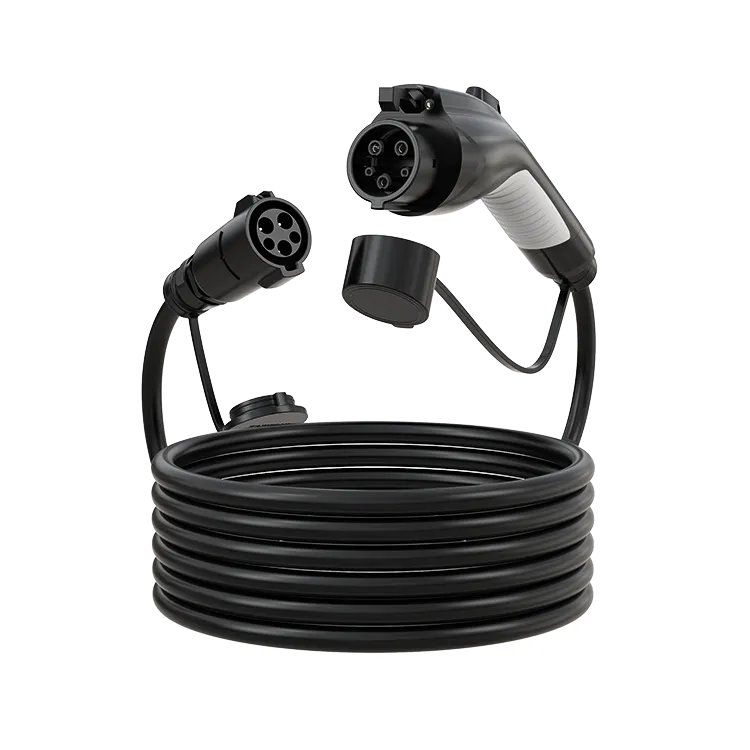
The EVDANCE EV-AC04001U is a 40 A J1772 portable charger — 9.6 kW, NEMA 14-50P, IP66, 25 ft cable. J1772 is the shared AC connector across brands — handy when the household’s next car wears a different badge — and IP66 means a driveway or carport is still workable. For a tenancy, the plug-in’s whole argument is that move-out day takes thirty seconds — compare forms in our hardwired vs plug-in guide.
Frequently Asked Questions
Do I need permission if nothing is installed?
Check the lease first — some restrict high-draw appliances or parking use. Even where nothing is fitted, a short written heads-up costs nothing and prevents a dispute later.
The only 240 V outlet is the dryer outlet, and its shape differs. What now?
Then it cannot plug in as the house stands; forcing or adapting a mains plug shape is not the answer. Work through our guide to plugging a Level 2 charger into a dryer outlet, and treat any change as a landlord-and-electrician decision.
What happens when I move out?
You unplug it and take it. Nothing was fixed, so there is nothing to make good — outlet and circuit stay as they were.
Related Reading
- Can I Have an Electric Car Charger at Home? Houses, Rentals and Condos
- Can I Plug a Level 2 Charger Into a Dryer Outlet?
- EV Charger Hardwired vs Plug-In: Which Should You Choose?

