
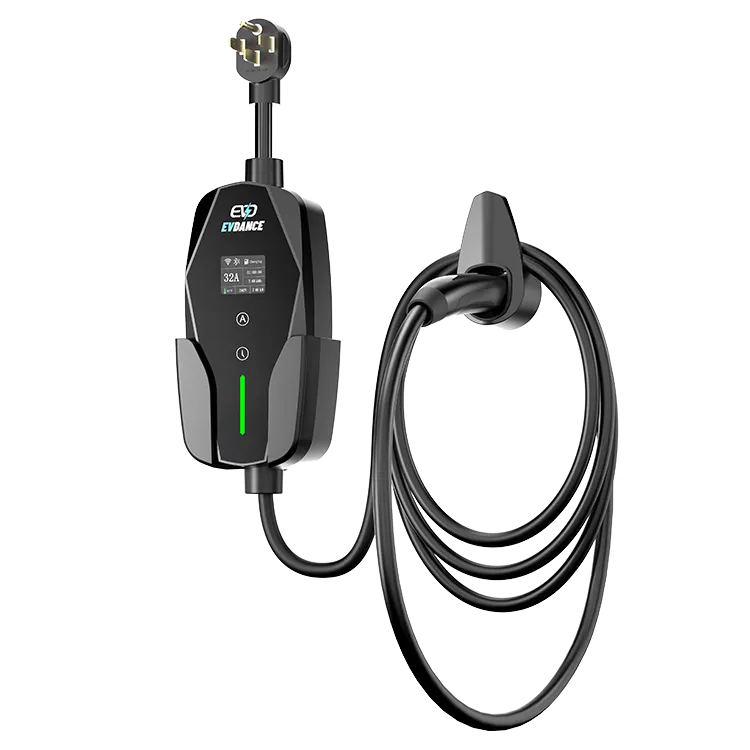
A plug-in portable leads a harder life than a fixed wallbox: it is unplugged, coiled, carried and plugged in again, so its safety checks are a standing routine, not an install-day event. Every check here is eyes-and-hands only — nothing to open, nothing to test with instruments. The EV-ACS3210T adds two items a fixed unit lacks: the current setting it will run at, and the screen that reports the session.
Key Takeaways
- A portable’s connections are remade every session, so its checks run on a rhythm: glance, monthly pass, full pass after changes.
- Every check is eyes-and-hands only — nothing opened, nothing instrument-tested, nothing repaired.
- This unit adds two checks of its own: the selected step against the circuit, and screen readings that agree with it.
- Failures sort into two boxes: outlet side to an electrician, unit side to EVDANCE support.
Why a Portable Gets a Routine, Not a One-Off
A hardwired wallbox is connected once and checked at inspection; after that its joints sit undisturbed for years. A portable’s connections are remade every session. The plug blades slide in and out, the cable bends at the same two points, and the connector latch clicks daily. Wear concentrates where the current flows — the hazard background in our guide to whether a NEMA 14-50 outlet is a fire hazard is mostly loose, worn connections, not faulty chargers. Circuit-side protection is a separate, panel-side question — see whether an EV charger needs GFCI protection.
Three Passes, Three Rhythms
- Every plug-in — the 30-second glance. The plug seats fully, with no sag. The cable runs untrapped — not pinched by a door, not under a tyre. The screen shows the step you intend to run on this circuit.
- Monthly — the hands-on pass. Work through the table below with the unit unplugged.
- After anything changes — the full pass. A new outlet, a dropped unit, a tripped breaker, another driver: repeat the monthly pass and re-confirm the setting against the circuit.
The Monthly Pass, Item by Item
| Check | Where | What good looks like | If it fails |
|---|---|---|---|
| Plug blades | The NEMA 14-50P plug | Blades straight, no scorch marks or pitting | Any heat damage: stop using it; unit side to EVDANCE support, outlet side to an electrician |
| Receptacle grip and face | The outlet it lives on | The plug holds firm; the face uncracked, no discolouration | Loose fit or heat marks: do not charge on it; electrician first |
| Cable jacket | Along the full run, especially both ends | No cuts, crush flats or exposed inner layers; bend points not kinked | Damage retires the cable — it is never taped and kept in service |
| NACS connector | The car end | Pins clean and straight; the connector seats on the car positively | Bent pins, or a connector that will not stay seated: stop and contact support |
| Current setting | The screen, before the car is connected | The step shown is the one this circuit allows | Reset it before the session; a step that will not hold is a unit fault |
| Screen readings | During a session | The running current sits at the selected step; figures advance steadily | Readings that disagree with the setting: end the session and contact support |
| Warmth | Plug and outlet, after a long session | Warm under load is normal; too hot to hold is not | Stop charging on that outlet; an electrician checks the receptacle |
| Housing and cable boot | The unit body and strain reliefs | No cracks; the cable enters housing and connector without pulling loose | Cracked housing: stop — the weather rating depends on the enclosure being whole |
What a Failed Check Means
The routine sorts every failure into two boxes. Outlet-side findings — a tired receptacle, heat marks, a tripping breaker — belong to a licensed electrician; nothing behind the outlet face is owner work. Unit-side findings belong to the manufacturer: the EV-ACS3210T carries EVDANCE’s 3-year standard warranty, and support is the route, not a repair attempt. The routine never produces a DIY fix: no opened housing, no taped cable. The IP66 rating covers the enclosure against weather, not a worn plug or a loose receptacle — why those two items top the table.

Frequently Asked Questions
How often should I run these checks?
The glance at every plug-in, the hands-on pass monthly, the full pass after anything changes — a move, a drop, a trip, a different outlet.
Can I open the unit to check inside?
No. Every check here is external, by design. Anything inside the housing is the manufacturer’s side — if the screen or behaviour suggests an internal fault, the unit goes to EVDANCE support.
The plug feels warm after a long session. Is that a failed check?
Warm is normal under a continuous load. Too hot to hold comfortably is the fail line: stop, and have an electrician check the receptacle before the next session.
Related Reading
- Is a NEMA 14-50 Outlet a Fire Hazard for EV Charging?
- Does an EV Charger Need GFCI Protection?
- What Is a NEMA 14-50 Outlet? A Guide for EV Owners
- Do Portable EV Chargers Work? How Speed Depends on the Outlet

